300x85-png.webp)


 Hong Kong
 Singapore
 China
China Dubai
Dubai Thailand
 United Kingdom
 Mexico
Need short-term health insurance for the US, travel, or international stays? Top providers include Allianz Care, AXA, GeoBlue, Everest, Pivot Health, and UnitedHealthcare. These companies offer flexible short-term plans for both domestic and global needs, whether for travel, work, or coverage gaps.
Discover the world’s top
health insurers.
Compare quotes with
a click of the button.
This guide highlights the best short-term health insurance options and key factors to compare when choosing a plan, ensuring you get the right coverage wherever you go.
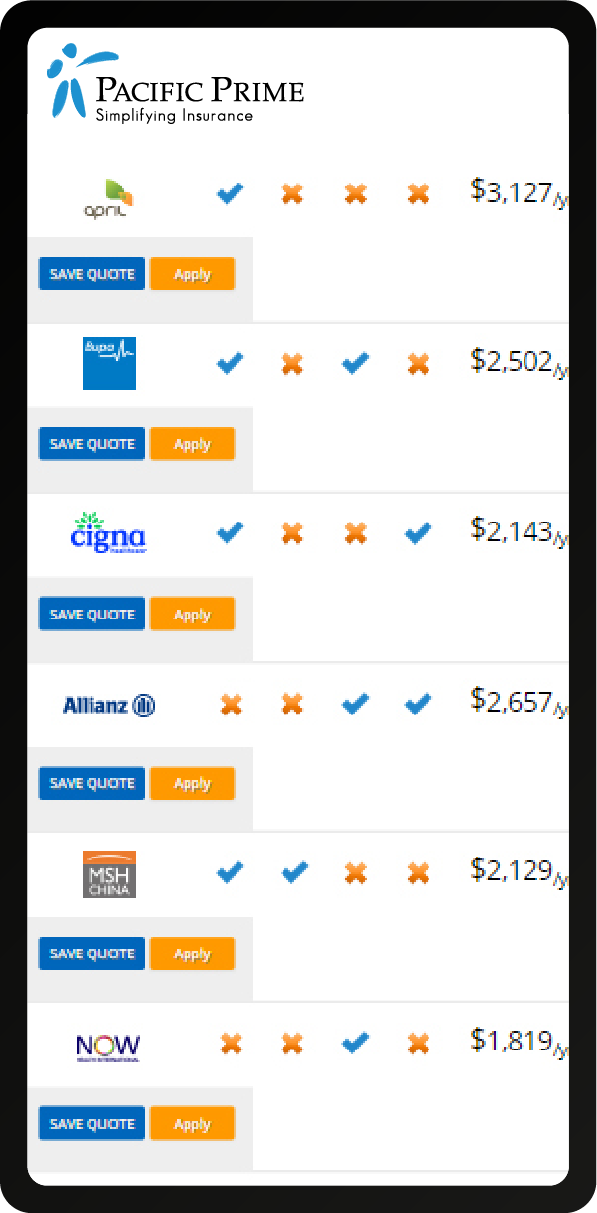
Top 10 Short-Term Health Insurance Providers

Pacific Prime suggests coverage from Everest, Pivot Health, and UnitedHealthcare for top-tier short-term coverage in the United States as their plans offer more comprehensive coverage with flexible add-ons not usually offered in short-term insurance.
Allianz Care, AXA, April International, and GeoBlue offer some of the best short-term international insurance with wide network access around the globe, stellar customer care, and unique customization to meet your health needs, whatever the length of coverage you need.
April International also makes the list of top travel insurance companies, along with Vumi Travel VIP, IMG GlobeHopper, and MSH International. These companies’ coverage of medical needs and all other trip-related mishaps makes them ideal for those planning a brief trip abroad.
Short-term health insurance is meant to cover your medical needs when you have a gap in coverage, whether you’ve lost a job or moved to a new state.
For those looking for coverage in the United States, remember that short-term health insurance won’t cover all ten essential health benefits outlined by the ACA, but different plans offer different levels of coverage.
Here are our suggestions for the top short-term health insurance companies in the country.
Best Short-Term Health Insurance in the United States
The best short-term health insurance companies in the United States are Everest, Pivot Health, and UnitedHealthcare. Within the United States, the options for short-term health insurance vary widely depending on the state in which you live.
If you live in a state that allows short-term coverage, we suggest the following insurers:
Everest
Consider Everest’s Flex Term Health insurance policy for competitively low prices. They boast a strong focus on customer satisfaction and offer great flexibility with four deductible options, four coinsurance options, and four coverage maximum options—including up to $1.5 million.
Their comprehensive coverage offers basic and major medical coverage in most states. However, because their coverage is higher, their premiums also tend to be higher than other competitors. They also don’t cover prescriptions unless you’ve been hospitalized.
Pivot Health
Pivot Health, on the other hand, does cover prescriptions: their Quantum PPO Copay plan offers a $5 generic copay on certain prescription drugs, with preferred copays at $35 and nonpreferred at $70. Pivot Health’s Epic Base policy also extends its coinsurance at 0%, paired with a low policy cost.
Pivot Health’s premium costs are comparatively low, but make sure to look through their plan specifics, as their coverage tends to be less extensive. Also keep in mind that their maximum coverage option is lower than other companies, with a cap at $1 million.
UnitedHealthcare
United Healthcare’s Copay Select Max plan covers prescription drugs with a copay of $25, $75 urgent care visit, and $50 doctor’s office visits, with a cap at four visits per term. Because UnitedHealthcare is such a large company, they have a massive network of doctors, hospitals, and professionals.
With deductibles as low as $2,500 and a lifetime coverage maximum of $2,000, it may be an affordable option, but consider that the premium may be higher and that the coinsurance sits at 30%.
Some people find this plan tempting also because, after 12 months, it covers pre-existing conditions and preventative care after 6 months (up to $200). However, ACA plans will be much more affordable and comprehensive if you’re considering long-term plans.
Best Short-Term International Health Insurance Options
Allianz Care, AXA, GeoBlue, and other international health insurance providers offer excellent options if you need short-term health insurance while you travel overseas. Pacific Prime’s partners offer a variety of incredible, flexible options, and you can compare quotes directly on the page.
Allianz Care
Allianz Care’s Flexicare short-term international plan is perfect for individuals and families living abroad for short stretches of time. With over 72 million cases in 75 countries, Allianz Care’s international expertise will be sure to have you covered. Find out more about Allianz Care on our site.
AXA
One of AXA’s unique offerings is their second medical opinion option included in every plan. They are also known for covering claims quickly, with over 80% of claims paid within 48 hours. You’ll also find 24/7 customer support in many different languages. Search AXA’s plans and find one for you.
April International
April International covers the bases for those seeking coverage internationally, whether they’re moving to England long-term or visiting Hong Kong for a week. One of the top selling points for their coverage is that they have zero deductible. Find out more about April International.
GeoBlue
GeoBlue is unique in that it offers top-tier plans for those living in the United States as well as for those overseas, so they’re the perfect one-stop shop for any health insurance need. Choose between their flexible domestic plans, international short-term plans, and travel insurance plans.
Best Travel Insurance Plans for Short-Term Coverage
April International, Vumi Travel VIP, IMG GlobeHopper, and MSH International are the best travel insurance companies to give you the temporary coverage you need abroad if you only plan to travel briefly.
While traditional travel insurance includes some emergency medical benefits, its focus is on trip expense coverage, like cancellation or lost items. Travel medical insurance plans, however, ensure that you have your healthcare needs covered even while you’re traveling to other countries.
Pacific Prime’s partners provide only the best travel insurance. Compare quotes right away, deep dive into this article on our top five travel insurance companies, or check out our overview of just a few of the top picks below.
Vumi Travel VIP
Whether you cover a single vacation or several trips through an annual plan, VUMI makes stellar medical care accessible across the globe. VUMI offers second medical opinions on annual trips, comprehensive care for minor injuries to repatriation, and even emergency dental coverage.
If you want to insure all aspects of your trip, you can add traditional travel insurance for coverage on nonmedical needs like luggage delay, theft, legal assistance, or cancellation. Check out more about Vumi Travel VIP.
IMG GlobeHopper
With coverage options as brief as five days and up to two years, IMG’s flexibility is uniquely suited to cater to all travel types, whether you plan to stay with family overseas extensively or you’re making a thrilling getaway excursion in Europe.
One of IMG’s unique offerings is their Adventure Sports Rider add-on: most medical travel insurance policies do not cover high-risk recreational activities, such as rock climbing or skydiving, but IMG’s plan can cover you during even your most exciting outings. See what IMG GlobeHopper has to offer you.
MSH International
The French company MSH International features tailored plans with inclusive coverage in every country worldwide. They offer their top medical network, with health coverage up to $1,000,000, whether you need emergency assistance or a routine checkup.
MSH International’s Snowbirds plan, geared toward those who travel internationally several times throughout the year, covers up to $5,000,000 toward emergency illness or injury. If MSH International sounds like a good fit for you, head to this page to find out more.
Key Facts About Short-Term Health Insurance
The top options for temporary coverage depend on your medical needs, your budget, and whether you plan to stay home or hit the tarmac before your regular health insurance kicks in. Here’s what you need to know about the different types of short-term health coverage.
Short-Term Health Insurance vs COBRA Explained
Short-term health insurance offers temporary coverage for as short as a month and up to a year, depending on where you live. Because it’s crafted for transitional care, it’s meant to fill the gap in health insurance with immediate, flexible, affordable care until you find something more long-term.
For those living in the United States, it’s important to note that short-term health insurance is not available in Hawaii, Washington, California, Colorado, New Mexico, Minnesota, D.C., New York, New Jersey, Connecticut, Rhode Island, Massachusetts, Vermont, New Hampshire, or Maine.
Similarly, you can only purchase short-term insurance for three months or less in Oregon, Delaware, and Maryland.
COBRA plans extend the health insurance coverage you received from your previous employment, but without the contribution from your employer, you cover the full plan cost. This makes COBRA plans dependable but often expensive.
Like regular short-term health insurance, to qualify for COBRA, you must have a distinguishing life event such as voluntary or involuntary job loss, a qualifying move, retirement, reduced work hours, or loss of coverage as the dependent of an employee receiving coverage.
What Short-Term Health Insurance Covers and Excludes
Most short-term health insurance plans cover preventative care, emergency care, urgent care, and medical tests, and some offer discounts on medications. However, since it’s not comprehensive, most plans don’t cover pre-existing conditions, mental health services, maternity care, or substance abuse.
Travel Insurance vs International Health Insurance
International health insurance is secondary emergency coverage that works like normal health insurance back home, just abroad, whether you’re traveling for a vacation or work. Like normal short-term insurance, not all short-term international plans provide comprehensive care.
Traditional travel insurance includes some medical coverage for emergency expenses but mostly covers trip complications such as cancellation, delay, or lost baggage and personal items. If you’re preparing for a trip overseas, you can find out more about the best traditional travel insurance options on our page.
Travel medical insurance offers secondary international coverage that generally covers emergency medical, dental, and evacuation with options to bundle this health-focused insurance with traditional travel insurance, in case you want comprehensive coverage for any unforeseen mishap abroad.
How to Pick the Right Short-Term Health Insurance

When choosing temporary health insurance, weigh these factors:
Availability
Before you do any research on plans, verify your state’s laws on short-term insurance: not all plans are available in all states, as listed above. So while you may have found a plan you love, you can only qualify if your state’s regulations allow.
Deductible
While it might make sense to choose the lowest deductible possible, if you have low-risk health concerns, opting for a higher deductible is often cheaper, as it lowers your premium. However, for those with high-risk concerns, a low deductible will be much more affordable.
Prescription Drug Coverage
Many short-term health insurance plans do not cover prescription drugs. Especially if you are traveling abroad and need an international or travel medical insurance plan, read the fine print to ensure you can get the prescriptions you need at a price you can afford.
Cost
In determining affordability, weigh out your premium, your deductible, your copays and coinsurance, and your out-of-pocket maximum, keeping in mind that some short-term health insurance does not have out-of-pocket maximums.
- Premium: the amount you pay each month to have health insurance
- Deductible: the amount you pay before your insurance starts covering costs
- Copay: the amount you pay for certain care visits, like doctor’s visits
- Coinsurance: the coverage percentage you pay once you have met your deductible
- Out-of-pocket maximum: the total maximum amount you will pay for health care within a term
How to Qualify for Short-Term Health Insurance
Applying for short-term insurance is simple. If your state allows short-term health insurance—or you’re looking for something more international—you can apply at any time. You will be asked to complete a short questionnaire that outlines your health history.
From that questionnaire, insurers assess whether you qualify for their plan. You may be denied if you have health complications that short-term insurance won’t cover, such as a history of substance abuse or pre-existing conditions.
Keep in mind that companies could approve you for a policy but still deny covering a claim if it is related to a pre-existing condition. If insurers review your claim and do find that a pre-existing condition is the cause of your health problems, they could even drop your coverage.
FAQ
Should I get short-term insurance?
If you have had a qualifying life event, such as losing a job, consider short-term health insurance to fill the gap until you can purchase comprehensive health insurance. Short-term insurance is ideal for those traveling internationally extensively or those waiting for long-term coverage to begin.
What are the downsides of short-term insurance?
For those in the U.S., short-term health insurance does not cover the then essential health benefits (EHBs) as outlined by the ACA. Short-term health insurance is also not available in all states and is restricted to no longer than three months in others.
How much does short-term insurance usually cost?
Minimal coverage short-term health insurance may cost as little as $100 a month, with more broad coverage costing over $200 a month. Your age, location, medical history, gender, and chosen insurance carrier all affect cost.
Why is short-term insurance often less expensive?
Short-term health insurance tends to be less expensive than long-term health insurance because it does not offer the same range and availability of coverage. For example, most short-term policies do not cover pre-existing conditions or care for injury during high-risk activities.
Why would someone choose short-term insurance?
Traveling internationally as well as qualifying life events like moving states, losing a job, or turning 26 make short-term insurance a good choice for individuals who want medical care coverage when regular long-term coverage isn’t available. It also tends to be affordable and flexible.
Can I cancel short-term insurance whenever I want?
You can cancel short-term health insurance when you want. Either select an end date for coverage when you sign up for a plan or contact your insurer. If you call the customer support number on the back of your insurance card, you should be able to cancel your plan easily.
How quickly does short-term insurance start?
Short-term insurance can begin as soon as the day after you’ve been approved, though it will depend on your chosen insurance company’s timeline.
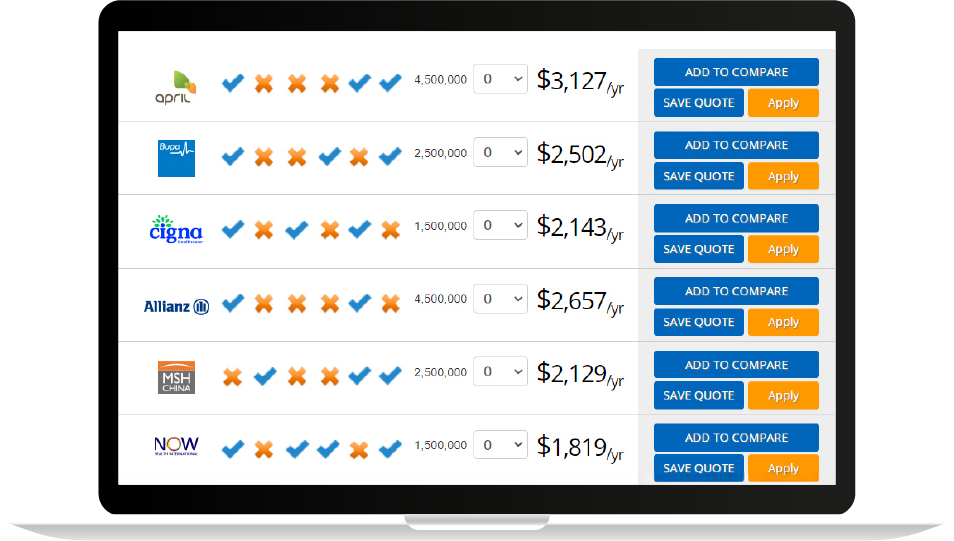
Conclusion
Pacific Prime is here to make finding the right short-term insurance easy. You can look through our insurers and partners and all they have to offer, compare plans, or get a quote.
If you want to learn more about your options for short-term insurance, review our article on temporary health insurance options and cheap short-term medical insurance plans.

Serena earned her Bachelor’s Degree in Psychology from the University of British Columbia, Canada. As such, she is an avid advocate of mental health and is fascinated by all things psychology (especially if it’s cognitive psychology!).
Her previous work experience includes teaching toddlers to read, writing for a travel/wellness online magazine, and then a business news blog. These combined experiences give her the skills and insights she needs to explain complex ideas in a succinct way. Being the daughter of an immigrant and a traveler herself, she is passionate about educating expats and digital nomads on travel and international health insurance.
- How to Compare Travel Insurance Plans the Smart Way – October 21, 2025
- Best Hospitals in the UAE: Top Picks in Dubai and Abu Dhabi – October 21, 2025
- How Much is a Doctor Visit in Dubai Without Insurance? – October 21, 2025

Comments