300x85-png.webp)


 Hong Kong
 Singapore
 China
China Dubai
Dubai Thailand
 United Kingdom
 Mexico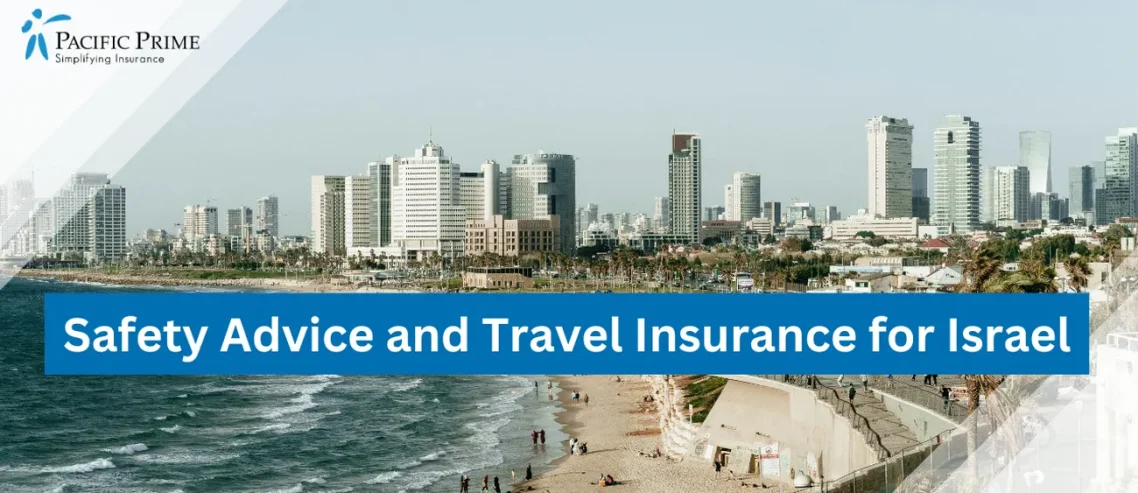
While areas such as the Gaza Strip and Northern Israel should be avoided, with proper preparation, traveling to other regions of Israel can be both safe and memorable, whether you want to float in the Dead Sea, make a religious pilgrimage, or visit family.
Discover the world’s top
health insurers.
Compare quotes with
a click of the button.
If you’re hoping to travel to Israel, finding the best travel insurance and learning some safety essentials will make all the difference for a stress-free voyage. With once-in-a-lifetime experiences like letting loose to live music at Barby amid the famous nightlife of Tel Aviv or touring the sacred sites of the Holy Land, you don’t want a surprise to dismantle your vacation.
In this article, we’ll walk you through what travel insurance you’ll need for Israel, what to prepare before your trip to Israel, and the best safety tips to enjoy your time while you’re there.
Travel Insurance for Israel
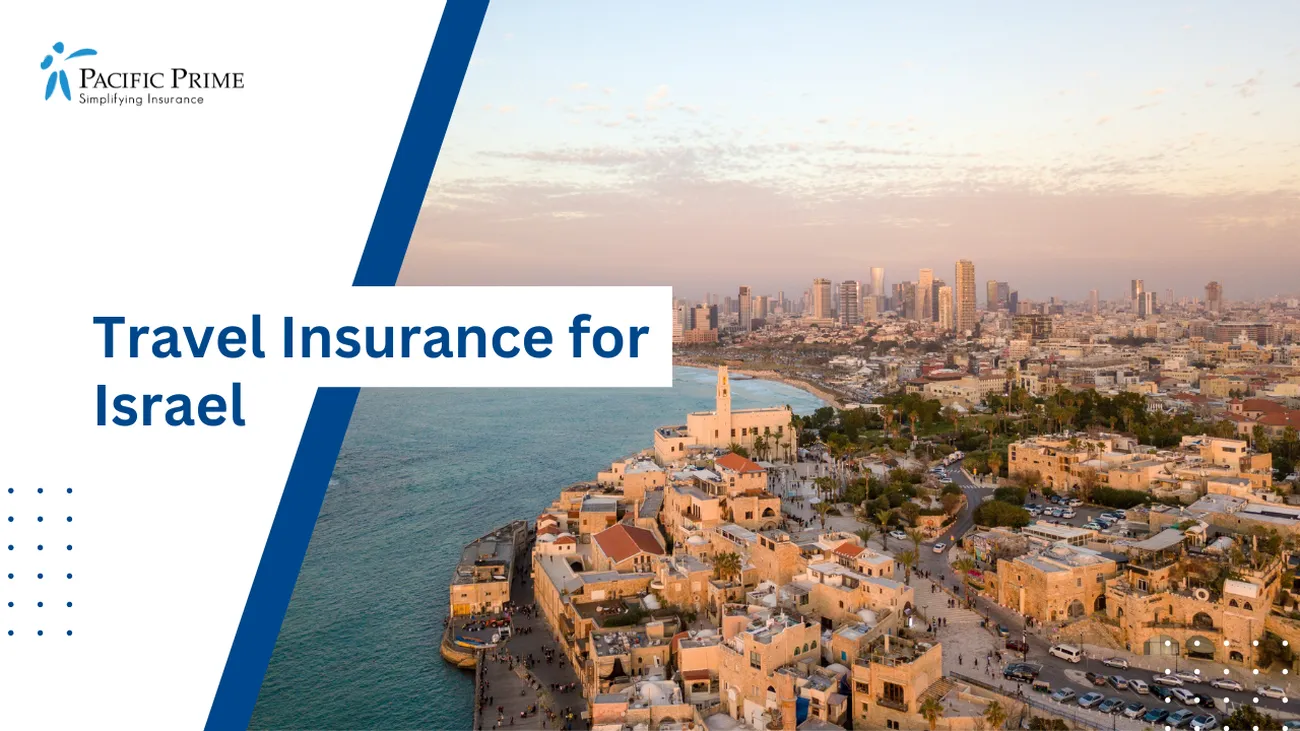
Travel insurance in Israel can protect you from the unexpected risks of traveling to a foreign country. While you might already know you want to purchase travel insurance before heading to Israel, it’s normal to have a few concerns. Let’s break down what travel insurance could do for your trip.
Why You Need Travel Insurance in Israel
You need travel insurance for Israel, especially as tension in the region has erupted in recent months. The U.S. Department of State travel advisory for Israel, the West Bank, and the Gaza Strip advises that you obtain comprehensive travel insurance before visiting any area of Israel.
Planning your trip carefully can help you avoid danger, whether you plan to stop anywhere near regions of conflict or not. As part of that preparation, purchase travel insurance that will give you all the resources you need and which will allow you the peace of mind to enjoy your vacation.
Although some feel the price for travel insurance outweighs its benefits, that is not the case when visiting Israel. Preparing for any mishap is essential, and while you may never have to use your travel insurance, better safe than sorry is a good rule of thumb when planning your trip to Israel.
Because of Israel’s ongoing disputes and the uptick in terrorism, a comprehensive plan is the best option. Consider plans that include medical evacuation, emergency travel changes, and repatriation of remains.
What Travel Insurance Covers
Travel insurance covers trip cancellation, delayed departure, personal belongings and lost luggage, travel documents, personal liability, and emergency medical situations. Most plans are customizable, so you can find what is both affordable and necessary for you.
Travel insurance is the ideal coverage if you’re traveling for less than a month or two.
Short-Term Insurance for Your Trip to Israel
Travel insurance policies generally allow for limited in-patient care and don’t cover preexisting conditions, while short-term insurance allows for a more extensive range of care and choice over where you receive treatment.
If you plan on staying in Israel for a lengthier amount of time or you have extra medical concerns, consider short-term insurance.
The Best Travel Insurance for Israel
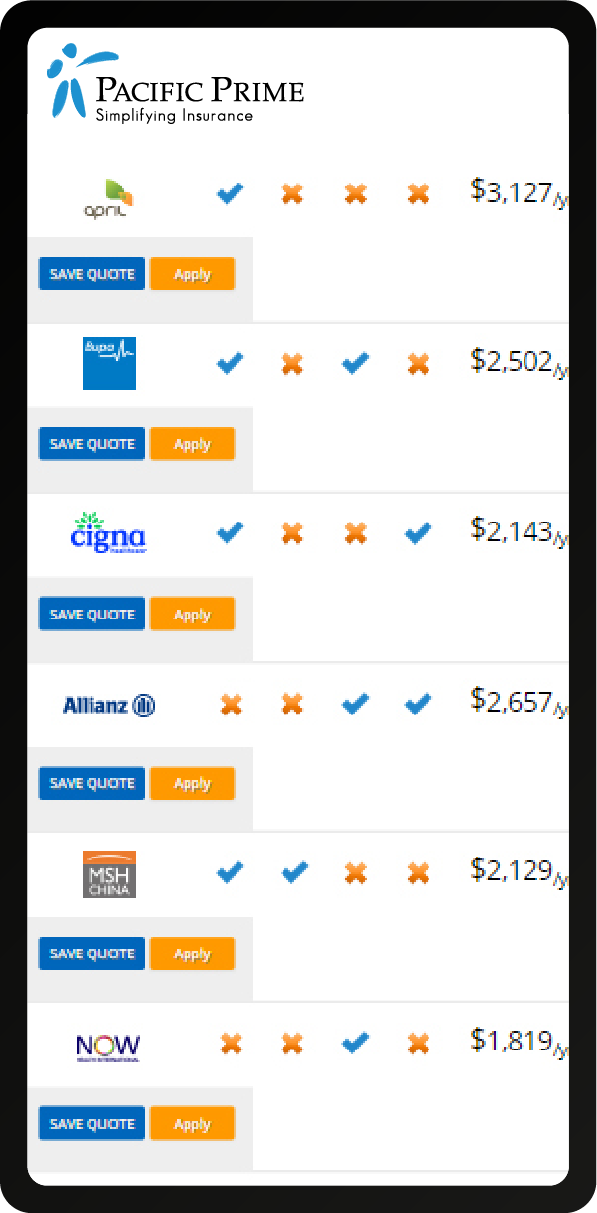
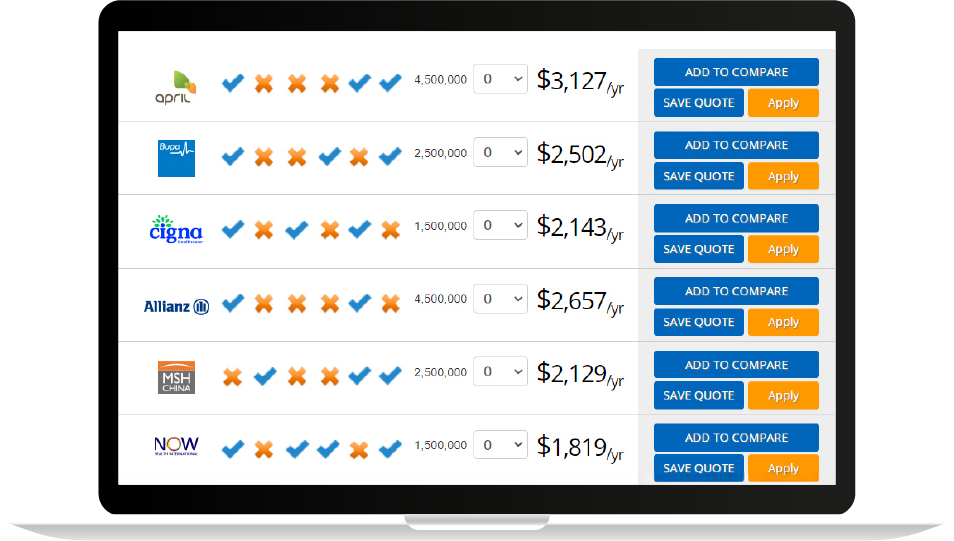
Pacific Prime offers the best travel insurance from companies globally. You can find and compare the top travel insurance plans on our page, but here are some of the most popular companies we work with.
IMG
With award-winning global benefits and over a million physicians and facilities, IMG boasts excellent flexible plans for international travelers. Take a look at IMG’s plans to find which is best for you.
Bupa Global
While most travel insurance doesn’t cover preexisting conditions, Bupa checks that box. They also can cover children under two for free and pregnant women up to thirty-six weeks. Find out more about Bupa on our site.
April International
April International prioritizes customer satisfaction, which shows in their 4,000+ employees responsible for customer service. With over thirty years of business, April International is known for handling claims quickly. Check out the plans April International has to offer.
Vumi
Vumi’s VIP plans are distinguished for making each traveler feel special. With options for single-trip coverage or annual coverage over multiple trips, VUMI’s options are distinguished. Go ahead, browse VUMI’s plans.
GeoBlue
GeoBlue’s network of providers across 180 countries offers the largest direct billing network of any other travel insurance provider. Whether you choose their Voyager single-trip plan or their Trekker short-term, multiple-trip plan, you’ll be good to go. Find out more about GeoBlue’s offers.
Pacific Prime is proud to partner with amazing companies around the globe. If you’re still undecided, compare quotes across our companies or read through this helpful article.
What Medical Preparation to Make Before Traveling to Israel
Even though travel insurance covers a variety of medical emergencies and expenses, don’t forget to check off your own medical preparations on your to-do list before getting on the plane. Here are some medical preparations you should make:
Get Your Vaccines
Meet with your doctor at least one month before your trip to catch up on all vaccinations. While Israel has no current vaccination requirements to enter the country, you should refer to the U.S. Centers for Disease Control and Prevention for the list of vaccinations they suggest.
Prepare Your Medications
Make sure you have all personal prescriptions filled. Remember to always keep your prescription medications in their original packaging, and if you have any doubt, refer to the Israel Ministry of Health to verify that your medication is legal in Israel.
If you need to take a syringe kit and needles for prescribed medication, such as insulin for diabetes, you’ll also need a letter from your doctor outlining the prescription’s use. This letter must be written on letterhead stationery.
Treat epinephrine auto-injectors (EpiPens) the same way, and ensure that you bring extras as they can be expensive and sometimes difficult to find abroad.
Plan Ahead for Emergencies
While it can be stressful to think about emergencies, knowing what you would do in a medical emergency is important when preparing for international travel. It is advisable that you give DNA samples to your medical provider before your trip in case your family needs to access them.
Calling an Ambulance in Israel
If you need to call an ambulance in Israel, dial 101. Either Israel’s Magen David Adom ambulances will pick you up, or, if you are near the West Bank or Gaza, Palestinian Red Crescent Society ambulances may arrive instead.
According to the Global EMS Database, five of Israel’s hospitals equate to U.S. level 1 trauma centers, which have all specialties on site. Workers in the ambulance will assess your needs and take you to one of these five hospitals or to one of Israel’s other hospitals in its expansive network.
Receiving Health Care in Israel
Depending on the region of Israel you visit, the quality of medical care you receive will vary. Israel offers some of the world’s most renowned care, and you can look through a list of the best hospitals in Israel to know where you can receive that top-tier treatment.
However, some areas of Israel fall below common standards, and, especially in areas of conflict, there simply may not be accommodations for you.
Essential Safety Advice for Travel in Israel
After the October 7th, 2023 breakout of war, many tourists wonder if it’s still safe to travel to Israel. The good news is that if you stick to the steps below, it is generally safe to travel to Israel.
Pay Attention to Travel Warnings and Alerts in Israel
Organizations such as the U.S. Department of State and the Overseas Security Advisory Council (OSAC) periodically provide updates on the threats in Israel, from crime and the terrorist environment to political unrest and transportation, so you should visit these pages as you plan your itinerary.
One of the best ways to stay up to date on any safety threat is to enroll in the Smart Traveler Enrollment Program (STEP). This free service provides U.S. citizens with real-time updates on threats in the area and makes it simple to locate you in the case of an emergency. Plus, it only takes twenty minutes to enroll your trip.
While you hopefully won’t ever have to use it, find the nearest bomb shelters or hardened shelters for any given day on your trip. The Home Front Command app sends out immediate alerts for all rocket attacks.
Consider checking the Facebook and X/Twitter pages for the Department of State or even other countries’ safety reports. Some countries, such as Canada and the U.K., may outline different travel guidelines and advisories.
Prepare for Trip Cancellation
To safeguard your trip and your investment, purchase trip cancellation coverage as soon as you book your trip: if situations in Israel change after you buy your plane ticket but before you purchase travel insurance, you’ll be left to cover the cancellation cost yourself.
Here are types of cancellations and delay coverage you may need to cover for your trip to Israel:
1. Cancel for Any Reason
As you talk to your insurer, discuss cancel for any reason (CFAR) coverage. This type of coverage is just what it sounds like, allowing you to cancel your trip for even personal reasons and still receive a refund for your prepaid deposits.
Don’t forget that most CFAR plans require that you cancel at least 48 hours before your trip to receive your guaranteed rates. Even with limitations on the time frame for purchasing coverage, eligibility requirements, and reduced reimbursements, it is the most comprehensive cancellation option.
2. Trip Cancellation
This general cancellation covers unexpected personal emergencies such as loss of job, illness, injury, and death as well as more external emergencies like natural disasters or terrorism, and it applies until the day you depart.
If you cancel your trip for any of the reasons outlined in your coverage, you should also be reimbursed your prepaid expenses, from tours to spa treatments.
3. Trip Interruption
As the name suggests, trip interruption covers emergencies that cut your trip short. That all-day bike tour you never got to because you had to return home? Covered. Like trip cancellation, trip interruption coverage should account for nonrefundable prepaid activities you miss out on.
4. Travel Delay
Whether because of inclement weather or complications with aircraft leaving later than you anticipated can complicate your travel day, especially if you make several connecting flights to Israel.
Travel delay insurance should cover costs you wrack up if your flight is delayed, such as a hotel stay or transportation—plus that culinary class you missed because of your flight postponement.
Stay Alert
Be vigilant when you enter common tourist locations or crowded areas. Keep your personal belongings hidden and close to your body, as pickpocketing in Israel is fairly common.
Plan out your exits, and watch for suspicious activity. If necessary, call 100 for police enforcement. Israel takes potential threats seriously, so be cautious of when and how you document your trip, and never take pictures of law enforcement.
Be Familiar with Language and Customs
While many people in Israel speak English well, knowing some common phrases in both Hebrew and Arabic is a good idea. Hebrew is the national language in Israel, and Arabic is spoken by about 20% of individuals in Israel.
Familiarize yourself with some of the customs in Israel as well, such as the rules around Shabbat. Shabbat is the Jewish sabbath day, or day of rest, which begins at sunset on Friday and ends on Saturday evening.
Jews refrain from work and travel on Shabbat, so most shops will close early on Friday to facilitate people getting home on time. Avoid travel in very orthodox areas, such as Jersulamen, on Shabbat because strict observers may become violent if you flaut their religious customs.
If you want to stay busy on your Saturdays, you still have plenty of options, as Shabbat does not look the same in all areas of Israel. Tel Aviv, for example, stays busy on Shabbat, so consider perusing its street art or relaxing at Alma Beach.
Avoid Areas of Conflict
The U.S. Department of State travel advisory warns that because of terrorism and armed conflict, you should avoid Gaza altogether. Similarly, steer clear of Northern Israel within 2.5 miles of the Lebanese and Syrian borders to avoid violence between Hezbollah and Israel.
Statistically, it has been very safe to travel in Israel. In fact, when considering crime rates, Israel has often ranked as much safer than many Western countries and cities. That doesn’t mean, however, all areas of Israel are great tourist destinations at the moment.
Consider Your Wardrobe When Packing
Research any holy sites you plan to visit because some require head coverings; close-toed shoes; and for your shoulders, knees, and cleavage to be covered. You might even bring along a lightweight scarf of your own for these sites.
Dress in Israel is generally casual. Pack long, light, loose layers. You may also want to bring a wide-brimmed hat and sunglasses. Comfortable walking shoes are a must, but leave any valuable articles of clothing, including accessories, at home as they’ll make you more of a target for theft.
Have Emergency Contacts and Numbers on Hand
Talk to family members or friends about being your point of contact in case of emergency. Give them access to your important documents, logins, and contacts in case you cannot return from Israel when you planned.
Similarly, you should keep a contact card on yourself at all times which should include information such as the phone number, email address, and street address of your at-home contacts; your medical providers back home; your housing in Israel; and numbers for medical care in your travel areas.
Below you can also find the information for U.S. embassies in Israel.
U.S. Embassy Jerusalem
14 David Flusser Street
Jerusalem 93392
Telephone: + (972) (2) 630-4000
Emergency After-Hours Telephone: + (972) (2) 622-7230
U.S. Office of Palestinian Affairs
18 Agron Road
Jerusalem 9419003
Emergency After-Hours Telephone: + (972) (2) 622-7230
U.S. Embassy Jerusalem Branch Office Tel Aviv
71 HaYarkon Street
Tel Aviv Israel 63903
Telephone: + (972) (3) 519-7551
Consider Timing and Location
As we’ve mentioned, stay away from areas of war, and exercise caution when visiting potential target areas. As you plan your visit, also think of timing. Just like there are guidelines around Shabbat, there are guidelines around holidays, like Ramadan.
Ramadan is a Muslim holy month when believers fast (don’t eat or drink) between sunrise and sunset. If you choose to travel to Israel during Ramadan, you should also avoid eating, drinking, and even smoking in public when you’re in a predominantly Muslim community.
Frequently Asked Questions
What type of travel insurance do I need for a trip to Israel?
You should buy comprehensive travel insurance which covers cancellations, delays, medical emergencies, luggage, and personal items. Check out the top-notch companies Pacific Prime partners with to give the best travel insurance for Israel.
What insurance do I need before traveling to Israel?
If you plan to only stay in Israel for a month or two, buy comprehensive travel insurance. If you plan on staying longer or you have preexisting medical conditions, you should consider short-term insurance.
What safety issues should I be aware of when visiting Israel?
Israel has experienced an influx of conflict, and you should avoid Gaza and Northern Israel. The threat of terrorism and civil unrest is real, so use caution when visiting other areas of the country as well.
What should my travel insurance policy include?
Find a plan that covers trip cancellation, delayed departure, personal belongings and lost luggage, travel documents, personal liability, and emergency medical situations.
What is usually not covered by travel insurance?
Plans vary, but most plans do not cover preexisting conditions, dangerous activities such as skydiving, medical tourism for procedures like elective surgery or routine dental work, mental health care, self-inflicted injury, or last-minute changes.
What medical conditions might not be covered by travel insurance?
Mental health conditions as well as preexisting conditions are often not covered by travel insurance, though there are companies who may offer coverage; however, you may need short-term health insurance instead.
What are two drawbacks of having travel insurance?
The high cost of travel insurance sometimes dissuades individuals from purchasing it, especially if they think they won’t need it. Also, the cost can fluctuate depending on age.
Conclusion
Israel is a beautiful country with a huge offering for tourists, whether you’re in the mood for a history escapade, a faith-building journey, or a cultural refresh. With the proper travel insurance and thorough safety preparation, there is no reason you shouldn’t enjoy all that Israel has in store.
Visit Pacific Prime to find the right travel insurance for you, or get a quote for your travel insurance right away. If you’re uncertain how to use the tool, check out this handy tutorial.
Maybe you’ve decided that Israel isn’t the right place for you or you’re still choosing a destination. If Spain tops that list, be prepared with this list of the best hospitals in Spain.
Or maybe you decide you need somewhere a bit more fresh. If you head to Finland, look through our comprehensive guide to health care in Finland. No matter where you’re headed, Bon Voyage!

Serena earned her Bachelor’s Degree in Psychology from the University of British Columbia, Canada. As such, she is an avid advocate of mental health and is fascinated by all things psychology (especially if it’s cognitive psychology!).
Her previous work experience includes teaching toddlers to read, writing for a travel/wellness online magazine, and then a business news blog. These combined experiences give her the skills and insights she needs to explain complex ideas in a succinct way. Being the daughter of an immigrant and a traveler herself, she is passionate about educating expats and digital nomads on travel and international health insurance.
- How to Compare Travel Insurance Plans the Smart Way – October 21, 2025
- Best Hospitals in the UAE: Top Picks in Dubai and Abu Dhabi – October 21, 2025
- How Much is a Doctor Visit in Dubai Without Insurance? – October 21, 2025



Comments