300x85-png.webp)


 Hong Kong
 Singapore
 China
China Dubai
Dubai Thailand
 United Kingdom
 Mexico
Pacific Prime aims to provide a variety of resources for expatriates and travelers to refer to in order to aid their understanding and decision-making. As brokers, we understand that comparing plans is not easy, but we promise it will be easier if you have the correct resources.
Discover the world’s top
health insurers.
Compare quotes with
a click of the button.
Whether you’re an expat or a frequent traveler, understanding the key factors in choosing the right plan is crucial for your peace of mind and financial security. These factors can be as simple as your budget, purpose, and lifestyle, which can easily be assessed by reading this article.
To help you get started with any decisions related to comparing and purchasing international health insurance, we have compiled a list of resources, such as useful links, terms, and definitions, in this Pacific Prime article.
Understanding Travel and Health Insurance Definitions

When it comes to definitions, you’ll want to know what allowable charges, deductibles, claims, benefits, benefit levels, exclusions, underwriting, and pre-existing conditions are. Understanding these terms will help you understand the mechanisms behind your policy.
Navigating the complexities associated with international health insurance can be challenging, but with the following definitions and advice, you’ll be able to make better and more informed decisions.
Listed below are the key travel and health insurance definitions and their descriptions:
-
- Pre-existing Condition: Among the most important definitions when it comes to taking out a health insurance policy, a pre-existing condition is a medical condition diagnosed or treated before your insurance coverage began. Insurers and brokers need to know this right away.
- Allowable Charge: The amount an insurer considers reasonable for a specific medical service in your area. Also known as the “maximum allowable” or “usual, customary, and reasonable charge.”
- Benefit: The specific healthcare services covered by your insurance plan.
- Benefit Level: The maximum amount the insurer will pay for a covered service.
- Claim: A request for payment or reimbursement for medical services received.
- Co-Insurance: The percentage of covered healthcare expenses you pay after meeting your deductible.
- Co-Payment: A flat fee you pay for specific services, like doctor visits or prescriptions.
- Deductible: The annual amount you must pay out-of-pocket before your insurance begins to cover expenses.
- Dependent: A family member (spouse, child, etc.) covered under the policyholder’s plan.
- Direct Billing: An arrangement where healthcare providers bill your insurer directly, reducing out-of-pocket costs.
- Drug Formulary: A list of medications covered by your insurance plan.
- Exclusion / Limitation: Conditions or treatments not covered by your insurance policy.
- Group Health Insurance: Coverage provided to a group, often by an employer, under a single policy.
- In-Network Provider: A healthcare provider that has a contract with your insurer to offer services at reduced costs.
- Individual Health Insurance: A plan purchased by an individual to cover themselves and their dependents
- Insured: The person(s) covered by the health insurance policy.
- Network: The group of providers contracted by an insurer to offer services at negotiated rates.
- Out-of-Network Provider: A provider not contracted with your insurer, often leading to higher out-of-pocket costs.
- Out-of-Pocket Maximum: The most you will pay during a policy year before your insurer covers 100% of covered expenses.
- Payer: The health insurance company responsible for paying your medical claims.
- Policyholder: The individual or entity that owns the insurance policy.
- Pre-Approval: A requirement to get approval from your insurer before receiving certain services.
- Premium: The amount paid for health insurance, typically on a monthly or annual basis.
- Provider: Any healthcare professional or institution offering medical services.
- Rider: An additional coverage option that can be added to your plan for an extra premium.
- Underwriting: The process by which an insurer evaluates an applicant and sets their premium.
- Waiting Period: A time frame during which certain coverage benefits are not available, often applied to specific conditions like maternity.
Types of Health and Travel Insurance Plans
When it comes to the types of health insurance plans, it’s important to know what each type covers; for example, international health insurance covers inpatient, outpatient, emergencies, and evacuations for yourself while living abroad, and family health insurance covers your family members.
Listed below are the types of insurance, their definitions, and their respective links:
- International health insurance: International health insurance provides coverage for medical expenses incurred while traveling or residing outside of one’s home country.
-
- Family health insurance: Family health insurance provides comprehensive medical coverage for a household of multiple individuals.
- Maternity health insurance: Maternity health insurance covers the medical expenses related to pregnancy, childbirth, and newborn care.
- Short-term health insurance: Short-term health insurance provides temporary medical coverage for a limited time period.
- Travel health insurance: Travel health insurance provides coverage for medical expenses that may arise during trips outside of one’s home country.
- Expat health insurance: Expat health insurance is a type of international health coverage specifically designed for individuals living or working abroad long-term, distinct from temporary travel insurance.
Choosing a Health Insurance Plan
When selecting health insurance, it’s important to understand the key insurance terms, assess your health and lifestyle needs, compare plans that match your budget, and seek expert advice from, preferably, brokers like Pacific Prime.
Listed below are some practical steps to follow when choosing health insurance plans:
- Understand Key Insurance Terms: Familiarize yourself with terms like deductibles, co-insurance, exclusions, and riders. This knowledge ensures you’re aware of what each plan covers and any limitations.
- Assess Your Health and Lifestyle Needs: Consider pre-existing conditions, future family planning, and specific lifestyle needs to determine the necessary coverage, such as maternity or family plans.
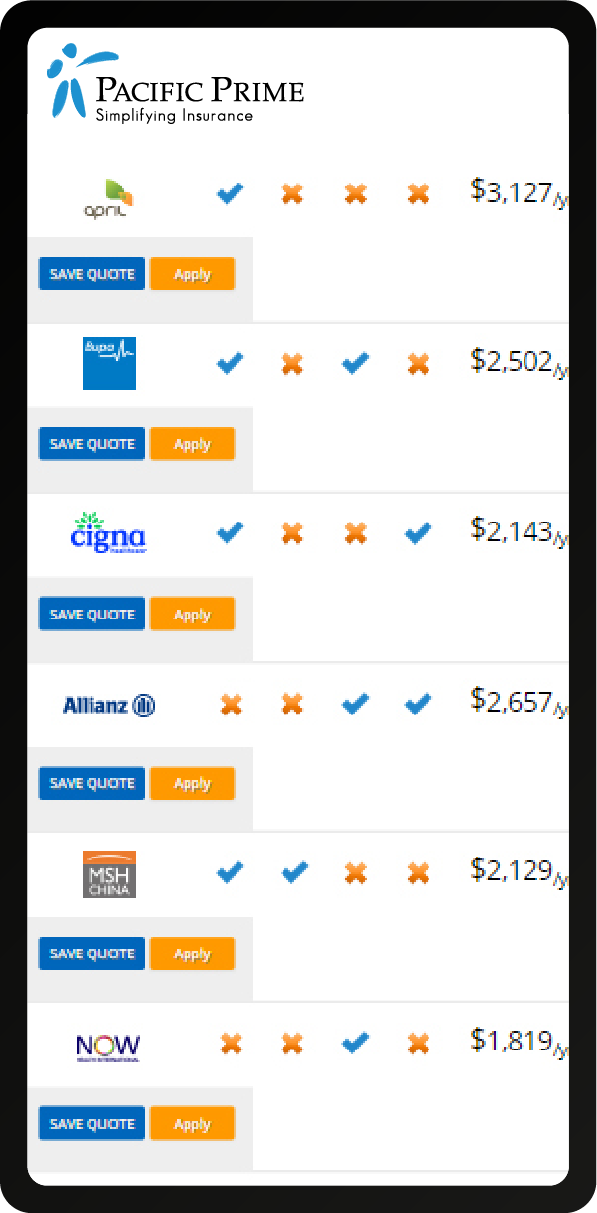
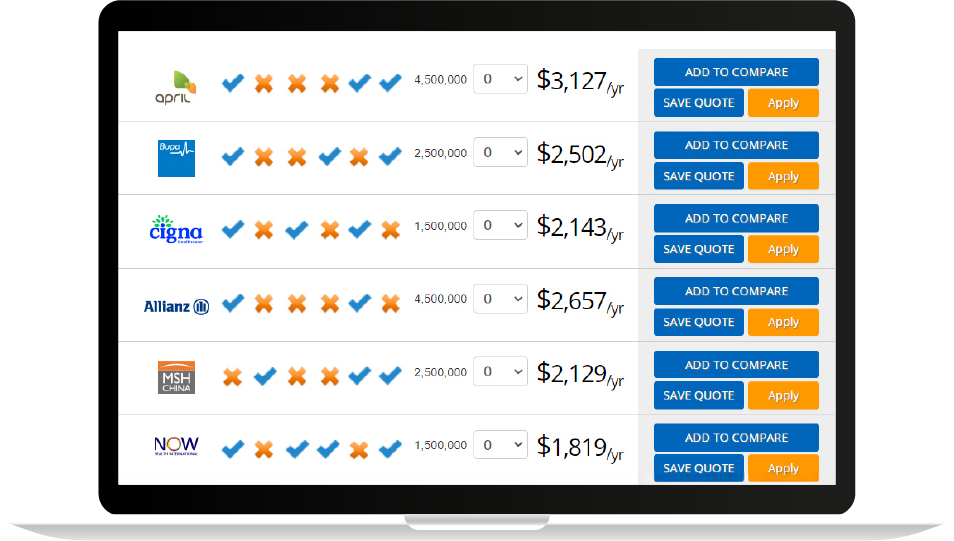
- Compare Plans: Evaluate the coverage, price, claims process, provider network, and insurer reputation to find the right balance for your needs.
- Seek Expert Advice: Use tools like Pacific Prime’s online quotation tool to compare plans, and consider consulting a broker for personalized assistance.
Choosing a Travel Insurance Plan
When choosing a travel insurance plan, start by assessing the financial stability of the insurance provider. Next, it’s important to compare the different levels of coverage to suit your needs. Lastly, ensure that the plan includes essential benefits such as medical coverage and trip cancellation.
Listed below are the key factors to consider when choosing and comparing a travel insurance plan:
- Financial Stability: Choose a provider with a strong financial rating
- Coverage Levels: Compare basic, intermediate, and comprehensive plans
- Cost Influences: Trip length, age, destination, and cancellation benefits affect premiums
- Specific Coverage: Check for essential benefits like medical, trip cancellation, and baggage
- Policy Duration: Match your policy to your trip length (short-term vs. long-term)
- Family Coverage: Look for plans that cover children for free
- Provider Reputation: Use comparison tools and consult experts for advice
Secure Your Expatriate and Travel Needs
Choosing the right health insurance plan is crucial for ensuring peace of mind and financial protection while living or traveling abroad. By understanding insurance terms, assessing your health needs, and comparing plans, you can make an informed decision. But you don’t have to do it alone.
If you’re seeking international health insurance to safeguard yourself while living abroad or during travel, Pacific Prime is here to assist you. With over 20 years of experience, our knowledgeable advisors can help you find a comprehensive plan tailored to your specific needs.
Reach out to us today for a complimentary plan comparison and a free quote!
Frequently Asked Questions
What resources does Pacific Prime offer to help expatriates and travelers choose the right health insurance?
Pacific Prime provides a comprehensive list of resources, including definitions of key insurance terms, practical tips, and guides to help expatriates and travelers make informed decisions about their health insurance.
Why is understanding health insurance terms important when choosing a plan?
Knowing terms like deductibles, co-insurance, and exclusions helps you understand what each plan covers and any limitations, ensuring you select the right coverage for your needs.
How can I get personalized assistance with choosing a health insurance plan?
You can use Pacific Prime’s online quotation tool for plan comparisons or consult with their expert brokers for personalized advice and assistance.

Upon graduating from Mahidol University International College’s International Relations program, he spent his career in marketing and business development, working for an international subcontractor, a marketing research firm, an international news agency, a software development company, and a creative agency. His journey now continues at Pacific Prime, where he hopes to make an impact by simplifying insurance and writing a gargantuan amount of SEO articles to draw in billions of leads.
In his free time, Piyanat is an avid martial artist and musician, spending most of his time at boxing gyms in Nakhon Pathom and music studios with his friends in the music industry.
- Chiang Mai Travel Insurance: A Comparison Of The Top Providers – August 22, 2025
- Last-Minute Travel Insurance: How to Get Covered After Departure – August 18, 2025
- Childbirth Coverage in Singapore: Maternity Health Insurance Explained – August 18, 2025



Comments