300x85-png.webp)


 Hong Kong
 Singapore
 China
China Dubai
Dubai Thailand
 United Kingdom
 Mexico
Dubai has become a popular destination for Swedish expats, whether for career opportunities or retirement abroad. For a smooth transition, Swedes planning a move to Dubai should secure the right visa, understand cost of living, pick the best area to settle in, and get to know Dubai’s healthcare system.
Discover the world’s top
health insurers.
Compare quotes with
a click of the button.
If you are a Swedish citizen considering a move to Dubai, this Pacific Prime article covers everything you need to know, from visa applications, cost of living, housing tips, to cultural differences between Sweden and Dubai. We also highlight the most important topic for expats: health insurance.
What Dubai Visa Swedish Expats Should Apply For
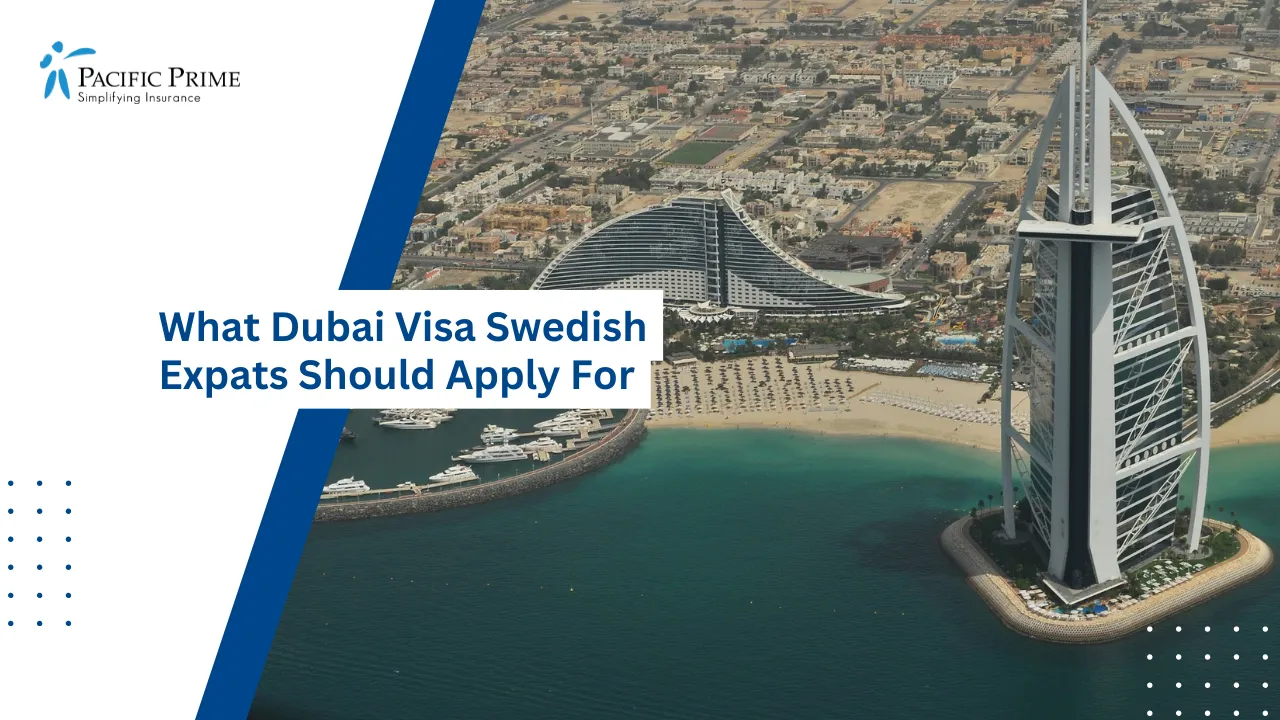
For Swedish citizens planning a move to Dubai, understanding the right visa options is one of the first and most important steps. Employment and family visas generally provide the most flexibility and long-term opportunities, but there are several visa categories depending on your purpose of stay.
Here are the main visa options for Swedish expats moving to or staying in Dubai:
Golden Visa
The Golden Visa is a renewable, long-term visa available for talented foreign professionals, investors, and students. Valid for either five or ten years, it allows Swedes to live, work, or study in Dubai without needing a local sponsor.
Investor Visa
Investor purchasing real estate with a minimum value of AED 750,000 (USD $204,000) can apply for a two-year investor visa, renewable every two years. It requires proof of property ownership and a valid health insurance policy.
Work Visa (inside the UAE)
Expats moving to Dubai for employment can apply for one of three types of work visas: the Green Visa, the Standard Work Visa, or the Domestic Workers Visa. Each is tied to the type of employment and the employer’s eligibility.
Work Visa (outside the UAE)
For those working remotely, the Virtual Work Residence Visa allows expats to legally live in Dubai while working online for an employer outside the UAE.
Retirement Visa
Swedes aged 55 or older may apply for the Retirement Visa, which allows them to live in Dubai for up to five years, provided they meet financial and savings requirements.
Student Visa
Swedish students enrolling at a university or educational institution in Dubai can apply for a Student Visa, usually valid for one year at a time and renewable as long as studies continue.
Residence Visa for Family Members
Swedes who hold a valid UAE residence visa through employment or other means can sponsor family members, such as spouses or children. Specific criteria apply regarding income level and housing.
Cost of Living in Dubai vs. Sweden
The cost of living in Dubai is 13% more expensive than in Stockholm. Differences are most visible in housing rent, but many everyday expenses can also be cheaper.
The average monthly rent for a one-bedroom apartment in Dubai’s downtown area costs around AED 6,398 (USD $1,742) per month, while the same-sized room in Stockholm goes for only about USD $1,220.
Daily expenses in Dubai tend to be lower than in Stockholm. For instance, a lunch menu costs about USD $9.98 in Dubai compared to USD $14.60 in Stockholm. Public transport and taxi fares are also cheaper in Dubai. However, groceries can be more expensive due to the reliance on imported items.
Where to Live in Dubai
Dubai offers expats a wide range of neighborhoods to choose from. Below are five standout areas from our top 15 best places to live in Dubai to help you make an informed decision about where to settle next.
1. Arabian Ranches
Arabian Ranches is a tranquil suburban community featuring villas and townhouses, surrounded by lush greenery and golf courses. This area is ideal for families seeking a peaceful environment with access to quality schools and healthcare facilities.
The community is well-known for its proximity to parks, schools, and medical clinics. The location is also connected via major highways, though public transport options are limited.
The average rental prices in the Arabian Ranches are AED 110,000 or US $29,970 a year for a 2-bedroom villa, and AED 130,000 or US $35,410 a year for a 3-bedroom villa.
2. Jumeirah Village Circle (JVC)
Jumeirah Village Circle (JVC) is a family-friendly neighborhood offering a mix of villas and apartments, designed with green spaces and waterways. The village is ideal for families looking for affordable housing within proximity to key areas, parks, schools, retail outlets, and healthcare centers.
The average rental prices in JVC are AED 28,000 or US $7,600 a year for a studio apartment, and AED 50,000 or US $13,600 a year for a 2-bedroom apartment.
3. Palm Jumeirah
Palm Jumeirah is an emerging community known for its spacious apartments and proximity to attractions like Dubai Miracle Garden. The area is ideal for expats seeking modern living spaces at competitive prices, with the benefit of stunning sea views from the iconic man-made island.
Amenities inside the island include shopping centers, schools, and recreational facilities. The average rental prices in Palm Jumeirah are AED 315,000 or US $85,905 a year for 3-bedroom villas, and AED 450,000 or US $122,550 a year for 5-bedroom villas.
4. Dubai Marina
Dubai Marina is a master-planned community offering a range of villas and apartments, set around an 18-hole championship golf course. This luxurious waterfront community offers a vibrant nightlife with a plethora of dining options.
The average rental prices in Dubai Marina are AED 40,000 or US $10,888 a year for a studio apartment, and AED 80,000 or US $21,776 a year for a 2-bedroom apartment.
5. Mirdif
Mirdif is a well-established residential area known for its community feel and suburban lifestyle. The area is ideal for families and individuals seeking a quieter environment while still having access to all essential urban amenities.
The average rental prices in Mirdif are AED 33,000 or US $9,000 a year for a studio apartment, and AED 60,000 or US $16,400 a year for a 2-bedroom apartment.
Healthcare in Dubai

For Swedish expats moving to Dubai, securing health insurance is one of the most important steps. It’s not only a visa requirement but also essential for protecting yourself against high medical costs and ensuring access to the UAE’s modern, high-quality healthcare facilities.
Expats in Dubai can choose between individual, family, and international health insurance plans. Among these, international plans are especially popular with Swedes, as they provide flexible, portable coverage and the option to add benefits such as dental, vision, or maternity care.
Explore some of the best health insurance providers in Dubai through Pacific Prime to find a plan that suits all your expat needs, all at no extra cost.
Education in Dubai for Swedish Expats’ Children
For Swedish expats moving to Dubai with children, finding the right school is a top priority. The city has a wide range of private international schools offering high-quality education, modern facilities, and multicultural friends. Admission is competitive, so early applications are recommended.
Dubai’s schools offer choices of curricula, including the British system, International Baccalaureate (IB), and American programs. English is the primary language of instruction, with Arabic taught as a mandatory subject. Many schools also provide extra language options such as French or German.
One popular option is GEMS World Academy, offering the full IB continuum and excellent facilities for academics, sports, and the arts. Another strong choice is GEMS Wellington International School, which combines the British curriculum with IB programs to prepare your children for tertiary education.
Sunmarke School is also popular among expats, providing both British and IB pathways and a reputation for innovative teaching. With so many options available, Swedish families can select a school that best fits their child’s needs, curriculum preferences, and long-term academic goals.
Cultural Differences in Dubai
Moving from Sweden to Dubai means adapting to a new culture and lifestyle. Differences in language, clothing, food, weather, and driving can feel significant at first. But once you adjust, life in Dubai can be both enriching and rewarding.
Language
Arabic is the official language in Dubai, but English is widely spoken and understood, especially in business, education, and daily life. With such a large expat community, Swedes should find it relatively easy to communicate and get around without speaking Arabic.
Clothing
While Sweden has a relaxed approach to fashion, Dubai follows a more conservative dress code, especially in public places.
Respectful attire is expected for both men and women. Sleeveless tops and shorts are generally fine, but very short, tight, or revealing clothing is discouraged outside of beaches or nightclubs. Religious sites require modest clothing that covers the shoulders and knees.
Food
For Swedes used to a mix of traditional husmanskost and international cuisines, Dubai offers endless variety. Middle Eastern favorites like shawarma and hummus are widely available, but you’ll also find a wealth of global options—Indian, Japanese, Italian, and more.
While you might miss certain Swedish staples, many international supermarkets stock imported Scandinavian products, and specialty Nordic restaurants can occasionally be found in the global city of Dubai.
Weather
The climate in Dubai is the opposite of Sweden’s long, dark winters and mild summers. In Dubai, winter temperatures average between 15°C and 25°C, while summer heat can climb to 44°C. For Swedes, adjusting to year-round sun and extreme summer heat is one of the biggest lifestyle changes.
Driving
Swedes moving to Dubai should note several differences in road rules and driving culture.
- Side of the road: Driving is on the right-hand side, the same as in Sweden.
- Roundabouts: These function counter-clockwise, similar to Sweden.
- Licenses: Swedish driving licenses can be exchanged for a UAE license without a test.
- Traffic culture: Driving styles here can be more aggressive than in Sweden, so extra caution is advised.
Get the Right Health Insurance for Your Move to Dubai with Pacific Prime
Moving to Dubai is exciting, but preparation is key. By securing individual or family health insurance before you relocate, you can protect yourself and your loved ones from unexpected medical costs while ensuring peace of mind.
Whether you’re a Swedish expat or relocating from the United States, the United Kingdom, or other parts of the world, Pacific Prime provides the latest insights on visas, healthcare, and expat life in Dubai to make your transition easier.
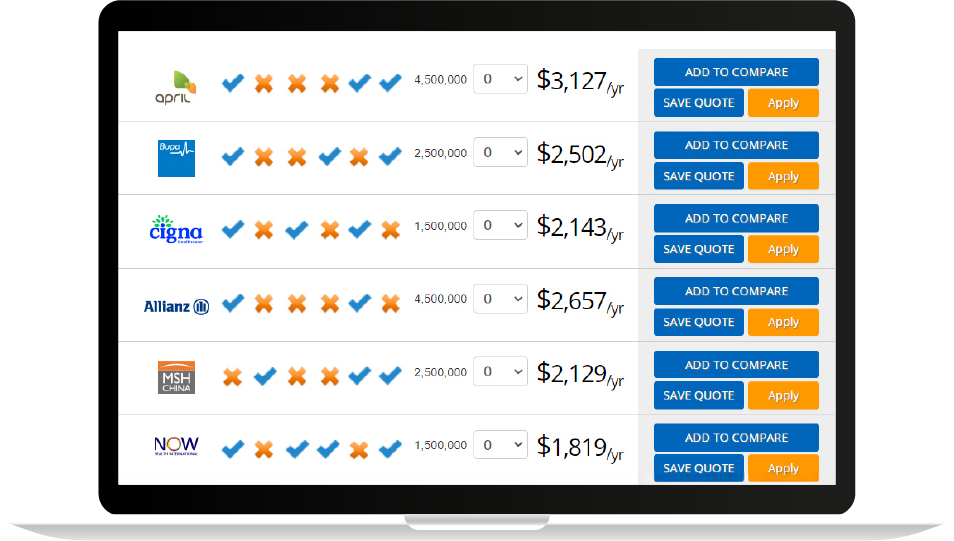
As a trusted global insurance broker, Pacific Prime’s team of experts offers impartial advice and compares premium plans from top international insurers. We help you find the most suitable health insurance plan that matches both your needs and budget.
Contact Pacific Prime today for a one-on-one consultation and a free, no-obligation quote!

With his keen interest in journalism, especially in the healthcare and wellness field, Tawan joins Pacific Prime with the goal of creating content that simplifies health insurance solutions, helping people make informed choices and choose the best options for their needs. Tawan firmly believes that words have power that can shape the world for the better.
In his free time, Tawan loves to pick up his Nintendo Switch and wield his Master Sword in Hyrule’s dungeons. He is also an avid sci-fi books/shows enjoyer. You can spot him hanging around bookstores and game shops all day long!
- Best Health Insurance for Solo Traveling in Thailand – October 22, 2025
- Top Health Insurance in Thailand for Irish Expats: Options and Benefits – October 18, 2025
- Daman Health Insurance for Expats in Dubai: Plans, Benefits, and Options – October 15, 2025



Comments