300x85-png.webp)


 Hong Kong
 Singapore
 China
China Dubai
Dubai Thailand
 United Kingdom
 Mexico
Those moving from Spain to Dubai can expect a vibrant expat community, tax-free income, year-round sunshine, and a high standard of living. At the same time, it’s important to prepare for key differences, from cultural norms to everyday costs.
Discover the world’s top
health insurers.
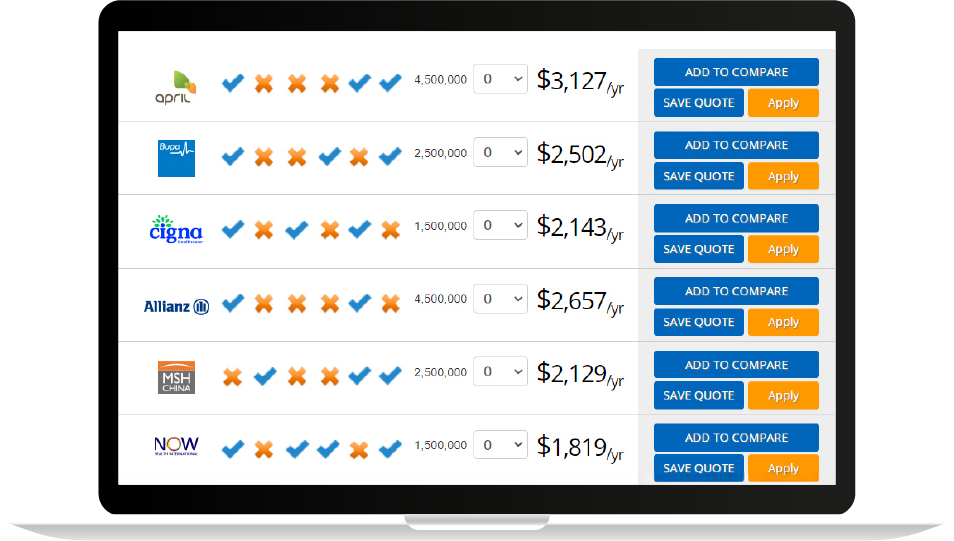
Compare quotes with
a click of the button.
If you’re a Spanish citizen planning the move, this Pacific Prime guide covers everything you need to know: visa applications, cost of living, healthcare and education, the best neighborhoods, and cultural insights.
We’ll also highlight how health insurance is both a legal requirement and an essential safeguard for peace of mind during your time in Dubai.
What Dubai Visa Spanish Expats Should Apply For
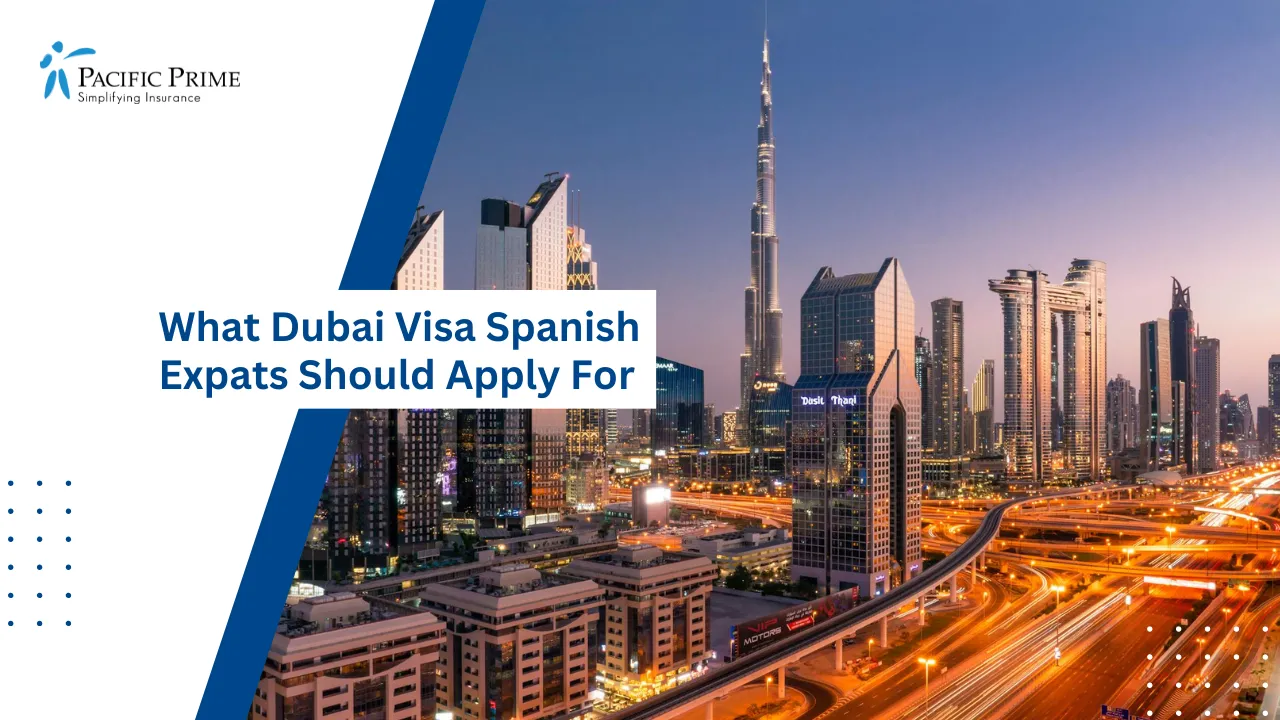
Spanish citizens can enter the UAE and Dubai without a visa for short stays but must obtain a residency visa for long-term living. The type of residency visa depends on your purpose, whether for work, study, investment, retirement, or family reunification.
Common options include the Golden Visa, Work Visa, Virtual Work Visa, Retirement Visa, Student Visa, and Family Visa.
Golden Visa
The UAE Golden Visa is a renewable 5- or 10-year residency permit for exceptional talents such as investors, entrepreneurs, researchers, educators, and outstanding students. It allows holders to live, work, or study in the UAE without the need for a local sponsor.
Golden Visa holders can also sponsor unlimited family members and maintain residency even when spending over six months outside the country.
Work Visa
For Spanish citizens seeking employment, two main work visas are available: the Green Visa and the Standard Employment Visa.
The Green Visa is valid for five years, self-sponsored, and open to freelancers, self-employed professionals, and skilled workers, offering greater flexibility. The Standard Employment Visa, on the other hand, is employer-sponsored, valid for two years, and directly tied to your work contract.
Virtual Work Visa
Dubai’s Virtual Work Program grants one-year residency to foreigners employed by companies based outside the UAE. This visa does not require a local sponsor or employer, but applicants must provide proof of remote work eligibility and earn a minimum monthly salary of AED 12,856 (EUR 2,985).
Retirement Visa
Spanish citizens aged 55 or older may apply for the UAE Retirement Visa, which grants a renewable 5-year residency. To qualify, applicants must meet financial requirements, such as a monthly income of at least AED 20,000 (EUR 4,641) or alternative criteria like property ownership or savings.
Student Visa
The UAE Student Visa is available to those enrolled in a recognized higher education institution for a minimum of one year. Students may be sponsored either by a resident parent or directly by the accredited university or college they attend.
Family Visa
The UAE Family Visa allows Spanish expats to sponsor their spouse, children, and parents to join them in Dubai. The visa duration typically matches the sponsor’s residency permit, provided the sponsor meets the minimum income requirement and can provide suitable accommodation.
The table below summarizes the types of visas Spanish expats can get in Dubai.
| Visa Type | Key Details | Duration |
| Golden Visa | Long-term residency with exclusive benefits issued to outstanding foreign talents, investors, and entrepreneurs | 5 or 10 years |
| Green Visa | Self-sponsored work visa for freelancers, self-employed individuals, and skilled individuals | 5 years |
| Standard Employment Visa | Employer-sponsored visa for employees of a registered company in the UAE | 2 years |
| Virtual Work Visa | Residency visa for remote workers and digital nomads of company located outside the UAE | 1 year |
| Retirement Visa | Long-term visa for retirees with who meet financial criteria | 5 years |
| Student Visa | A student residence visa for those receiving higher education in the UAE | 1 year |
| Family Visa | A visa granted to family members of expats legally living in the UAE | Depends on the sponsor’s residence permit |
Cost of Living in Dubai vs.Spain
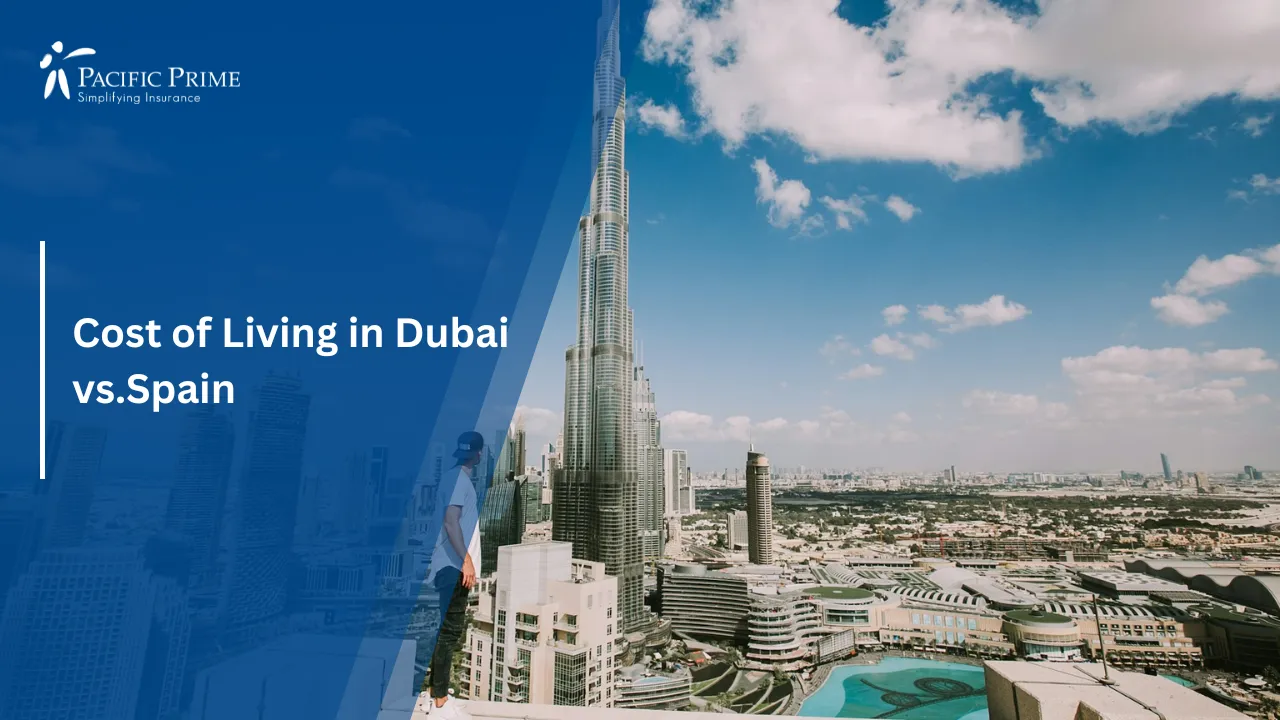
The overall cost of living in Dubai is about 22% higher than in Spain’s major cities like Barcelona and Madrid. For a single person, monthly expenses in Dubai average around AED 4,253 (EUR 987), compared to approximately EUR 725 in Spain.
The main driver of this difference is housing, which is considerably more expensive in Dubai. The table below provides a side-by-side comparison of basic living costs in Dubai and Madrid.
| Expenses | Dubai | Madrid |
| One-bedroom apartment in city center | AED 9,050 (EUR 2,103) | EUR 1,323 |
| Three-bedroom apartment in city center | AED 17,279 (EUR 4,014) | EUR 2,448 |
| Basic utilities (electricity, heating, cooling, water, garbage) for 85 m² apartment | AED 819 (EUR 190) | EUR 172 |
| One-way ticket local transport | AED 6 (EUR 1.39) | EUR 1.50 |
| Meal, inexpensive restaurant | AED 40 (EUR 9.30) | EUR 15 |
Where to Live in Dubai for Spanish Expats
Spanish expats in Dubai can choose from a wide range of neighborhoods, each offering a distinct lifestyle, housing style, and budget. Selecting the right area can make a big difference for your expat experience.
Below is a brief overview of some of the best places to live in Dubai for expats.
1. Downtown Dubai
The heart of the city and home to the iconic Burj Khalifa and Dubai Mall, Downtown Dubai is ideal for those who want to live at the center of it all. It offers luxury apartments, vibrant nightlife, and easy access to business districts, but it comes with higher rental prices.
2. Arabian Ranches
Known for its peaceful suburban vibe, Arabian Ranches is perfect for families. With spacious villas, international schools, parks, and community facilities, it offers a quieter lifestyle while still being within commuting distance of central Dubai.
3. Al Barsha
A more affordable and well-connected option, Al Barsha is popular among expats for its mix of apartments and villas, proximity to Mall of the Emirates, and easy access to metro stations. It’s a practical choice for those seeking convenience without breaking the bank.
4. Dubai Marina
One of Dubai’s most popular waterfront neighborhoods, Dubai Marina is loved for its modern high-rise apartments, lively promenade, and easy access to beaches and restaurants. It’s especially appealing to young professionals and couples who enjoy an active social scene.
5. Dubai Sports City (DSC)
Dubai Sports City (DSC) is a vibrant, sports-focused community that seamlessly blends modern urban living with a passion for athletics and wellness. Ideal for families, the area features parks, playgrounds, and reputable schools, ensuring a balanced lifestyle for people of all ages.
Healthcare in Dubai for Spanish Expats
While Dubai’s healthcare system combines high-quality public and private services, expats typically rely on the private sector for care, using either employer-provided or individually purchased health insurance.
This contrasts with the Spanish healthcare system, which provides near-universal coverage through the Sistema Nacional de Salud (SNS). In Spain, private health insurance is typically purchased only as a supplement to public coverage.
With that said, many Spanish expats in Dubai choose international private health insurance to secure comprehensive coverage, access top-tier medical facilities worldwide, and enjoy peace of mind while living abroad.
Explore our article for A Complete Overview of Health Insurance in Dubai.
Education in Dubai for Spanish Expats’ Children
Dubai offers a wide range of educational options for expat families, including private international schools, public schools, and specialized curricula. Spanish expats often choose international schools that follow British, American, IB (International Baccalaureate), or European curricula.
Key points for Spanish expats:
- Curriculum choice: Schools offering IB or European programs may be easier for Spanish-speaking children to adapt to academically.
- Location and commute: Choosing a school near your home reduces daily travel time, making it easier for children to attend extracurricular activities and after-school programs.
- Language of instruction: Most private schools teach primarily in English, though some offer bilingual or Spanish-language programs.
- Tuition costs: Private schooling can be a significant expense, with annual fees ranging from AED 30,000 (EUR 6,980) to over AED 100,000 (EUR 23,270) depending on the school and grade level.
To help Spanish expat families compare options, the table below highlights some of Dubai’s well-known international schools, including their location, curriculum, and estimated annual tuition fees.
| Schools | Location | Curriculum | Annual Fees |
| GEMS Wellington International School | Al Sufouh | International Baccalaureate (IB) | AED 50,000 to AED 103,399 (EUR 11,630 to EUR 24,050) |
| Dubai British School | Emirates Hills | British | AED 53,000 to AED 79,540 (EUR 12,327 to EUR 18,500) |
| American School of Dubai | Al Barsha | US | AED 60,570 to AED 102,300 (EUR 14,087 to EUR 23,795) |
| Nord Anglia International School | Al Barsha | British | AED 69,625 to AED 105,300 (EUR 16,193 to EUR 24,492) |
| Repton School Dubai | Nad Al Sheba | British | AED 57,175 to AED 102,755 (EUR 13,298 to EUR 23,900) |
| Jumeirah College | Al Safa | British | AED 78,945 to AED 98,680 (EUR 18,361 to EUR 22,950) |
Cultural Differences Spanish Expats Should Know Before Moving to Dubai
While Dubai is one of the most cosmopolitan cities in the Middle East, local customs, traditions, and laws are deeply rooted in Islamic culture and differ significantly from everyday life in Spain.
Religion and Daily Lives
While Islam is the UAE’s official religion, people of all faiths are free to practice their beliefs, especially in Dubai, where the population is highly diverse.
That said, Islamic traditions strongly shape daily life in Dubai. Prayer times are observed throughout the day, Ramadan brings changes to dining and working hours, and modesty in behavior is valued in public spaces
Public holidays are also based on the Islamic lunar calendar, meaning dates shift each year depending on the sighting of the moon, unlike the fixed holidays in Spain.
Dress Code and Modesty
Dubai does not enforce an official dress code, but both expats and tourists are expected to respect local cultural norms. In general, it’s advisable to wear clothing that covers shoulders and knees, particularly in public areas, government buildings, and religious sites.
Additionally, women are required to cover their arms, legs, and hair to enter a mosque in Dubai.
Food and Dining
Dubai’s international food scene makes dining out very common, from casual eateries to upscale restaurants. Compared to Spain’s love of tapas, cafés, and late social meals, Dubai’s lifestyle centers more on restaurants, malls, and private gatherings.
Mealtimes also differ. Spaniards often dine at 9–10 p.m., while in Dubai people usually eat earlier. Alcohol is only served in licensed venues, unlike Spain’s more relaxed approach to drinking.
Driving
Driving is common in Dubai, with well-maintained roads and modern infrastructure. Traffic tends to move faster than in Spain, and rules are strictly enforced. Spanish expats can use an international driving permit temporarily, but long-term residents must obtain a UAE license.
Secure Your Health Insurance in Dubai with Pacific Prime
Health insurance is mandatory for all residents in Dubai, making it an essential part of relocating from Spain. From routine check-ups to emergency care, having the right health insurance gives you peace of mind while living in Dubai.
With over 25 years of experience, Pacific Prime works with a wide range of leading insurance providers to compare plans and ensure you find the right international health insurance that fits your needs and budget.
Need help with your coverage in Dubai? Contact us today for a free plan comparison and expert, unbiased advice.
If you’re not from Spain, you might find our guides for UK expats moving to Dubai, US expats relocating to Dubai, or our general expat guide to Dubai helpful.
- Thailand Digital Nomad Visa 2025: How to Apply – October 20, 2025
- Top Health Insurance in Thailand for Spanish Expats: Options and Benefits – October 20, 2025
- Arab Orient Insurance and GIG Health Insurance for Expats in Dubai – October 15, 2025



Comments