300x85-png.webp)


 Hong Kong
 Singapore
 China
China Dubai
Dubai Thailand
 United Kingdom
 Mexico
Most U.S. expats who move to Bali opt for international health insurance to protect their budget and health. Bali does offer public medical services to qualifying expats, but private insurance offers access to better facilities, more specialists, and higher-quality care.
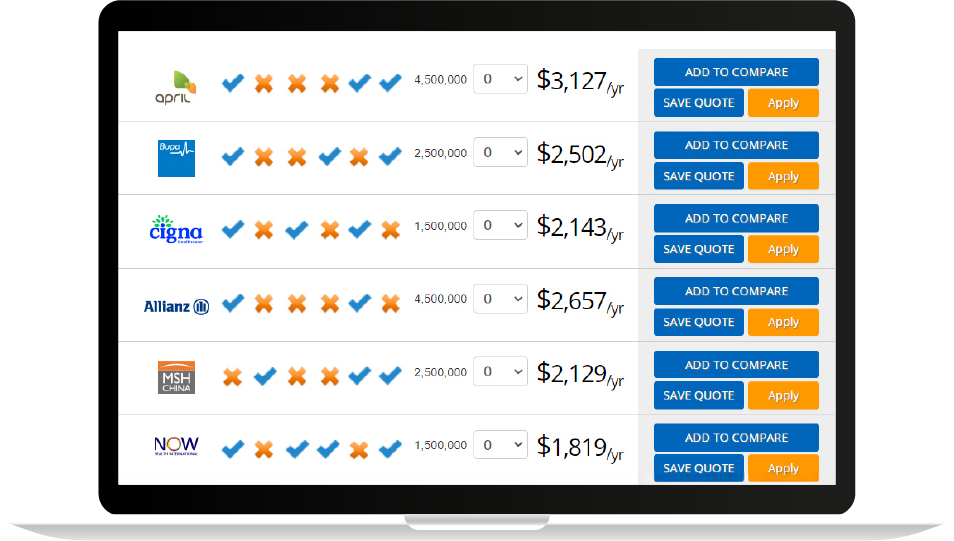
Discover the world’s top
health insurers.
Compare quotes with
a click of the button.
Are you an American expat preparing for a long-term move to Bali? If you’re wondering about Bali’s healthcare system, what medical services are available to you, or what kind of health insurance you should get, this article is for you.
In this Pacific Prime guide for U.S. expats moving to Bali, we’ll not only explain the country’s healthcare system and insurance options but also present the top international health insurance providers for expats in Bali and much more.
If you’re ready to compare plans, go ahead and use our free quote tool. If you’re looking for more tips to make your move to Bali easier, visit our article Moving to Bali from the USA: Your Complete Guide to Visas, Insurance, and Living Abroad.
The Healthcare System in Bali, Explained for U.S. Expats
Bali’s healthcare system includes public and private sectors, with the public sector utilizing hospitals, clinics, and health posts to meet the basic health needs of the population. While public healthcare in Bali varies in quality, private care is generally sophisticated and comprehensive.
Bali’s public healthcare system continues to improve, but challenges to infrastructure and resource allocation continue. Most public facilities are concentrated in urban areas like Denpasar, making comprehensive services sparse in rural locations.
Private healthcare is prevalent in Bali and is generally preferred by expatriates. Bali’s private sector offers higher standards of care, shorter wait times, and more comfortable facilities, whether you’re seeking primary care, specialized treatments, or emergency services.
When medical facilities aren’t able to provide the necessary care for complex cases, patients are evacuated to Singapore or Australia for more advanced treatment. This makes medical evacuation coverage a necessity for U.S. expats settling in Bali.
Costs of Medical Care in Bali for U.S. Expats
Medical costs in Bali are far less than in the U.S., but insurance offers the best buffer for your budget. Basic consultations in public hospitals may cost 100,000–300,000 IDR (USD $5–15), with specialist consultations ranging from about 489,190–815,317 IDR (USD $30–50) in private hospitals.
Prescription medications also tend to be less expensive in Bali, and individuals can often purchase medications at a pharmacy without a prescription.

Alternative Medicine in Bali
Expats moving from the U.S. to Bali should be aware that alternative medicine and natural healthcare are still widely practiced in patient care. Treatments such as Balinese massage, herbal medicine, and yoga are offered at wellness centers and clinics to promote natural healing.
Some of the most common holistic healing options offered in Bali include:
- Traditional Balinese massage
- Herbal medicine (jamu)
- Acupuncture
- Energy healing
- Reflexology
- Yoga therapy
Public Hospitals in Bali
Some of Bali’s top public facilities are Sanglah Hospital and Mangusadah Hospital, in addition to public health centers.
Prof. Ngoerah Central General Hospital (Sanglah Hospital)
Address: Jl. Diponegoro No. 45, Dauh Puri Klod, Denpasar, Bali, Indonesia
Phone number: +62-361-227-911
Prof. Ngoerah Central General Hospital offers services such as inpatient, emergency, cancer, maternity, and central surgery care, as well as traditional services such as acupuncture and prana. This is the largest public hospital in Bali, with 721 beds.
RSUD Badung (Mangusadah Hospital)
Address: Jalan Raya Kapal, Mangupura, Mengwi, Kapal, Kec. Mengwi, Kabupaten Badung, Bali 80351, Indonesia
Phone number: +62 361 9006813
Mangusadah Hospital is a prominent hospital located in the Badung Regency. With 594 beds, it offers a variety of services and is a common treatment site for locals.
Puskesmas Clinics (Public Health Centers)
Address: Jalan Srikandi No. 40A, Benoa Village, South Kuta District, Badung Regency, Bali 80361
Phone number: +62-361-771-957
Pukesmas, or local clinics, serve as the first point of contact for basic public healthcare. At these clinics, patients can receive general primary care and dental care, and some offer more comprehensive care.

Private Hospitals in Bali
Urban and tourist-centric areas such as Denpasar, Kuta, and Ubud offer most of the top private hospitals, such as BaliMed Hospital, BIMC Hospital, Siloam Hospitals, Kasih Ibu Hospitals, and Bali Royal Hospital.
Address: Jl. Mahendradatta No.57X, Denpasar, Bali, Indonesia
Phone number: +62 361 484748
BaliMéd Hospital provides high-quality care across a range of medical specialties, including emergency medicine, obstetrics and gynecology, pediatrics, and general surgery. The hospital is equipped with advanced medical technologies and professional staff. It is a popular choice for expats.
Kuta address: Jl. Bypass Ngurah Rai No. 100X, Kuta 80361
Kuta phone number: +62 361 761 263
BIMC Nusa Dua
Nusa Dua address: Kawasan BTDC Blok D, Nusa Dua 80363
Nusa Dua phone number: +62 361 3000 911
BIMC Ubud
Ubud address: Jl Raya Sanggingan No 21, Kedewatan, Ubud – Gianyar 80561, Bali, Indonesia
Ubud phone number: +62 361 209 1030
Bali International Medical Centre (BIMC) is a renowned private medical facility that is part of the Siloam Group. BIMC is known for its comprehensive services, including cosmetic surgery and dialysis, and for its multilingual staff, which simplifies the experience for U.S. expats.
Address: Jl. Sunset Road No.818, Kuta, Kec. Kuta, Kabupaten Badung, Bali 80361, Indonesia
Phone number: +62-361-779-900
Siloam Hospitals boasts the largest private hospital network in Indonesia, with over 41 hospital branches and 25 clinics. The medical staff at Siloam prioritizes giving international-standard services to patients across many specialties, from cardiology and neurology to urology and orthopedics.
Address: Jl. Teuku Umar No. 120, Denpasar – Bali 80114
Phone Number: (0361)-300-3030
With locations in Denpasar, Kedonganan, Tabanan, and Saba, Kasih Ibu Hospitals offer top-quality care to patients. Services include brain and spine, orthopedic, eye, dialysis, and oncology care, and the facilities include an intensive care, emergency, and outpatient units, and more.
Address: Jl. Tantular No. 6 Renon, Denpasar
Phone number: +62 361 222 588
Bali Royal Hospital (BROS) was founded in 2013 and offers modern medical facilities and advanced technology for a high-quality patient experience. Its spectrum services include, but are not limited to, emergency care, maternity services, and specialized treatments.

Health Insurance Options for U.S. Expats in Bali
U.S. expats living in Bali may qualify for Bali’s public insurance scheme, but private insurance is much more popular because it affords expats access to top facilities and better care.
Public Health Insurance for U.S. Expats in Bali
Indonesia’s national health insurance scheme, known as BPJS Kesehatan, provides affordable healthcare to citizens and residents, including expatriates who are employed in Indonesia.
Under this scheme, expats can receive free or heavily subsidized treatment at public healthcare facilities, with full coverage having no limits on age or pre-existing conditions.
Expats who are employed in Indonesia for at least six months can qualify for BPJS Kesehatan. After six months, your employer must register you and your family for the JKN program. Once this is complete, you should receive a BPJS card, which you’ll use to access public healthcare facilities.
Private Health Insurance for U.S. Expats in Bali
Private facilities in Bali are known for high-quality care and internationally trained staff. They frequently offer state-of-the-art equipment and specialized care. U.S. expats in Bali generally choose private insurance like international health insurance to guarantee access to these institutions.
International health insurance offers portable, customizable care, giving expats access to the best facilities not just in Bali and Indonesia but worldwide. Portability is important for expats in Bali since medical evacuation is otherwise very expensive.
Some of the benefits often included with international health insurance include:
- Worldwide coverage
- Inpatient and day patient care
- Cancer care
- Mental health care
- Emergency ambulatory services and ER care
- Palliative care
- Home nursing
- Lab work and testing
- Prescription medications
- Emergency dental care
- Rehabilitation
Individuals who choose an international insurance plan also have the luxury of picking which benefits they need, including add-on benefits like vision and dental care, and when to renew their policies.

The Best International Health Insurance Plans for U.S. Expats in Bali
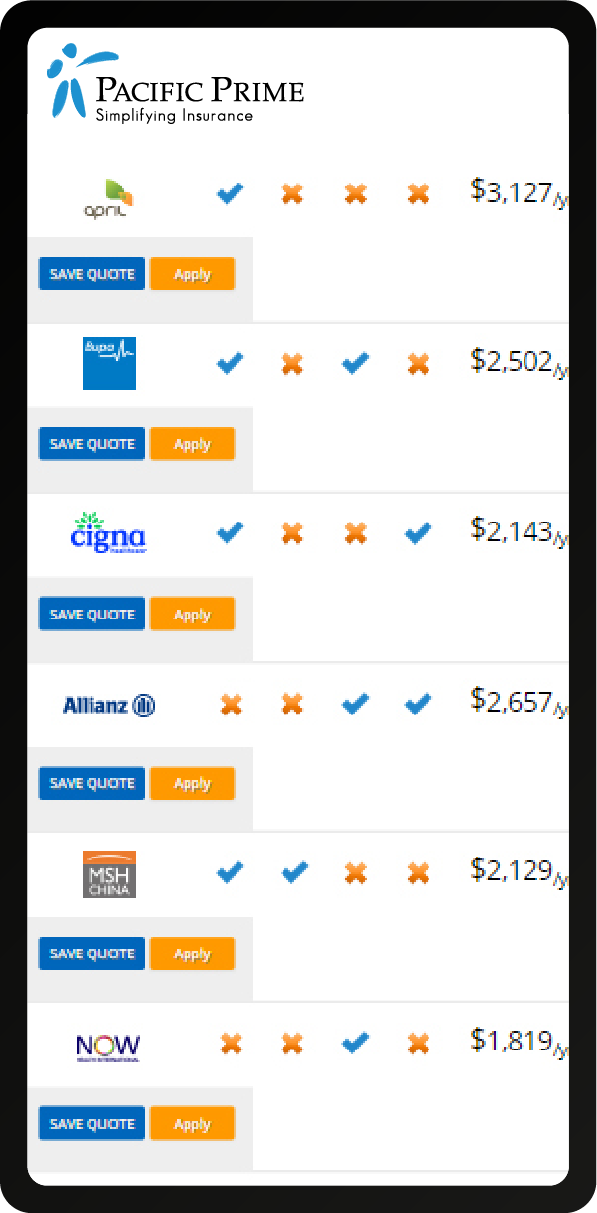
Some of the top international health insurance providers for U.S. expats in Bali include Allianz, AXA, Cigna, GeoBlue, IMG Global, and NOW Health International.
Allianz
Allianz offers expats coverage through three plans: Allianz Care, Allianz Care Plus, and Allianz Care Pro. All three plans cover inpatient and day-care services, oncology treatment, and medical evacuation.
The annual limit per plan is:
- Care plan: USD $2,500,000
- Care Plus plan: USD $4,000,000
- Care Pro plan: USD $5,00,000
AXA
AXA offers five core international plans: their Foundation, Standard, Comprehensive, Prestige, and Prestige Plus plans. These plans come with valuable services such as:
- 24/7 customer support: All AXA members receive 24/7 customer support from an experienced multilingual team.
- Prompt claims process: For claims submitted with the required information, over 80% are paid to the client within 48 hours.
- Second medical opinion: AXA plans offer clients the option of a second medical opinion from highly ranked medical professionals.
- Evacuation and repatriation: Evacuation and repatriation coverage comes standard with AXA health plans.
- Virtual doctor service: Expats who buy an AXA plan have access to virtual consultations with a real doctor day or night, anywhere in the world.
Annual limits of each plan are:
- Foundation plan: USD $160,000
- Standard plan: USD $1,600,000
- Comprehensive plan: USD $2,400,000
- Prestige plan: USD $3,200,000
- Prestige Plus plan: USD $8,00,000
Cigna
Cigna is known for their excellent health insurance plans. Expats looking for coverage inpatient and outpatient services can choose from Cigna’s Silver, Gold, and Platinum plans as well as their Close Care plan.
Expats can also choose to customize their plan with add-on benefits such as:
- Dental and vision benefits
- Evacuation and Crisis Assistance Plus™
- Outpatient services
- Health and wellbeing services
The annual limits for each plan are:
- USD $1,000,000 for the Silver plan
- USD $2,000,000 for the Gold plan
- An unlimited annual maximum for the Platinum plan
- USD $500,000 for the Close Care plan
GeoBlue: International Health Insurance
GeoBlue is a favorite insurance provider for U.S. expats since they’re backed by the Blue Cross Blue Shield reputation. Their Xplorer Essential and Xplorer Premier (Select) plans are ideal for expats making a long-term move to Bali.
Some of the top perks offered under GeoBlue plans include:
- Unlimited annual and lifetime global medical coverage
- Immediate coverage for pre‑existing conditions (with prior U.S. coverage)
- Prescription drug benefits
- Telemedicine
- Direct billing with private hospitals overseas

IMG Global
IMG’s Global Medical Insurance plan comes in four tiers: Bronze, Silver, Gold, and Platinum. Expats value IMG for their customizable worldwide coverage, emergency medical evacuation coverage, and prescription drug coverage across all tiers.
Limits across each tier are:
- Bronze: $1,000,000 per individual
- Silver: $5,000,000 per individual
- Gold: $5,000,000 per individual
- Platinum: $8,000,000 per individual
NOW Health International: Health Insurance
NOW Health offers their WorldCare plan with four tiers of coverage and their SimpleCare plan with three tiers of coverage.
The SimpleCare plan was designed to allow expats to save on their premium costs. Note that expats cannot receive elective coverage in the United States under the SimpleCare plan. Under the SimpleCare plan, annual limits are:
- USD $1,000,000 for the SimpleCare Core tier
- USD $1,500,000 for the SimpleCare 100 tier
- USD $1,500,000 for the SimpleCare 250 tier
The WorldCare plans from NOW Health were designed with comprehensive care in mind. Under the WorldCare plan, annual limits are:
- USD $3,000,000 for the Essential tier
- USD $3,500,000 for the Advance tier
- USD $4,000,000 for the Excel tier
- USD $4,500,000 for the Apex tier
What U.S. Expats Should Consider When Choosing Health Insurance in Bali
When choosing private health insurance plans for Bali, U.S. expats should consider direct billing options, specifics of their health and budget, and more. We’ve listed some of the main factors to keep in mind below:
- Your Budget: Your health history, desired coverage, extra benefits, and even age and gender all contribute toward the cost of your plan. When breaking down your budget for your policy, remember the following costs:
- Premiums are the amount you pay each month for health insurance.
- Deductibles are the amount you pay before your insurance covers costs.
- Copays are the amount you pay for medical visits, like doctor’s visits.
- Coinsurance is the coverage percentage you pay once you have met your deductible.
- The out-of-pocket maximum is the total maximum amount you may pay for health care within a term.
- Plan Limits: Each plan offers differing coverage limits, meaning the maximum amount the insurer will pay for medical expenses.
- Range of Benefits: Expats should evaluate plans that meet their unique needs, especially if they require specialty services, such as maternity care, mental health services, and prescription medications.
- Exclusions: Many plans do not cover pre-existing conditions, specific treatments, or alternative therapies. If you need treatment for excluded care, you will have to cover the costs out of pocket.
- Direct Billing Options: Some providers provide direct billing, which allows expats to receive treatment upfront before payment, alleviating financial stress and streamlining the medical process.
- Adventure Support: Many individuals moving to Bali have lifestyles that include many outdoor excursions, so verify that your chosen policy covers your chosen activities, from hiking to surfing. Ensure the insurer also provides 24/7 emergency assistance for urgent medical emergencies.


Safety Tips for U.S. Expats in Bali
U.S. expats who move to Bali can make the most of their move by avoiding common health emergencies, by securing insurance that includes medical evacuation coverage, and by following general safety guidelines. Let’s cover each of these in more depth below.
Avoid Common Health Risks in Bali
- Dengue Fever: This mosquito-borne disease can cause high fevers, severe headaches, nausea and vomiting, and a rash. Avoid dengue by using bug spray, wearing long, lightweight, loose clothing, and staying inside during dusk and other times when mosquitoes are more active.
- Surfing and Diving Injuries: Expats who love to surf and enjoy the ocean often choose Bali for long-term relocation, but they should be careful to avoid reef cuts, sprains, or other water-related injuries. Warm up properly, wear appropriate gear, and learn about Bali’s ocean conditions.
- Dehydration and Heatstroke: Bali’s tropical climate may be unlike many areas of the U.S. from where expats are moving. Drink water regularly, wear appropriate clothing and sunscreen, and seek shade and rest to avoid dehydration and heatstroke.
Secure Medical Evacuation in Bali
Medevac insurance covers the cost of transporting you from Bali to a better medical facility, often in Singapore or Australia, if local care is insufficient. Without insurance, this can cost USD $25,000–$100,000, or more.
Many of Bali’s medical facilities are capable of treating most medical cases. However, complex cases, especially for patients who are relying only on public services, may require more advanced treatment.
Considering Bali’s geographical location, it’s also wise for U.S. expatriates to secure a comprehensive international insurance plan that covers medical evacuation to their home country or a nearby country with advanced medical facilities.
Follow General Safety Guidelines
Bali is considered a safe place to travel and live, but other areas of Indonesia, especially Central Papua and Highland Papua, are targets for terrorist activity. If you plan to visit other areas of Indonesia, ensure that you:
- Monitor media for news of potential terrorist activity
- Check weather channels to be prepared against natural disasters
- Secure any personal belongings and avoid wearing flashy items that could attract pickpockets
- Drink responsibly while enjoying nightlife, and secure a safe ride home if necessary
Frequently Asked Questions
Are healthcare services in Bali good?
Private hospitals offer the best care in Bali, with modern equipment, English-speaking staff, and shorter wait times. They are prepared to treat infections, perform minor surgery, and more. Public hospitals, however, function at a lower standard.
Do U.S. expats need health insurance in Bali?
Expats in Bali can qualify for public insurance after six months if they are employed by an Indonesian employer. That means expats need private health insurance for at least the first six months of their stay, though most prefer to keep their private plan for better access to high-quality care.
What health insurance is best for U.S. expats in Bali?
International health insurance that includes medical evacuation coverage is the best option for expats living in Bali. It guarantees access to private hospitals and clinics that have English-speaking staff, state-of-the-art equipment, shorter wait times, and specialized services in Bali and abroad.
Conclusion
U.S. citizens moving to Bali should now have a good idea what Bali’s healthcare looks like and know the best options to cover their medical needs. Consult an insurance expert online to help you compare the best type of insurance plan for your needs.
Before your big move, also consider reading our articles:
- International Insurance vs. Local Indonesian Plans: Which is Better for U.S. Expats?
- Emergency Medical Services in Bali: What U.S. Citizens Should Expect
- Living in Bali as an American
- Bali vs. US Cost of Living: Full Comparison for Expats

Serena earned her Bachelor’s Degree in Psychology from the University of British Columbia, Canada. As such, she is an avid advocate of mental health and is fascinated by all things psychology (especially if it’s cognitive psychology!).
Her previous work experience includes teaching toddlers to read, writing for a travel/wellness online magazine, and then a business news blog. These combined experiences give her the skills and insights she needs to explain complex ideas in a succinct way. Being the daughter of an immigrant and a traveler herself, she is passionate about educating expats and digital nomads on travel and international health insurance.
- How to Compare Travel Insurance Plans the Smart Way – October 21, 2025
- Best Hospitals in the UAE: Top Picks in Dubai and Abu Dhabi – October 21, 2025
- How Much is a Doctor Visit in Dubai Without Insurance? – October 21, 2025



Comments