300x85-png.webp)


 Hong Kong
 Singapore
 China
China Dubai
Dubai Thailand
 United Kingdom
 Mexico
Navigating health insurance in India can be tricky for expats and foreigners due to the country’s diverse healthcare landscape and varying insurance options. Understanding how to secure the right coverage is key to accessing quality care without unexpected costs.
Discover the world’s top
health insurers.
Compare quotes with
a click of the button.
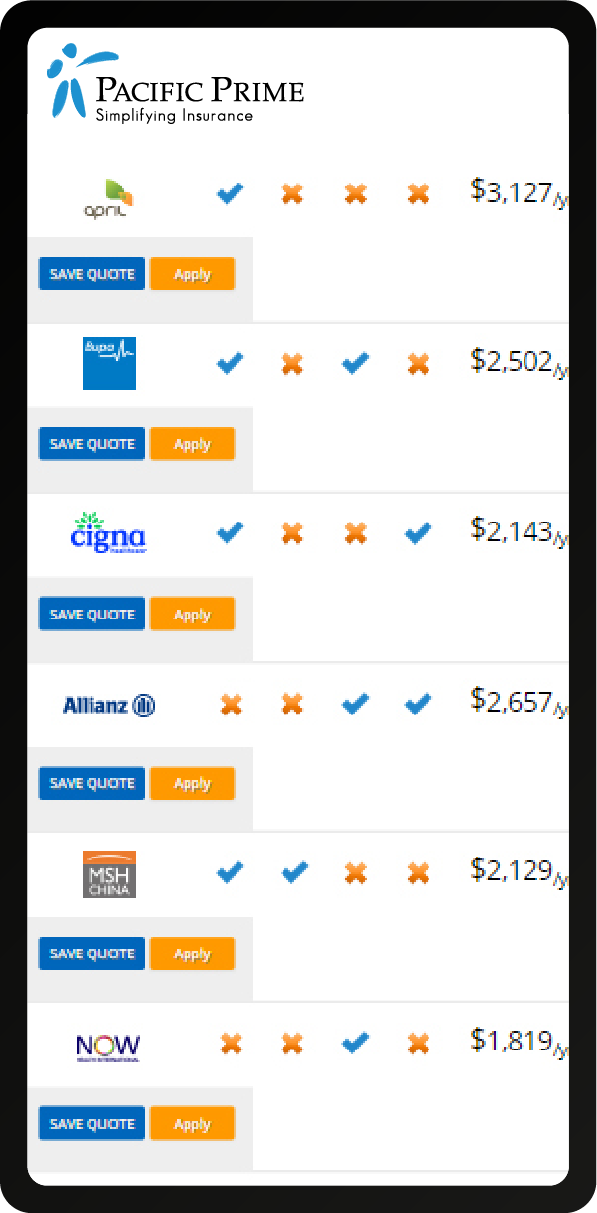
This complete Pacific Prime guide will help you navigate health insurance in India, explain the types of international health insurance plans available, highlight key considerations for expats, and show how Pacific Prime can simplify finding a policy that fits your unique needs.
The Healthcare System in India: A Dual Structure
India offers healthcare through both the public and private sectors. While public hospitals provide basic services at low cost, private facilities are preferred for speed, quality, and advanced treatment options. However, the latter comes with higher costs.
Public hospitals may experience long wait times, staff shortages, and limited infrastructure. In contrast, private hospitals in metro areas like Mumbai, Delhi, and Bangalore offer modern amenities and internationally accredited services at a fraction of Western prices.
Expats often choose private hospitals for faster and more efficient care. However, treatment expenses in the private sector can add up quickly, making health insurance an essential part of life for foreigners residing in India.
Is Health Insurance Mandatory for Expats in India?
While health insurance is not legally mandatory for foreigners in India, it is strongly recommended. Without coverage, expats may risk facing high medical bills for emergencies, hospitalizations, or routine care, especially in private hospitals.
Moreover, some long-term visa types—such as employment visas or student visas—may require proof of insurance for application or renewal. Many international schools and employers also make health insurance a condition of employment or enrollment.
Given the unpredictability of health issues and the costs involved in private care, obtaining health insurance in India is a practical necessity rather than a legal requirement.

Types of Health Insurance Options for Expats in India
Expats have two main choices, which are local Indian health insurance plans or international health insurance plans. Each has its pros and cons depending on your lifestyle, travel frequency, and healthcare preferences.
1. Local Indian Health Insurance
Local health insurance plans are offered by Indian insurers and are typically more affordable. They cover treatments within India and may include access to a wide hospital network, cashless services, and tax benefits under Indian law.
However, local plans usually have limitations, such as exclusions for pre-existing conditions, age limits, sub-limits on room rent or treatments, and no overseas coverage. Customer service may also vary by provider and region.
2. International Health Insurance Plans
International health insurance plans are designed specifically for expats and global citizens. They offer coverage both in India and abroad, ideal for frequent travelers or those planning to visit their home country regularly.
These plans offer comprehensive benefits, including evacuation, maternity care, dental, and wellness coverage. Although premiums are higher, the service, flexibility, and global coverage they offer make them attractive to expats and digital nomads alike.
With deep expertise in expat health insurance and strong partnerships with leading global insurers, Pacific Prime can help you navigate, compare, and select international health insurance plans that meet your unique needs.
Whether you’re relocating to India, splitting your time across countries, or planning to travel extensively, our expert advisors can match you with a plan that ensures seamless healthcare access both locally and globally.
Moreover, Pacific Prime supports you beyond just choosing a plan. We offer multilingual customer service, ongoing claims support, and policy management to make your health coverage experience as smooth as possible.

Trusted International Health Insurance Providers for Expats in India
Pacific Prime collaborates with a selection of leading international health insurance companies, ensuring that expats in India have access to comprehensive and reliable coverage options. These providers are renowned for their global networks, customizable plans, and expat-focused benefits:
- Allianz Care: Offers extensive global coverage with a vast network of medical providers, catering to diverse healthcare needs.
- Cigna Global: Provides flexible plans with worldwide coverage, known for their excellent customer service and comprehensive benefits.
- Bupa Global: Delivers high-quality international health insurance with a focus on preventive care and wellness services.
- AXA Global Healthcare: Combines global expertise with local knowledge to offer tailored health insurance solutions for expats.
- IMG (International Medical Group): Specializes in international medical insurance, offering a range of plans suitable for individuals and families.
- William Russell: Known for their personalized service and straightforward plans, catering specifically to expatriates.
- GeoBlue: Provides U.S.-style health insurance coverage for globally mobile individuals, with a strong emphasis on quality care.
- VUMI (VIP Universal Medical Insurance Group): Offers premium international health insurance plans with a focus on high-net-worth individuals.
- DavidShield: Delivers innovative insurance solutions with a global reach, emphasizing flexibility and customer satisfaction.
Pacific Prime partners with top insurers to help expats in India find health plans suited to their needs. Whether you want full coverage, flexibility, or tailored benefits, our expert advisors are here to guide you every step of the way.
For more detailed information on these providers and to compare plans in India, click here.

Key Features to Look for in a Health Insurance Plan
When evaluating health insurance in India, expats should consider several factors beyond just premiums. Look for the following features to ensure comprehensive protection that suits your needs:
- Cashless Network Access: Ensure the insurer has a wide cashless hospital network across India, especially in cities you reside in or travel to frequently.
- Pre-existing Conditions Coverage: Many policies exclude pre-existing conditions for the first few years or impose waiting periods. Choose a plan that is upfront and fair in this area.
- Inpatient and Outpatient Coverage: Some plans only cover hospitalization. Look for plans that also include outpatient care, diagnostics, and specialist consultations.
- Evacuation and Repatriation: This is essential if you live in remote areas or wish to return to your home country for critical treatments.
- Customer Support in English: Smooth communication during medical emergencies is critical. Opt for insurers known for 24/7 English-speaking support.
How Much Does Health Insurance Cost in India?
The cost of health insurance in India is generally lower compared to Western countries, thanks to lower medical costs and competitive insurance markets. However, the price varies based on:
- Age and health of the applicant
- Type of coverage selected
- Sum insured or benefit limits
- Local vs. international provider
- Add-ons like maternity, dental, or wellness benefits
A local health insurance plan in India costs around INR 10,000–30,000 (USD 120–360) annually for healthy individuals. Comprehensive international plans range from INR 125,000–415,000 (USD 1,500 to 5,000), depending on coverage and benefits.

Top Destinations in India with Quality Healthcare

India offers world-class private hospitals in major cities, with internationally trained doctors and affordable care. Expats can access reliable treatment across key medical hubs. Here’s a look at the top cities and their most reputable hospitals for foreign residents:
Mumbai
- Kokilaben Dhirubhai Ambani Hospital: A leading multispecialty facility known for advanced diagnostics, international standards, and patient care.
- Lilavati Hospital & Research Centre: Offers top-notch services across departments, with a strong reputation in cardiology, oncology, and general medicine.
Delhi
- Medanta – The Medicity: A world-class super-specialty hospital in Gurugram, offering expertise in cardiac, neuro, and transplant surgeries.
- Max Healthcare: Operates a network of high-quality hospitals with strong specialties in oncology, orthopedics, and internal medicine.
- Fortis Healthcare: One of India’s largest private hospital chains, well-regarded for multi-specialty and critical care services.
Bangalore
- Narayana Health: Known for affordability and excellence in cardiac surgery, organ transplants, and cancer care.
- Apollo Hospitals, Bangalore: A premier medical center with advanced infrastructure and a full range of medical services.
Chennai
- Apollo Hospitals, Chennai: A flagship hospital offering cutting-edge treatments and globally recognized specialties.
- MIOT International: Focused on orthopedics, trauma, neurology, and minimally invasive surgeries, with international accreditations.
Hyderabad
- Yashoda Hospitals: Known for its comprehensive care across specialties like oncology, cardiology, and gastroenterology.
- Continental Hospitals: Offers international-standard facilities with a strong focus on patient safety and multi-disciplinary care.
Pune
- Ruby Hall Clinic: One of the oldest private hospitals in Pune, offering a wide array of services including emergency, oncology, and cardiac care.
- Jehangir Hospital: A popular choice for expats due to its patient-friendly services, diagnostic accuracy, and general medicine excellence.
These cities often attract medical tourists from the Middle East, Africa, and Southeast Asia, further affirming their reputation for affordable yet high-quality care.

Can Expats Use Public Healthcare in India?
Yes, foreigners are allowed to use public healthcare in India. However, it is rarely the first choice for expats due to quality and accessibility concerns. Public hospitals may lack privacy, modern equipment, or English-speaking staff.
That said, in emergencies or rural areas where private care is unavailable, public facilities may serve as a backup. Expats in India for volunteering or social work may also opt for public healthcare to reduce costs.
Still, most expats prefer private care and therefore require an international health insurance plan that grants them access to quality private hospitals without financial strain.
Medical Evacuation and Repatriation in India
India has well-equipped hospitals in major cities, but in remote regions, access may be limited. Medical evacuation can be crucial in such scenarios. International plans often include evacuation and repatriation benefits, which local plans may not.
Evacuation ensures transport to the nearest appropriate facility, while repatriation covers return to your home country for further treatment. These features are especially useful for expats working in rural areas, national parks, or mountainous regions like Ladakh.
If your lifestyle includes travel to remote parts of India, ensure your policy offers comprehensive evacuation coverage with coordination services.
What Documents Are Required to Purchase Insurance?
To purchase a health insurance policy in India, expats will generally need:
- A valid passport with a visa
- Proof of address in India
- Completed application forms
- Medical history or a health check-up (for certain ages or conditions)
- PAN card (for tax purposes, in some cases)
International insurers may have more relaxed documentation requirements, but may require payment via international credit cards or foreign bank accounts.
Waiting Periods and Exclusions
Indian health insurance plans often come with waiting periods for:
- Pre-existing conditions (2 to 4 years)
- Maternity coverage (9 months to 2 years)
- Certain surgeries or specific ailments (1 to 2 years)
Moreover, most policies do not cover cosmetic procedures, injuries from risky activities, self-inflicted harm, or treatment outside India (in the case of local plans). Reviewing policy exclusions is vital before committing.
Secure Your Health Insurance in India with Pacific Prime!
Navigating health insurance in India can be complex for expats and foreigners due to the variety of plans and healthcare providers available. Having the right coverage ensures you access quality medical care without unexpected costs or hassles.
Pacific Prime is here to simplify that process. Our expert advisors provide unbiased guidance to help you find the best international health insurance solution tailored to your lifestyle and budget.
With 25 years of experience serving expats worldwide, Pacific Prime offers personalized support—from comparing multiple insurers to assisting with claims—so you can focus on settling into your new life in India with peace of mind.
Contact us today for a free, no-obligation plan comparison tailored specifically for expats in India!

After obtaining his Bachelor’s Degree in Social Sciences, International Relations from Mahidol University International College, Veerabhatr has forged his career as a content writer in the travel, lifestyle, and real estate industries, writing in both English and Thai. He now continues to hone his skills as a writer at Pacific Prime, looking to engage and educate the audience by simplifying insurance.
Writer by day, and a DJ by night, Veerabhatr is a staunch music lover, and listens to all spectrums of genres available. He also loves to drink beer (moderately), eat all types of food, go to the beach, and learn about different cultures across the globe. He is also a die-hard fan of football and motorsports.
- How Much Salary Do You Need to Live Comfortably in Thailand? – October 22, 2025
- Guide on Moving to Thailand from Canada as An Expat – October 20, 2025
- Top Health Insurance in Thailand for Russian Expats: Options and Benefits – October 16, 2025



Comments