300x85-png.webp)


 Hong Kong
 Singapore
 China
China Dubai
Dubai Thailand
 United Kingdom
 Mexico
Health insurers calculate the price of international health insurance premiums based on a range of factors, including—but not limited to—medical inflation, healthcare utilization, the cost of prescription drugs, and policyholder age.
Discover the world’s top
health insurers.
Compare quotes with
a click of the button.
Are you curious why your healthcare premium went up? Are you trying to find ways to prevent your premium from becoming too expensive?
This article by Pacific Prime explains each of the factors that influence international health insurance costs and provides essential tips on how you can reduce your health insurance premiums, or, at the very least, prevent them from going up even higher.
Factors That Impact Your International Health Insurance Premiums

Healthcare costs and use, inflation, policyholder age, and prescription cost all contribute toward your international health insurance cost. While hearing from your health insurer that your premiums are going up is not ideal, it’s standard practice. Let’s address these top factors:
Healthcare Costs and Medical Inflation
International healthcare costs include the fees for medical care and services provided by your doctors, nurses, and other healthcare professionals. The cost of X-rays, MRIs, and other diagnostic scans and tests are likely covered up to the limit provided in the country of residence..
| Medical Inflation Trend: Every year, it’s guaranteed that healthcare costs will increase, as new medical health practices are studied, trialed, and implemented, as well as the adoption of sophisticated technology for better healthcare. |
Healthcare Utilization
Healthcare utilization, also known as Medical Loss Ratio (MLR), is one of many indicators that health insurance companies use to monitor or measure their operational status and level of cash flow. When utilization is high, the premiums for policyholders rise to cover any shortfall for the period.
Age of the Policyholder
As we age, we are more prone to having accidents or developing long-term chronic illnesses or conditions, such as cardiovascular diseases and cancer, which are all costly to treat. Policyholders are thus more likely to make a claim as they age, which is why premiums typically increase for them.
- Applying Age Brackets and Limits to Calculate Premiums: In general, all health insurers review age as a factor, but they each do so differently. Some apply age bands such as 50–60 or 60–70 to categorize clients, while others apply age limits like up to 65.
Even if you have not made any claims yourself, your premium can increase simply because your age bracket changes. Please note that the decisions made by insurers, such as how they make age distinctions, can change with time, as do their different terms and conditions.
Cost of Prescription Drugs
Medically prescribed drugs give patients life-saving treatment for certain health conditions, from mental illness to heart disease to diabetes. The overall cost of these medications plus the cost of manufacturing, logistics, and storage can also vary across countries.
These extensive costs can add up and are passed on to patients when they are charged for medically prescribed drugs. Consequently, this is reflected in the annual premiums.
How to Reduce Your International Health Insurance Policy Premiums
To save on health insurance, get insured while you are young, choose a plan with suitable benefits, opt for deductibles, consider inpatient-only coverage, ask about family discounts, buy a top-up policy, and compare plans with a broker.
Get Insured While You’re Young
Younger individuals pay lower premiums since they generally develop fewer chronic illnesses and have healthier lifestyles, making them less risky to insure. If you wait too long, insurers may also label conditions as pre-existing and exclude them from coverage.
Select a Plan with the Right Benefit Limits
Benefit limits determine how much insurers will cover. Consulting an expert ensures you choose appropriate coverage based on your age and health. These limits apply to total coverage, specific treatments, and lifetime payouts, helping you avoid underinsurance or excessive premiums.
Opt for Deductibles
Deductibles are the amount you must pay before insurance kicks in. While deductibles lower premiums, the right deductible amount depends on your budget and needs. This helps to balance the costs, which is particularly helpful if you’re in a tight spot.
Consider an Inpatient-Only Plan
This cost-effective option covers only hospitalization-related expenses, excluding outpatient care. It suits those who need emergency protection but can handle minor medical costs separately.
Ask About Family Discounts
Many insurers offer discounts for covering multiple family members under one policy, as it reduces costs compared to individual plans. Family policies are more affordable than separate policies, making this an important consideration.
Buy a Top-Up Plan
Top-up plans supplement your base coverage by covering excess costs beyond a certain threshold. They enhance protection without requiring a full policy upgrade. This helps to cover high medical expenses beyond standard policy limits.
Compare Health Insurance Plans
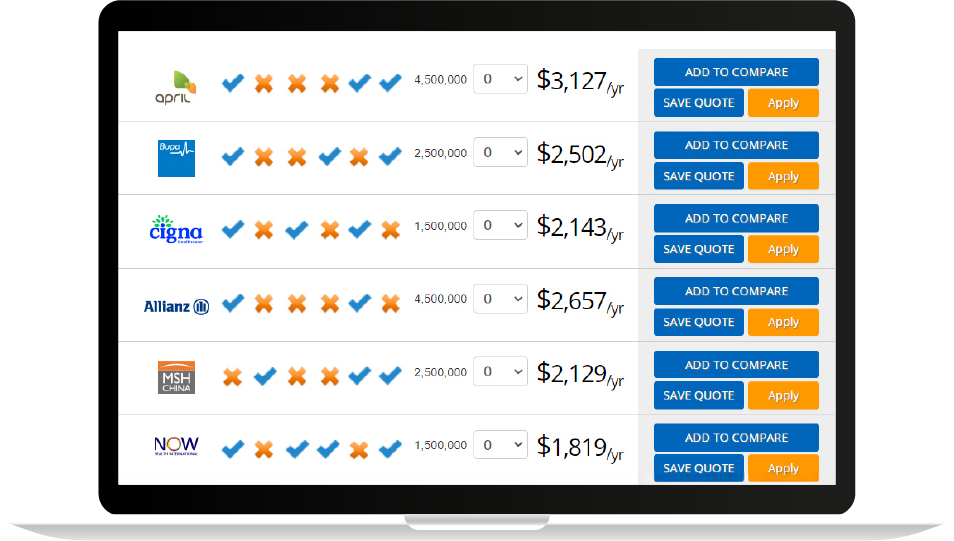
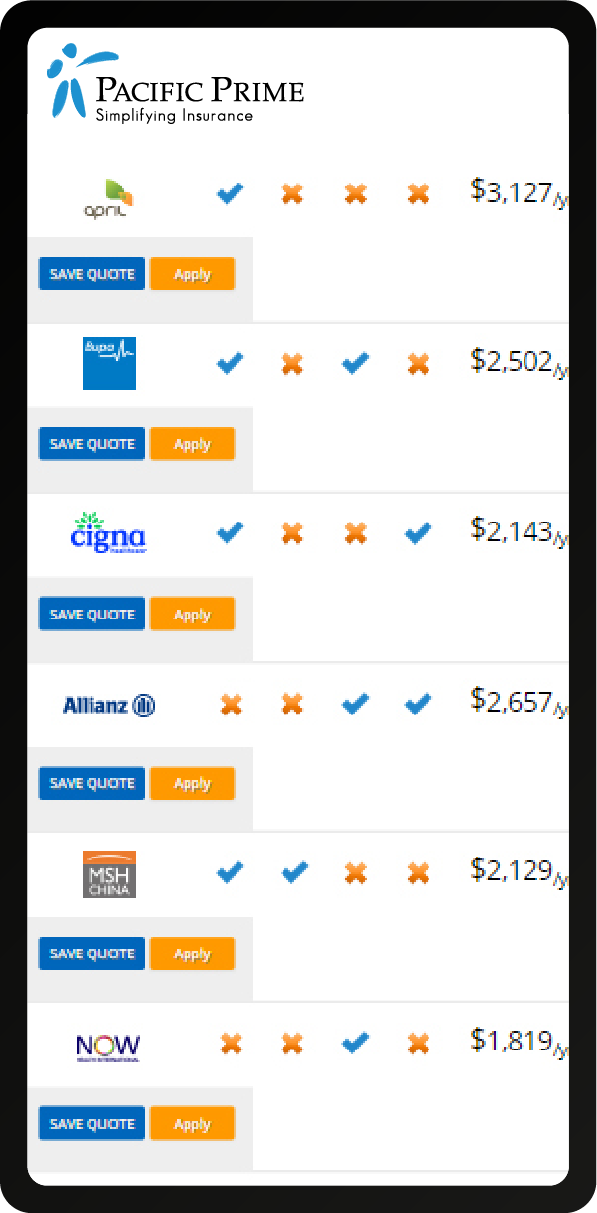
Consulting a broker ensures you select a plan balancing affordability and coverage. Choosing a policy purely for low premiums may leave you underinsured when you need it most. To compare plans easily, you can also use our free quote tool.
Frequently Asked Questions
Why do international health insurance premiums increase each year?
Premiums rise annually due to factors like medical inflation, increased healthcare utilization, higher prescription drug costs, and policyholder age. As medical advancements and new technologies drive up healthcare costs, insurers adjust premiums to cover these expenses.
How does my age affect my health insurance premium?
As you age, the likelihood of needing medical treatment increases, leading insurers to categorize policyholders into age brackets with higher premiums. Even without claims, your premium can rise simply because you move into a higher-risk category.
What are some ways to reduce my health insurance costs?
You can lower costs by getting insured early, choosing appropriate benefit limits, opting for deductibles, considering inpatient-only coverage, inquiring about family discounts, purchasing a top-up plan, and comparing policies through a broker.
Conclusion
For expats, making the most of your health insurance is important. Equally important is matching your budget with the right benefits, making it affordable and convenient for you to access healthcare during your stay abroad.
Pacific Prime’s team of specialists is available by phone or email to discuss all of your health insurance options, whether you are looking for a local plan or one that covers you internationally.
If you would like to speak with an expert advisor or get a free, no-obligation quote or to compare plans, please contact us today.

Upon graduating from Mahidol University International College’s International Relations program, he spent his career in marketing and business development, working for an international subcontractor, a marketing research firm, an international news agency, a software development company, and a creative agency. His journey now continues at Pacific Prime, where he hopes to make an impact by simplifying insurance and writing a gargantuan amount of SEO articles to draw in billions of leads.
In his free time, Piyanat is an avid martial artist and musician, spending most of his time at boxing gyms in Nakhon Pathom and music studios with his friends in the music industry.
- Chiang Mai Travel Insurance: A Comparison Of The Top Providers – August 22, 2025
- Last-Minute Travel Insurance: How to Get Covered After Departure – August 18, 2025
- Childbirth Coverage in Singapore: Maternity Health Insurance Explained – August 18, 2025



Comments