300x85-png.webp)


 Hong Kong
 Singapore
 China
China Dubai
Dubai Thailand
 United Kingdom
 Mexico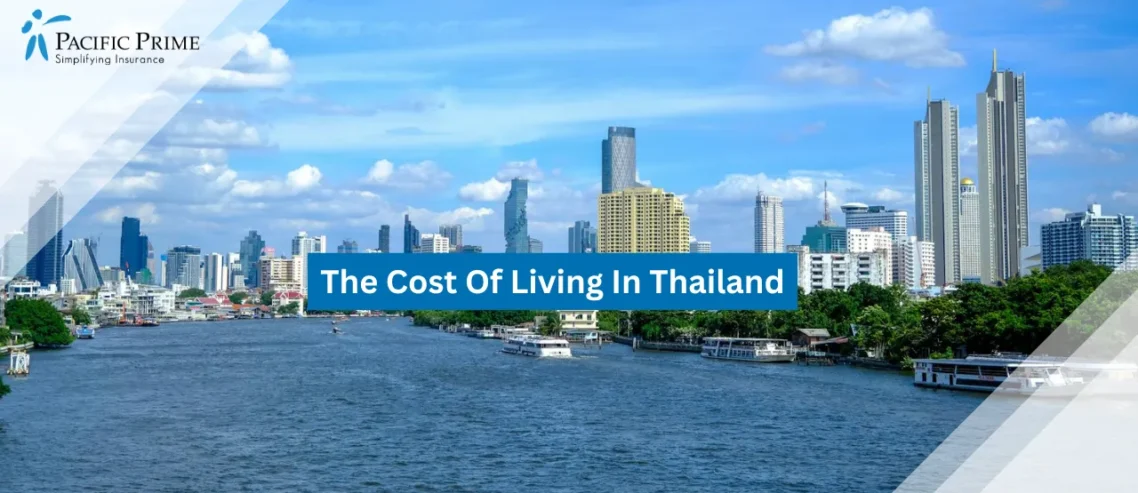
The cost of living in Thailand varies depending on the region. Bangkok, the capital city, is generally more expensive than other areas due to the strong demand for goods and services. That said, even in Bangkok, the cost of living is relatively lower than in many Western countries.
Discover the world’s top
health insurers.
Compare quotes with
a click of the button.
For those looking for a more affordable option, Chiang Mai, Thailand’s second-largest city, comes in with a lower cost of living while still keeping the city lifestyle similar to Bangkok but with more proximity to nature.
In this Pacific Prime article, we explore the cost of living in two of Thailand’s biggest cities, Bangkok and Chiang Mai—from housing, food, transport, and healthcare to education, utilities, and entertainment—and why getting international health insurance in Thailand is crucial for expats.
Cost of Living in Bangkok
The cost of living in Bangkok for a single person averages around USD $600–700 per month, excluding rent. While this is higher than in other parts of Thailand, it remains relatively affordable compared to Western countries and other East Asian nations such as Japan.
Here’s a breakdown of major costs of living for expats to consider when planning a move to Thailand.
Housing Costs in Bangkok: Renting & Buying as an Expat
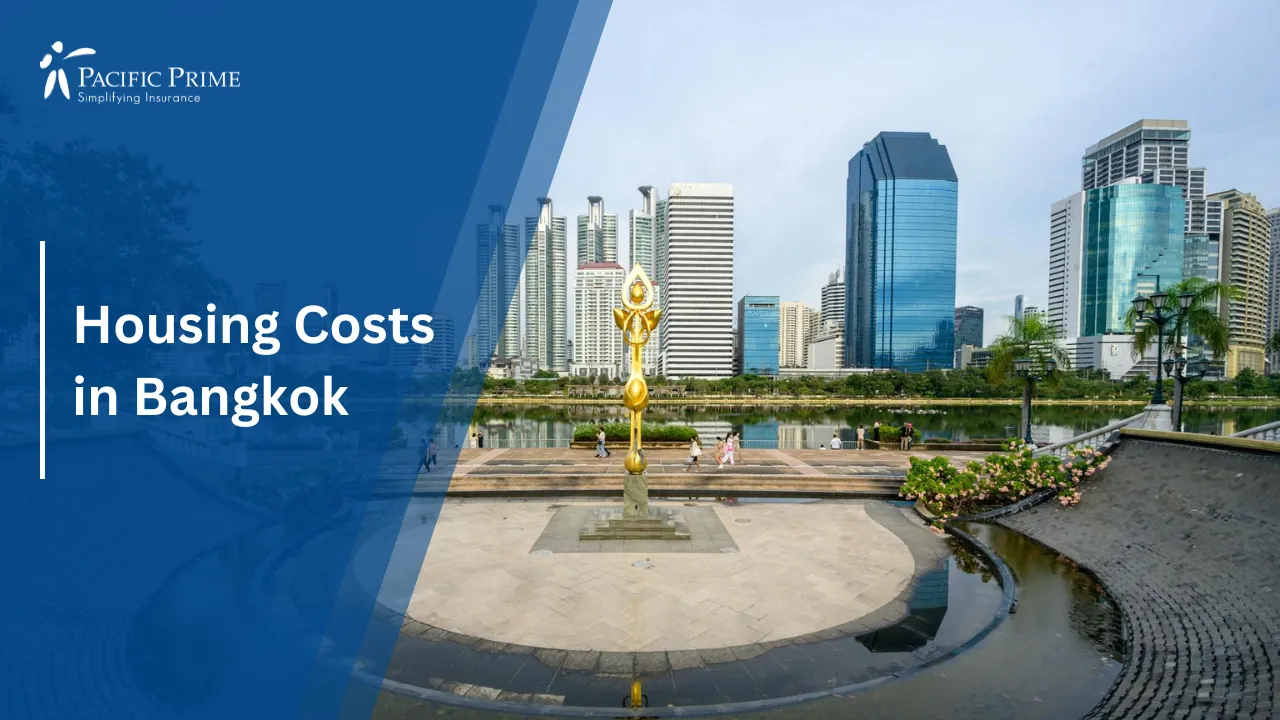
Bangkok boasts a wide array of housing options that cater to various budgets and preferences, and the cost depends on factors such as location, size, and type. Depending on its size and location, an apartment can cost anywhere from USD $200 to $3,000 or more per month.
For instance, a one-bedroom apartment in the city’s central areas, like Thong Lo, Phrom Phong, Asok, or Silom, can cost you around THB ฿15,000-35,000 per month (about USD $450-$1,050), while a 3-bedroom apartment can set you back THB ฿60,000-120,000 per month (about USD $1,800-$3,600) or even more.
If you’re on a budget, you might want to consider renting outside the city center, such as in Bang Na, Sena Nikhom, Ramkamhaeng, or Wongwian Yai, where you can rent a one-bedroom apartment for as low as THB ฿6,500 (about USD $190).
One piece of advice we can give is to find an apartment within walking distance of the BTS or MRT train lines, which will hugely save you on transportation costs, since most of the important spots in Bangkok are easily accessible by train.
Buying A Property in Thailand as an Expat
For those interested in investing in real estate in Thailand, it is not impossible for foreigners, but there are rules you need to follow.
Under the Land Code Act, foreigners can purchase and own property in Thailand, specifically condominiums and apartments, of which expats can own up to 49% of the unit space within that condominium project, as long as Thai nationals own at least 51% of the development.
Expats, however, cannot own land in Thailand. Instead, you may lease it and own any structure built on it. Long-term leases in Thailand typically last up to 30 years, with the potential for renewal or extension.
Food and Groceries: Budgeting for Meals in Bangkok
Thai food is renowned for its unique flavors and affordability, and one can enjoy a meal at a local eatery for as little as THB ฿100 (about USD $3). A three-course meal for two people at a mid-range restaurant can cost around THB ฿600-2,000 (about USD $18-60).
Street food vendors in Bangkok are unrivaled when it comes to great taste at a low price. A bowl of noodles or a dish of Pad Thai only costs THB ฿50-70 (USD $1.49-3)
Western-style restaurants and international cuisine establishments tend to be on the more expensive side. For those on a tight budget, buying groceries and cooking at home is the way to go.
Grocery Prices in Bangkok
Home cooks can find cheap, fresh produce at local markets, while Supermarkets like Tesco Lotus and Big C offer everything for your daily essentials. For imported goods, Gourmet Market offers them at higher prices. Monthly grocery costs in Thailand typically range from THB ฿4,000 to 8,000.
Transportation Costs in Bangkok: Getting Around Affordably
Getting around Bangkok is both convenient and cost-effective. Public transport like the BTS Skytrain and MRT subway costs no more than THB ฿60 (USD $1.70) per trip. Taxis and Grab rides start around THB ฿60 (USD $1.70), while motorbike taxis begin at only THB ฿20 (USD $0.66)
BTS and MRT trains
Public transportation in Bangkok is generally affordable and efficient. The BTS Skytrain and MRT subway are the most popular modes of transportation in the city, with a single trip costing THB ฿15-60 (about USD $0.4-1.7), depending on the distance traveled.
Taxis and Grabs
Taxis and ride-hailing services such as Grab are also available, with fares starting at THB ฿60 (USD $1.7). However, traffic in Bangkok can be notoriously congested, particularly during rush hour, which is why many locals prefer to ride the trains.
Motorbike Taxis or “Win Motorcycle”
For shorter distances, motorbike taxis, or “Win Motorcycle,” as locals call them, will be your go-to option to beat Bangkok’s traffic jams, with fares starting from as low as THB ฿20 (USD $0.66). Remember to always wear a helmet when riding one for your safety!
Renting a Car in Thailand
The cost to rent a car in Thailand can vary by car size and model, but they generally range from THB ฿14,000 (USD $420) per month for eco cars up to THB ฿35,000 (USD $1040) per month for SUVs.
Owning a car in the big city of Bangkok means additional expenses, such as monthly parking fees (THB ฿1,500-3,000), fuel (about THB ฿40 per liter), and car insurance. That’s why many expats find owning a vehicle in Bangkok unnecessary due to the many options of public transportation.
However, if you are an expat living in the suburbs or other provinces of Thailand, such as Chonburi or Nakhon Pathom, where public transport may not be widely available, having a car or a motorbike is essential for getting around.
Culture And Entertainment: Enjoying Life in Bangkok on a Budget
Exploring temples and museums can be fairly inexpensive, with most places charging a fee of around THB ฿50-100 (USD $1.49-3) for admission. A movie ticket for an international release costs around THB ฿280 (USD $8.2). However, indulging in upscale shopping and dining can be quite pricey.
In Bangkok, you’ll find a plethora of cultural and entertainment options, ranging from awe-inspiring temples and historical sites to contemporary malls and opulent spas. The cost varies depending on the activity or attraction.
Utilities and Bills: Managing Monthly Expenses in Thailand
Basic utilities in Thailand—like electricity, water, cooling, and gas—are affordable compared to many countries, though rates in Bangkok can be slightly higher. A major cost is air conditioning. A single person in a one-bedroom apartment typically pays THB ฿1,500–2,000 (USD $45-90) per month.
Electricity prices can get higher during the summer months, from March to May, due to higher demand leading to price increases by the government.
Other expenses like mobile plans and home internet are very affordable in Thailand without compromising on quality. The country is known to have one of the world’s fastest internet speeds, with mobile 5G plans starting at THB ฿400 (USD $12)/month and home internet from THB ฿600 (USD $18).
Education Costs in Bangkok: From Kindergarten to University

For expats with children, the cost of education in Bangkok can be a significant expense. Tuition fees for international schools can vary widely depending on the school and age of the child, with some schools charging fees as high as THB ฿1 million (almost USD $30,000) per year.
The good news is that state schools in Bangkok are free for Thai citizens, and they charge only a nominal fee for expat children. However, not all state schools in Thailand teach in English, so language may be a barrier.
Average Costs of Kindergarten in Thailand
The average annual tuition for a private international kindergarten in Thailand can range from THB ฿ 310,000 to 340,000 (about USD $9,200 to 10,000).
Average Tuition Fees for International Schools in Bangkok
Thailand has over 3,500 private schools and 31,000 public schools. International school fees typically range from THB ฿370,000 (USD $11,000) for grade 1 to THB ฿520,000 (USD $15,500) for grade 12.
University Tuition Fees in Thailand
The average cost of studying at a university in Thailand varies depending on factors such as the program and whether it’s a public or private institution. Generally, public universities in Thailand are more affordable and often offer a wider range of disciplines compared to private ones.
Top public universities like Chulalongkorn University and Thammasat University also provide international programs in popular fields such as business and engineering. These programs are still significantly more affordable than pursuing a degree in Western countries.
For instance, Chulalongkorn University’s Faculty of Commerce and Accountancy charges around THB ฿76,000 (USD $2,200) per semester for its international undergraduate program.
If your children hold Thai nationality, education costs become even lower, as they are eligible to attend public schools and standard university programs offered to Thai citizens.
Healthcare Expenses in Thailand: What to Expect
Bangkok is known for its world-class medical facilities, but the cost of medical services can be significantly higher than in other parts of the country. Here’s a quick overview of healthcare expenses in Thailand.
Cost of General Doctor Consultations in Thailand
The cost of seeing a general practitioner in Thailand varies depending on the type of facility.
Public hospitals are generally more affordable, with consultation fees typically ranging from THB ฿30-200 (USD $1-6). However, long wait times are common. Many locals are aware of this, so it’s typical to see people lining up at public hospitals as early as 6-7 AM.
At private hospitals and clinics, GP consultations typically cost between THB ฿500 and 1,500 (USD $15-45) and often include advantages such as access to advanced technology, higher-quality service, and shorter wait times.
Cost of Specialist Consultations in Thailand
Specialist consultations at public hospitals typically cost between THB ฿200 and 500 (USD $6-27), while at private hospitals like Bumrungrad Hospital, fees range from THB ฿1,500 to 3,000 (USD $45-90).
Cost of Health Checkups and Common Diagnostic Tests in Thailand
The cost of common diagnostic tests and health checkups in Thailand varies depending on the type of test, facility, and whether you are seeing a general practitioner or a specialist.
At public hospitals like Chulalongkorn Hospital, annual health checkup programs—which include tests for blood glucose, liver and kidney function, uric acid, chest X-ray, EKG, and more—cost around THB ฿1,220 (USD $36) for individuals aged 35 and older, and THB ฿720 (USD $21) for those under 35.
At private hospitals like Bangkok Hospital, annual health checkup packages cost around THB ฿5,400 (USD $160). These programs offer a wider range of tests, such as cholesterol and triglyceride screenings, and greater flexibility with appointment slots compared to public hospitals.
For expats looking for health checkups in Thailand, we recommend opting for top private hospitals for more convenience, wider coverage, and a smoother overall experience.
Cost of Inpatient Rooms in Thailand
Inpatient rooms at private hospitals are generally pricier than those at public hospitals due to the added amenities and higher-quality services.
For example, a standard room at Bangkok Hospital costs around THB ฿13,600 (USD $400) per night, with meals and nursing services included. ICU rooms start at THB ฿20,000 (USD $590) per night.
Meanwhile, at public hospitals like Chulalongkorn Hospital, a standard inpatient room can cost as little as THB ฿600 (USD $18) per night. But because of the high demand, it’s notoriously hard to get a standard room without having to wait a long time.
Often, patients at public hospitals may need to opt for higher-tier rooms that have shorter wait times, which can cost up to THB ฿12,000 (USD $355).
For greater convenience, easier communication with English-speaking staff, and quicker room availability, we recommend expats choose reputable private hospitals like Bangkok Hospital or Bumrungrad Hospital.
Cost of Common Surgeries in Thailand
The cost for common surgeries like appendectomy or cataract operations in Thailand also varies between public and private hospitals.
At private hospitals like Bangkok Hospital, a laparoscopic appendectomy costs around THB ฿213,000 (USD $6,300) (excluding consultation fees, treatment for underlying conditions, pathology, lab tests, and take-home medications).
In contrast, the same surgery at a public hospital typically costs between THB ฿18,000 (USD $530) and ฿42,000 (USD $1,245), though this price excludes inpatient room charges, nursing, and doctor fees.
For another common surgery, like cataract surgery with intraocular lens implantation, it can cost from THB 45,000 to 213,000 baht at Bangkok Hospital. At public hospitals, the cost generally falls between THB ฿18,000 and ฿40,000.
It’s important to note that these lower prices are typically for Thai nationals; expats may incur additional charges.
If you’re well covered by international health insurance, many of these higher surgery costs can be partially or fully covered, giving you peace of mind during your treatment.


Cost of Prescription Medications in Thailand
In Thailand, prescription medications are generally cheaper at public hospitals compared to private hospitals. Public hospitals often prescribe generic, lower-cost medications, while private hospitals offer pricier, sometimes imported brands that may not be available at regular Thai pharmacies.
It’s worth noting that a significant portion of private hospitals’ revenue (about 35.2%) comes from the sale of medicines and pharmaceuticals.
Thailand is well-known for offering high-quality medical care at relatively affordable prices, and in many cases, the cost of prescription medication is still lower than in most Western countries.
For more information, check out our detailed article: Thailand Prescription Medication Costs Without Insurance.
Cost of Dental Care in Thailand
Dental care in Thailand is affordable without compromising quality. In a private Bangkok clinic, a wisdom tooth extraction typically costs USD $87–200, which is far less than the roughly $2,400 it costs to remove all four wisdom teeth in the U.S.
Cost of Accident Treatments in Thailand
While healthcare in Thailand is generally affordable compared to many countries, emergency room (ER) visits can still be costly. An ER treatment for a motorcycle accident can cost USD $6,000–60,000, depending on the severity of the accident. Medical evacuation costs around USD $8,000–12,000.
Read more about the costs of medical treatments in Thailand in our article.
Bottom Line of Healthcare Costs for Expats in Thailand
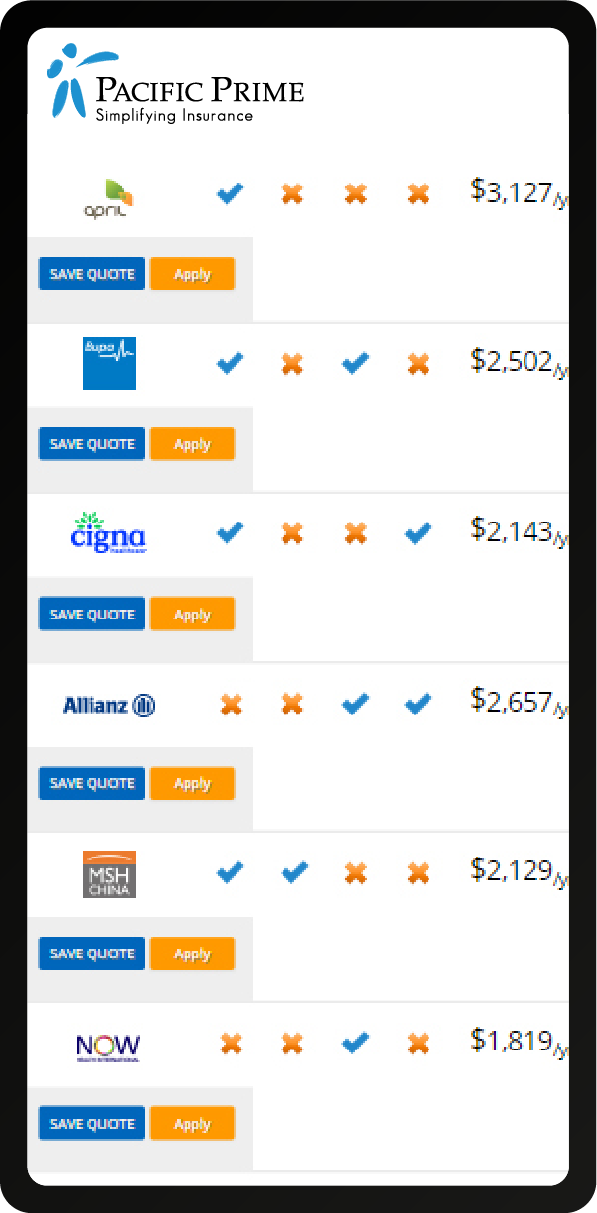
Expat residents are required to purchase health insurance in Thailand, which can be quite costly depending on the coverage required.
International private medical insurance (IPMI) for a male in his mid-30s who is healthy costs THB ฿117,850 (around USD $3,584) per year on average. For minor medical issues, clinics and pharmacies are widely available and are quite affordable.
Public hospitals and clinics can be even more economical, but the equipment can be older, and not everyone speaks English. Since expat residents are required to purchase health insurance, you can benefit from the speed and language convenience in the phenomenal private hospitals in Thailand.
Cost of Living in Chiang Mai
. Living in Chiang Mai can cost a lot less than in Bangkok, so if you’re on a fixed pension or living off your savings, you should give Chiang Mai some serious thought because your money will go much further there.
Housing in Chiang Mai: Renting and Buying as an Expat
Compared to other major cities in Thailand, housing costs in Chiang Mai are generally lower. A modest one-bedroom apartment or studio in the city center can range from THB ฿8,000-18,000 per month (about USD $230-530), which is around 50% cheaper compared to the same room in Bangkok.
A more extensive 3-bedroom apartment or villa can cost THB ฿20,000-35,000 monthly (about USD $590-1,040) or more. Rents can be lower outside the city center or in less frequented areas, where a single-room apartment can cost as little as THB ฿5,000 per month (about USD $150).
For those interested in buying properties in Chiang Mai, it is possible under the Land Code Act, which states that expats can own a unit in a condominium or apartment project as long as at least 51% of the total ownership within the project is held by Thai nationals.
Cost of Food and Groceries in Chiang Mai
In Chiang Mai, one can enjoy local delicacies for as little as THB ฿50 (about USD $1.49) per meal, while two people enjoying a three-course meal at a mid-range local eatery would cost approximately THB ฿500-1,400 (about USD $15-42).
As you can expect, dining at Western-style or international cuisine restaurants will set you back more. Groceries cost less in Chiang Mai than in Bangkok as well, though not by a mile.
Transportation Costs in Chiang Mai
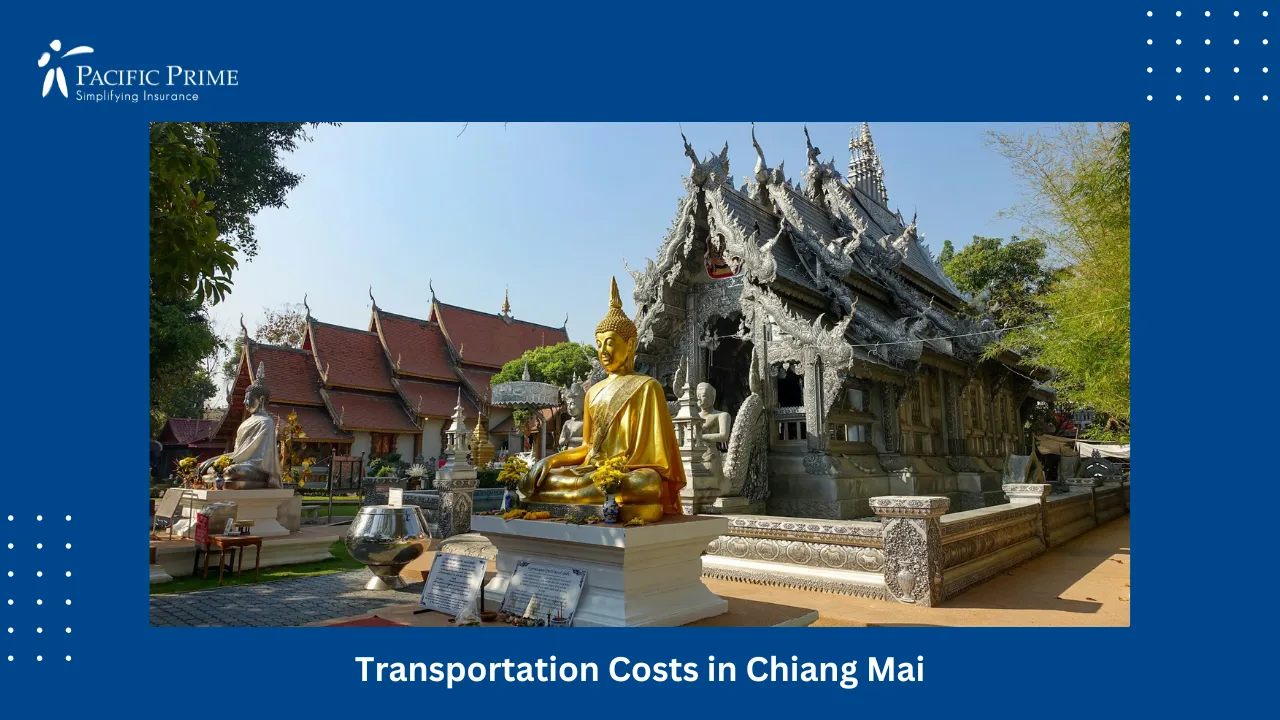
Compared to Bangkok, Chiang Mai’s public transportation fares poorly, as the city lacks BTS or MRT lines and didn’t even have a public bus system until 2018. The main transportation options in Chiang Mai include RTC City buses, tuk-tuks, songthaews (red trucks), taxis, and motorbikes for rent.
Chiang Mai’s RTC City Bus
Launched in 2018, the air-conditioned bus line became the cheapest mode of transportation in Chiang Mai, charging a flat fare of THB ฿30 (about USD $1) per ride.
Songthaews or Chiang Mai’s “Red Trucks”
Before the introduction of public buses, Songthaews, locally known as “Rod Daeng” (meaning “red car” in Thai), served as the backbone of Chiang Mai’s public transportation system. They are a convenient option for short to medium distances, typically costing between THB ฿30–50 (USD $1–1.50) per ride.
Tip: For longer distances or less common destinations, you can hire a Songthaew privately, similar to a taxi. But you might need a Thai-speaking friend to help negotiate the fare.
Taxis and Grabs
Similar to Bangkok, Chiang Mai also has ride-hailing services like Grab or Line Man, which you can also use for food or package delivery. Though less common, Chiang Mai also has motorbike taxis, or “Win Motorcycle,” like Bangkok.
Renting a Motorbike in Chiang Mai
Renting a scooter in Chiang Mai is another great option for affordable and reliable transportation. Daily rentals typically start at only around THB ฿250 (USD $7), while monthly rentals can be as low as THB ฿2,500 (USD $70). Always ride carefully, and be sure to wear a proper helmet for your safety.
Culture and Entertainment in Chiang Mai
Chiang Mai is renowned for its varied cultural heritage and extensive entertainment choices. The price of entertainment varies significantly based on the activity or attraction. Visitors can explore local markets, hike, and visit temples on a tight budget or even for free.
When it comes to city entertainment and recreation, such as movie tickets or gym memberships, prices in Chiang Mai are quite similar to those in Bangkok. Still, they are considered very affordable compared to Western countries.
For those who enjoy nightlife, the good news is that Chiang Mai’s bar and club scene is famously cheaper than Bangkok’s popular areas like Thonglor.
Utility Bills in Chiang Mai
Basic utilities in Chiang Mai, such as electricity, water, and gas, generally cost about the same as in Bangkok. However, you can save on electricity during Chiang Mai’s cooler months (November-February) by turning the air conditioning off at night, as it can get quite chilly.
Education in Chiang Mai
For expats with children, the cost of education in Chiang Mai can be a significant expense. International schools in Chiang Mai can be quite expensive, with tuition fees ranging from THB ฿200,000-800,000 (about USD $5,940-23,700) per year.
State schools in Chiang Mai are free for Thai citizens, and expat children will have to pay tuition fees to enroll. Again, not all state schools teach in English.
Healthcare in Chiang Mai
Chiang Mai has many medical facilities with modern amenities, and the costs can sometimes be lower than in Bangkok. Private hospital fees in Chiang Mai tend to be relatively affordable, with the price for a general health check-up at a local clinic starting at only THB ฿1,850 (about USD $55).
For example, a standard inpatient room at Bangkok Hospital Chiang Mai costs THB ฿5,250 (USD $156), which is almost three times cheaper than a room of the same size at Bangkok Hospital in Bangkok mentioned earlier at around THB ฿13,600 (USD $400) per night.
Overall, the costs for seeing a general practitioner, specialist consultations, health checkups, inpatient rooms, and surgeries in Chiang Mai are generally the same or slightly lower than in Bangkok, though this isn’t always the case.
One important consideration is that Chiang Mai offers fewer medical facility options, especially those with English-speaking staff, due to the city’s smaller size and lower expat population compared to Bangkok.
Public hospitals and clinics can be even more economical, but the equipment can be older, and not everyone speaks English. Since expat residents are required to purchase health insurance, you can benefit from the high-quality service and language convenience at private hospitals in Thailand.
Protect Your Health and Finances in Thailand with Pacific Prime
Living in Thailand offers a great balance between affordability and quality of life, including access to excellent healthcare at a fraction of the cost found in Western countries. However, medical expenses can add up quickly, especially at private hospitals.
That’s why comprehensive international health insurance is essential for expats. A good plan ensures you’re covered for unexpected health issues and can access top-tier treatment, English-speaking staff, and modern facilities without the stress of high out-of-pocket costs.
With more than 25 years of experience helping expats find the international health insurance plan that best fits their needs and budget, Pacific Prime is ready to offer the solution you need to make your journey to Thailand simple and stress-free.
Get in touch with us today for a FREE quote and personalized plan comparison, and take the first step towards your adventure in Thailand!
While Thailand remains one of the most popular destinations for expats, other countries across Asia, like Singapore or China, are also standout options worth considering.
China offers a rich cultural heritage, a wide range of cities with affordable costs of living, and growing opportunities for businesses and investors. Singapore is known for its world-class infrastructure, quality healthcare, and its status as a global financial hub.
If you’re considering a move elsewhere in the region, be sure to check out our full guide on the cost of living in Asia for a broader look at your options.
Frequently Asked Questions
What is the average salary in Thailand?
In Thailand, the average monthly salary for locals is around THB 25,000 to THB 40,000, depending on the region and industry. However, expatriates generally earn higher wages, with averages ranging from THB 60,000 to THB 100,000 or more.
Is English widely used in Thailand?
In Thailand, English is widely spoken, particularly in big urban centers and popular tourist destinations. Although not all locals are proficient in the language, they can usually manage simple dialogues.
What school options are there in Thailand?
In addition to state schools and international schools, there are also private schools in Thailand. Private schools typically enjoy more freedom than state schools in tailoring their curriculum. While tuition fees must be paid, scholarships are sometimes offered to students.

With his keen interest in journalism, especially in the healthcare and wellness field, Tawan joins Pacific Prime with the goal of creating content that simplifies health insurance solutions, helping people make informed choices and choose the best options for their needs. Tawan firmly believes that words have power that can shape the world for the better.
In his free time, Tawan loves to pick up his Nintendo Switch and wield his Master Sword in Hyrule’s dungeons. He is also an avid sci-fi books/shows enjoyer. You can spot him hanging around bookstores and game shops all day long!
- Best Health Insurance for Solo Traveling in Thailand – October 22, 2025
- Top Health Insurance in Thailand for Irish Expats: Options and Benefits – October 18, 2025
- Daman Health Insurance for Expats in Dubai: Plans, Benefits, and Options – October 15, 2025

Comments