300x85-png.webp)


 Hong Kong
 Singapore
 China
China Dubai
Dubai Thailand
 United Kingdom
 Mexico
Malaysia is among the top safest countries for expats with a low cost of living at only USD 540 for a single person, excluding rent, and approximately USD 1,915 for a family of four. These figures are far less than the global average.
Discover the world’s top
health insurers.
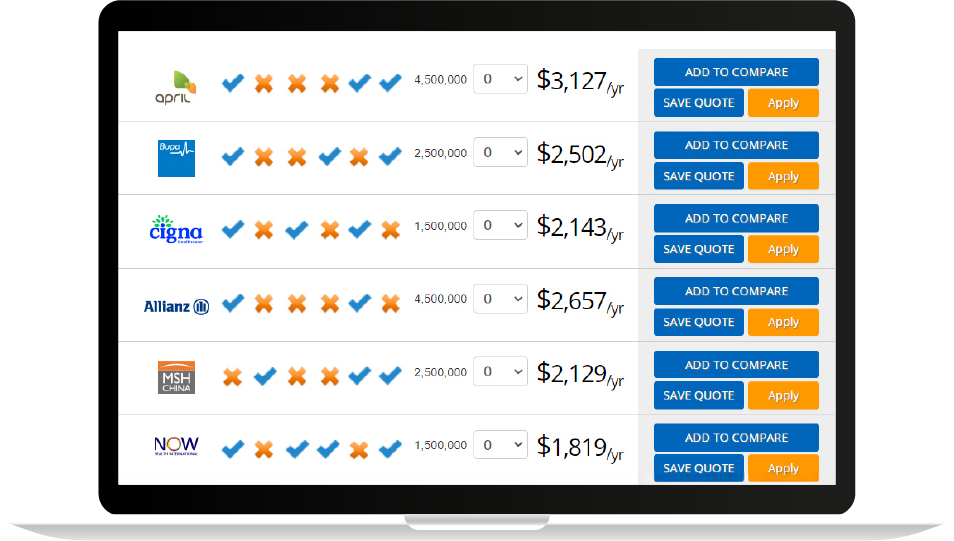
Compare quotes with
a click of the button.
For those planning to move to or visit Malaysia, this Pacific Prime article explores the cost of living in detail, from housing and food to transportation and healthcare. We will also explain why it will be beneficial to secure international health insurance before traveling there.
Cost of Living in Malaysia vs. Other Countries
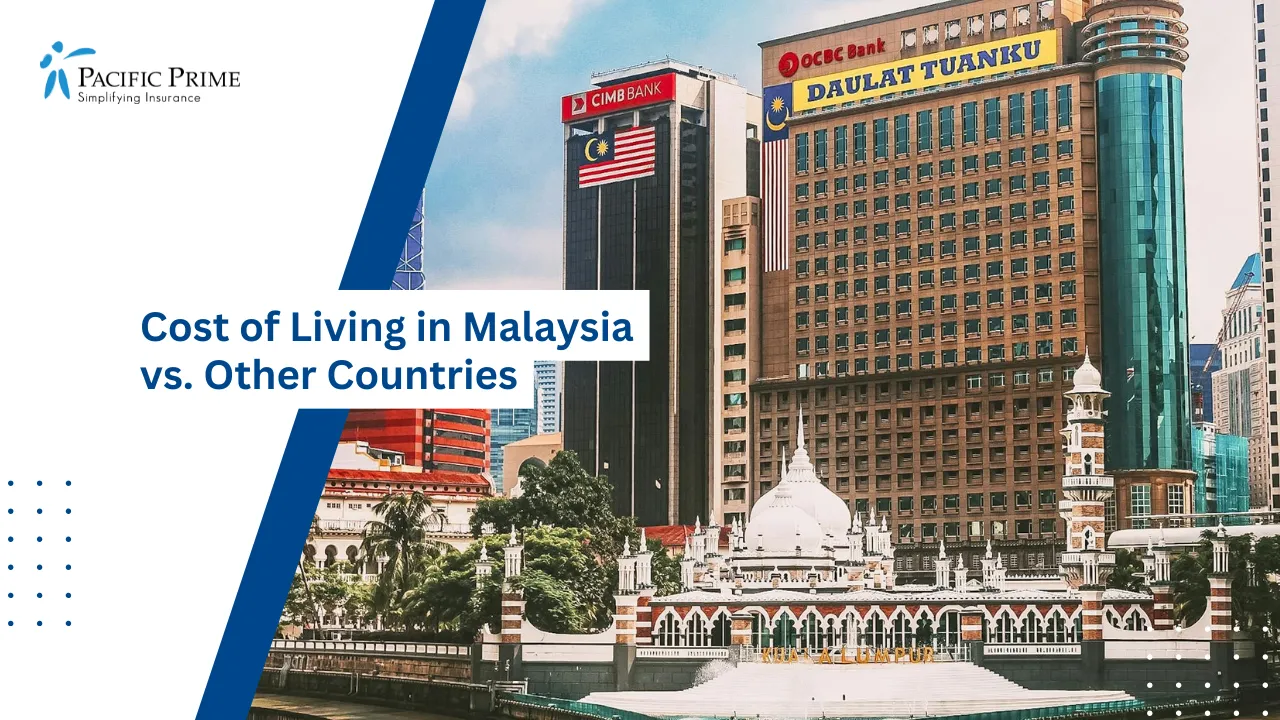
Numbeo’s Cost of Living Index ranks Malaysia as the 105th most expensive in the world for everyday expenses. This positions Malaysia as a low-cost destination compared to other countries, making it particularly attractive to expats, students, and retirees looking to manage their budgets effectively.
Within Southeast Asia, Malaysia holds the 5th spot in the regional cost of living rankings. It trails behind the top-ranked Singapore by almost 170%. Moreover, Malaysia is also generally 12% cheaper than Thailand, but it is slightly pricier than both Indonesia and the Philippines.
When compared to Australia, Malaysia’s daily living expenses (excluding rent) are about 50% lower. For example, a regular carton of 12 eggs in Malaysia will cost around USD 2.05, but USD 4.25 in Australia. However, some products, like cheese, milk, and wine, may actually be cheaper in Australia.
In comparison with Western nations, the cost of living in Malaysia is approximately 52% lower than in the United States, and rent is about 78% cheaper than in the U.S. Similarly, when compared to the United Kingdom, average daily expenses are about half as much in Malaysia.
For those looking to relocate specifically to Asia, you can also explore the cost of living in neighboring Singapore; in Japan, a compelling choice for expats seeking a balance between quality of life and rich cultural traditions; or in other countries across Asia to gain a broader perspective.
Malaysian Currency
The official currency of Malaysia is the Malaysian Ringgit, under the currency code MYR, or widely abbreviated in the country as RM. Overall, the MYR is moderately weaker than other major currencies. For foreigners coming to Malaysia, it is important to acknowledge the value of your money there.
See the table below to learn how your currency may translate into ringgit.
| 10 EUR | 47.86 MYR |
| 10 USD | 42.37 MYR |
| 10 GBP | 57.02 MYR |
| 10 AUD | 27.28 MYR |
*This price is based on the official exchange rate as of 29 May 2025.
Average Salary in Malaysia
While the legal minimum wage for Malaysians is RM 1,700 (USD 399) per month, statistics say the median monthly salary as of December 2024 is RM 3,045 (USD 715). Still, salary may vary by industry, with engineering, marketing and sales, banking, finance, and insurance as the highest-paying sectors.
For expats looking for local jobs in Malaysia, the average monthly salary is RM 5,000 (1,175 USD), which is still lower than jobs in the UK or the US.

Housing Costs in Malaysia
Rent prices in Malaysia are considered affordable compared to Western standards, with average rent prices for a one-bedroom apartment in the center of Kuala Lumpur and Penang costing USD 570 and USD 400, respectively.
Below is a table showing the estimated rent prices per month for apartments in Malaysia’s three major cities. Keep in mind, however, that rent costs will depend on location, property type, amenities, and demands.
| Apartment Type | Kuala Lumpur | George Town (Penang) | Johor Bahru |
| One-bedroom
City Center |
USD 570 | USD 385 | USD 455 |
| Three-bedroom
City Center |
USD 1,070 | USD 640 | USD 775 |
| One-bedroom
Outside Center |
USD 365 | USD 225 | USD 385 |
| Three-bedroom
Outside Center |
USD 630 | USD 520 | USD 640 |
Buying Property in Malaysia
According to the Centre, the housing affordability ratio for local Malaysians has remained over three times the median annual household income ever since the 2000s. Expats and digital nomads, on the other hand, are able to buy property easily in Malaysia, with liberal regulations on foreign ownership.
Firstly, here are the estimated property prices in Malaysia:
| Apartment Location | Kuala Lumpur | George Town (Penang) | Johor Bahru |
| City Center | USD 3,020/m² | USD 2,610/m² | USD 1,850/m² |
| Outside Center | USD 1,480/m² | USD 1,860/m² | USD 1,200/m² |
Extra Costs in Buying Property in Malaysia
In addition to property prices, there are also other costs you may need to factor in.
- Stamp duty: This essentially refers to a fee for any legal documents involved when you buy a property.
- Loan agreement: a flat 5% rate of the full loan value.
- Instrument of transfer (for foreign companies, non-citizens, and non-permanent residents): a flat 4% rate of the property market value.
- Legal fees: Unless you have experience in law practice in Malaysia, this refers to mandatory legal assistance in preparing Sales and Purchase Agreements (SPA), which are calculated based on a tiered rate.
| Price Tier | Legal Fee (% of property price) |
| First RM 500,000 | 1.0% |
| Next 500,000 (500,001–1 million) | 0.8% |
| Next 2 million (1,000,001–3 million) | 0.7% |
| Next 2 million (3,000,001–5 million) | 0.6% |
| Above 5 million | 0.5% |
- Real Property Gain Tax: This tax applies to profits from future property sales. A 30% tax is charged if the property is sold within the first five years of ownership and 10% if sold in the sixth year or later.
Utilities and Bills Costs in Malaysia
Basic utilities in Malaysia for an 85 m² apartment could cost in total between USD 25 and USD 82, depending on personal use. As of July 2025, however, the electricity price will increase by 14.2%, from 39.95 sen per kWh to 45.62 sen per kWh.
Mobile monthly plans with calls and over 10 GB of data could cost anything between USD 6 and USD 19, depending on the providers and negotiations. Meanwhile, the price for home internet (60 Mbps or more) will sit between USD 21 and USD 36.

Food and Grocery Costs in Malaysia
While buying groceries and cooking at home will cost only around USD 145 to USD 225 per month, depending on the types of food you make, eating out in Malaysia is also inexpensive and popular, costing approximately USD 180 per month for local cuisine.
Grocery Prices in Malaysia
For those who prefer curating their own ingredients and personalizing their dishes at home, here are the average prices of some common grocery items in Malaysia:
- Milk (1 liter): USD 1.81
- Loaf of Fresh White Bread (500g): USD 0.96
- White Rice (1 kg): USD 1.37
- Eggs (12, regular): USD 2.04
- Local Cheese (1 kg): USD 13.78
- Chicken Fillets (1 kg): USD 4.06
- Beef Round (1 kg): USD 8.37
- Apples (1 kg): USD 2.82
- Banana (1 kg): USD 1.46
- Tomato (1 kg): USD 1.48
- Potato (1 kg): USD 1.08
- Onion (1 kg): USD 1.21
- Lettuce (1 head): USD 1.05
Eating Out Prices in Malaysia
Another widely preferred option is dining out, as it isn’t far pricier than cooking at home and helps save time. Here, we have summarized estimated price ranges for eating and drinking outside in Malaysia:
- Meal at a hawker stall/a cheap restaurant: USD 2–USD 6
- Three-course meal for 2 people at a mid-range restaurant: USD 14–USD 47
- McMeal at McDonald’s: USD 3.75–USD 4.75
- Domestic Beer (0.5 liter draught): USD 2–USD 7
- Imported Beer (0.33 liter bottle): USD 3.50–USD 7.50
- Cappuccino (regular): USD 1.5–USD 3.75

Transportation Costs in Malaysia
Public Transportation in the City
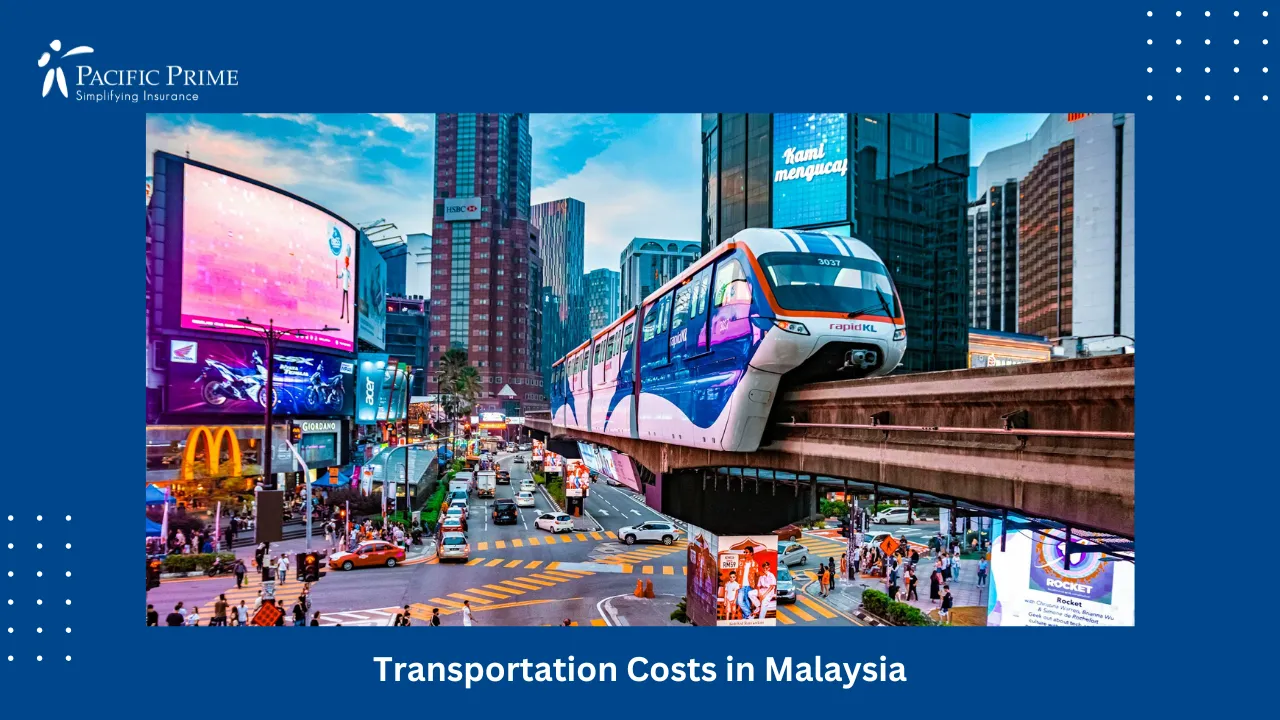
Public transportation in Kuala Lumpur is both affordable and reliable, with various options for trains and buses that allow you to travel through the city with ease.
- MRT (Mass Rapid Transit) system
- LRT (Light Rail Transit) system
- Monorail Lines
- BRT (Bus Rapid Transit) system
Tickets or token prices are based on distance, starting from USD 0.3 for one station if purchased at the Token Vending Machine (TVM) and going up to USD 0.5 for five stations. There is also an option of stored value cards, like the Touch’ n’ Go card, which allows you to travel for a slightly lower fee.
For transportation from Kuala Lumpur city center to Kuala Lumpur International Airport (KLIA) and vice versa, easily turn to KLIA Ekspres, which will take you from KL Sentral to the airport for USD 13 in under 30 minutes.
Malaysian Taxis
The Malaysian taxi operates on a meter system. In Kuala Lumpur, the base fare is USD 1.2 and increases by USD 1.2 for each additional kilometer traveled. In smaller towns, the base fare and price per kilometer are lower. For Penang, the base fare starts at USD 0.7 and goes up to USD 0.5 per km.
In tourist areas, taxi drivers often offer flat-rate fares, charging significantly more than the metered price. As a result, Grab, as an e-hailing service, becomes popular, with services now covering over 30 cities.
However, the app has highly fluctuating fares. For example, it can cost anything between USD 2.5 and above USD 4.5 for a 3 km ride, depending on the time of day, demand, and traffic.

Intercity Travel
Intercity buses are one of the most convenient ways to travel between cities on the Malay Peninsula. Below, we’ve summarized the starting fares for some of the most popular routes across the country.
| Routes | Distance | Est. Duration | Starting Price |
| Kuala Lumpur
– Johor Bahru |
321 KM | 4.45 hours | from USD 8.25 |
| Kuala Lumpur
– Penang |
361 KM | 5 hours | from USD 10.6 |
| Kuala Lumpur
– Malacca |
134 KM | 2.15 hours | from USD 2.85 |
| Penang
– Ipoh |
147 KM | 2 hours | from USD 4.75 |
In addition, there is the ETS (Electric Train Service) running between cities. One of the most popular routes is from Kuala Lumpur to Ipoh, which will cost between USD 7 and USD 11, depending on your ticket class.
Meanwhile, internal flights are the best way to travel to and from East Malaysia (Sabah and Sarawak) since there are no direct ferries from the Peninsula. On normal occasions, the flight will cost around USD 70.5 to USD 95, but it may skyrocket during the holiday when the demand is high.
Costs of Entertainment and Leisure in Malaysia
Malaysia boasts a lively mix of urban, cultural, and natural scenes, with a wide range of activities that suit every interest. The list below shows different costs of activities.
- A meal for two at a mid-range restaurant: USD 23.50
- A ticket to an international movie release: USD 4.70
- A local food tour: from USD 80 to USD 260.
- Badminton court rental (1 hour): from USD 3.5 to USD 11.75
- Football field rental (1 game): USD 14 (daytime) and USD 113 (nighttime)
- A monthly gym membership: from USD 16 to USD 56.
In KL, the Petronas Towers are the major landmark, with admission rates of USD 8.25 for MyKad and USD 23 for non-MyKad. There are also attractions like Chinatown, the National Mosque of Malaysia, Perdana Botanical Garden, and the Sultan Abdul Samad Building, which you can enter free of charge.

Education Costs in Malaysia
Public school provides free compulsory education from primary to secondary school. Still, many expats pay up to USD 23,500 a year for their children to attend international schools with globalized curricula.
Here, we have gathered information on the costs of public, private, and international schools under the five stages of education in Malaysia.
Pre-primary Education in Malaysia
| Types of Schools | Est. Price |
| Public pre-primary school | Free or minimal fees for materials |
| Private pre-primary school | USD 120 to USD 470 / month |
| International pre-primary school | Over USD 700 / month |
Primary Education in Malaysia
| Types of Schools | Est. Price |
| Public primary school | Free |
| Private primary school | USD 1,175 to USD 2,825 / academic year |
| International primary school | USD 2,825 to USD 7,000 / academic year |
Secondary Education in Malaysia
| Types of Schools | Est. Price |
| Public secondary school | Free |
| Private secondary school | USD 2,495 to USD 3,300 / academic year |
| International secondary school | USD 3,300 to USD 9,000 / academic year |
Post-secondary Education in Malaysia
Post-secondary education in Malaysia is optional but offers a wide range of pathways for students to choose from.
- Form 6, STPM: FREE
- Matriculation certificate: USD 140, the rest is covered by the government
- University Foundation or Asasi certificate: around USD 2500 to USD 4700 for Foundation / below USD 470 for Asasi
- STAM: USD 2.35 to USD 4.75 per subject
Additionally, international schools that follow the British curriculum also have sixth-form education. These students who study IB courses or A-level subjects prepare to get into an international college in Malaysia or study abroad. Their tuition could cost USD 9,210 annually at the leading school.
Higher Education in Malaysia
Tuition fees for higher education in Malaysia vary by field of study, program, length of study, and university type.
| Field of Study | Public University | Private University | International Program |
| Business | USD 2,050 | USD 7,250 | USD 18,150 |
| Computer Science | USD 2,405 | USD 6,820 | USD 21,000 |
| Laws | USD 2,215 | USD 7,425 | USD 28,130 |
| Economics | USD 2,075 | USD 7,015 | USD 18,150 |
| Engineering | USD 2,360 | USD 9,430 | USD 31,150 |
Note: The prices are based on the 2025/2026 academic year and taken from the top university of each category.
Healthcare Expenses in Malaysia

Malaysia has a dual healthcare system, where public healthcare services are subsidized by the government and patients fully bear the costs in private hospitals.
Doctor Consultations in Malaysia
| Treatment | Public Hospitals | Private Hospitals | Private Clinics |
| General consultation
(per visit) |
USD 0.25 | USD 7–USD 29.5 | USD 2.35–USD 8.25 |
| Specialist consultation
(per visit) |
USD 1.2 | USD 18–USD 55 | USD 18–USD 70 |
The cost of a visit to the doctor at a public hospital is low because the fees are subsidized by the government. The government has also regulated general consultation fees in private clinics, capping them at USD 8.25 for the past 10 years.
Unfortunately, the government subsidy in public hospitals does not apply to foreigners. Instead, a general consultation for a foreigner at a public hospital will cost USD 9.50, and a specialist consultation will cost USD 28.25.
Common Diagnostic Tests Costs in Malaysia
| Treatment | Public Hospitals | Private Hospitals | Private Clinics |
| Blood tests | USD 0.25 | USD 12 or more | USD 10 or more |
| X-rays | USD 23.5
(including examination) |
USD 12–USD 47 | USD 10.5–USD 28 |
| CT Scans | USD 21–USD 85 | USD 140–USD 355 | – |
| MRIs | USD 21–USD 106 | USD 170–USD 745 | – |
| Ultrasound | USD 2.3–USD 17.5 | USD 23.5–USD 47 | USD 15–USD 38 |
Inpatient Hospital Stay Costs in Malaysia
In the case of hospitalizations, the primary cost will depend on the type of room and hospital you select, as well as other inpatient charges that come with spending a night at the hospital. The table below shows estimated cost comparisons for hospitalization at public and private hospitals.
| Room Type | Public Hospitals
(per night) |
Private Hospitals
(per night) |
| General Ward | USD 0.3–USD 28.5 | USD 22.5–USD 28.5 |
| Executive Ward | USD 35.5–USD 53 | USD 95–USD 445 |
| ICU/CCU | Less than USD 25 | USD 105–USD 125 |
| Inpatient Charge | None or up to USD 3.5 | Vary greatly
(may be hidden or inflated) |
To clarify, in public hospitals, patients are divided into three classes: class 1, class 2, and class 3. The class system primarily determines the type of ward and the fees charged.
Class 1 patients, typically those willing to pay for comfort, pay the highest fees for better amenities, while class 3 patients receive the most subsidies but face longer waiting times, less privacy, and basic amenities.


Common Surgical Procedures Costs in Malaysia
While healthcare in Malaysia is considered affordable, surgeries can be very costly without subsidization from the government. See the table below to help you understand the prices of each common surgery in both public and private hospitals.
| Surgery Types | Public Hospitals | Private Hospitals |
| Appendectomy | USD 235–USD 1,175 | USD 1,890–USD 4,700 |
| Cataract Surgery | USD 115–USD 470 | USD 700–USD 3,530 |
| Cesarean Section (C-Section) | USD 47–USD 940 | USD 1,890–USD 4,715 |
| Coronary Artery Bypass Grafting (CABG) | Around USD 7,075 | USD 18,900–USD 28,300 |
| Hip Replacement | USD 1,800–USD 3,400 | USD 4,600–USD 6,500 |
| Knee Replacement | USD 1,800–USD 4,700 | USD 6,000–USD 14,000 |
Dental Costs in Malaysia
| Dental Services | Public Hospitals | Private Clinics |
| Scaling and polishing | Free | USD 21–USD 66 |
| Dentures | USD 6 | USD 105–USD 525 |
| Dental Bridge | Free | USD 420–USD 1,050 |
| Root Canal Treatment | Free | USD 125–USD 380 |
| Dental Crown | Free | USD 210–USD 420 |
| Wisdom Tooth Extraction | USD 0.25 | USD 30–USD 250 |
Other Common Health Issue Costs in Malaysia
For routine illnesses, the cost for treatment and prescription drugs is generally affordable, with a visit to a general practitioner in the public healthcare system ranging from USD 0.25 to USD 1.2, and a visit to private clinics costing between USD 2.35 and USD 8.25.
However, for conditions like influenza, consultation with a doctor and a vaccine may be required, costing around USD 16 to USD 19 per visit.
Budgeting Strategies for Living in Malaysia
In general, Malaysia is considered an affordable country for expats, with low living expenses—cheap food, convenient transportation, and a fairly stable rent market. However, there are also a few extra tips that those living in Malaysia can follow to save money.
- Cooking at home: For one person, weekly groceries average around USD 37–USD 50, which is much cheaper compared to dining out, where daily meals can add up to USD 10–USD 15.
- Take advantage of your student status: Some cinemas offer student-priced tickets for weekday showings before 6 pm. Restaurants like Kenny Rogers Roasters and Marrybrown offer a student set meal or a special discount for certain durations.
- Use the MyRapid Concession Card: If you are a senior citizen or student, it offers a 50% discount on fares for RapidKL Bus, BRT, LRT, Monorail, and MRT.
- Use a commuter pass, My50: It allows unlimited travel on all RapidKL rail and bus services within 30 days, costing only RM 50 or USD 12.
- Securing private health insurance: This will help manage unexpected medical bills, reduce out-of-pocket costs, and allow you to visit private hospitals without breaking your bank.
Get In Touch with Pacific Prime
While Malaysia offers a relatively low cost of living, vibrant culture, and modern facilities, settling into a new country can still come with its challenges, especially when it comes to navigating a new healthcare system.
Whether you’re relocating for work or study, having the right support can make your transition smoother. Securing international health insurance is a wonderful way to ensure access to quality care in private hospitals and protect yourself from unexpected medical costs while you settle in Malaysia.
Still unsure about choosing the right insurance plan for your stay in Malaysia? At Pacific Prime, we bring over 25 years of experience in helping expats find coverage that suits both their needs and budget.
Contact us today for a FREE quote comparison.
Frequently Asked Questions
How much do you need to live comfortably in Malaysia?
To live comfortably in Malaysia, a single person typically needs around USD 1,000–1,500 per month, covering rent, food, transport, and leisure. Costs vary by city, with Kuala Lumpur being pricier than smaller towns.
Is it cheaper to live in Malaysia or Thailand?
The cost of living, including rent, in Thailand is about 17.8% higher than in Malaysia, with groceries, rent, transportation, and utilities tending to be slightly cheaper in Malaysia. Still, as both countries have quite similar living costs, the overall expenses will vary based on personal lifestyle.
Is Malaysia a good place to raise a family?
Raising a family in Malaysia can be a great idea, as the country offers a comfortable, safe, and affordable environment. Both education and healthcare are of good quality, with a range of public and private options to choose from. Malaysia’s nature also makes it an ideal place for family outings.
What is the quality of healthcare like in Malaysia?
Malaysia offers high-quality healthcare, especially in private hospitals that are acknowledged internationally, with skilled, English-speaking medical staff. Meanwhile, public healthcare is also reliable but may have longer wait times and more basic amenities compared to private facilities.
Do I need vaccinations before moving to Malaysia?
Routine vaccinations are sufficient for most expats. However, it’s always beneficial to check with your healthcare provider regarding optional vaccines like Hepatitis A/B or Typhoid, especially if you plan to travel around the region.
- Thailand Digital Nomad Visa 2025: How to Apply – October 20, 2025
- Top Health Insurance in Thailand for Spanish Expats: Options and Benefits – October 20, 2025
- Arab Orient Insurance and GIG Health Insurance for Expats in Dubai – October 15, 2025

Comments