300x85-png.webp)


 Hong Kong
 Singapore
 China
China Dubai
Dubai Thailand
 United Kingdom
 Mexico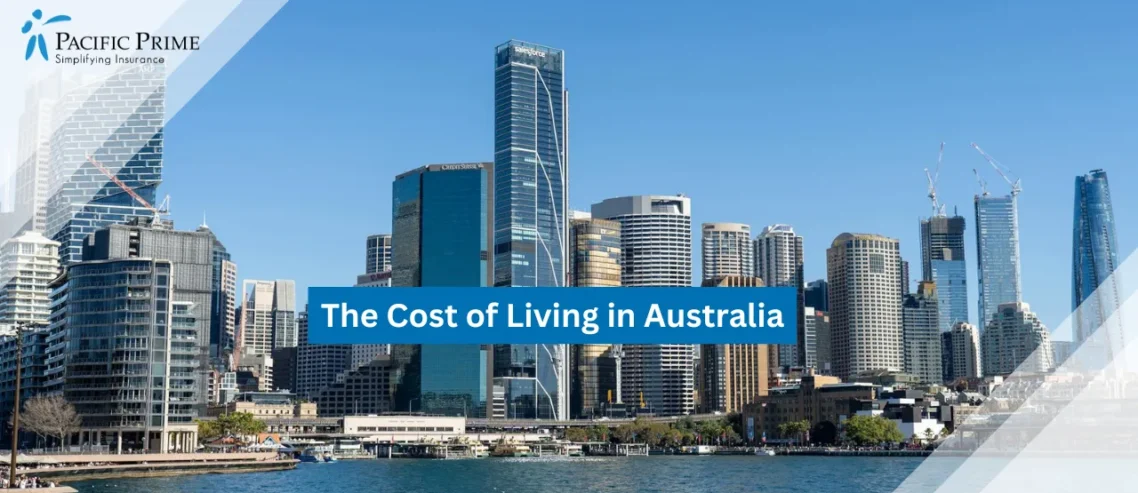
Australia, particularly in big cities like Melbourne or Sydney, can have a very high cost of living, with the estimated monthly cost without rent being AUD 1,610 or USD 1,045 for a single person and AUD 5,712 or USD 3,700 for a family of four.
Discover the world’s top
health insurers.
Compare quotes with
a click of the button.
Australia is an attractive destination for job opportunities, education, and leisure destinations. In this Pacific Prime article, we break down the cost of living in Australia and the benefits of having international health insurance in Australia.
Housing Costs in Australia
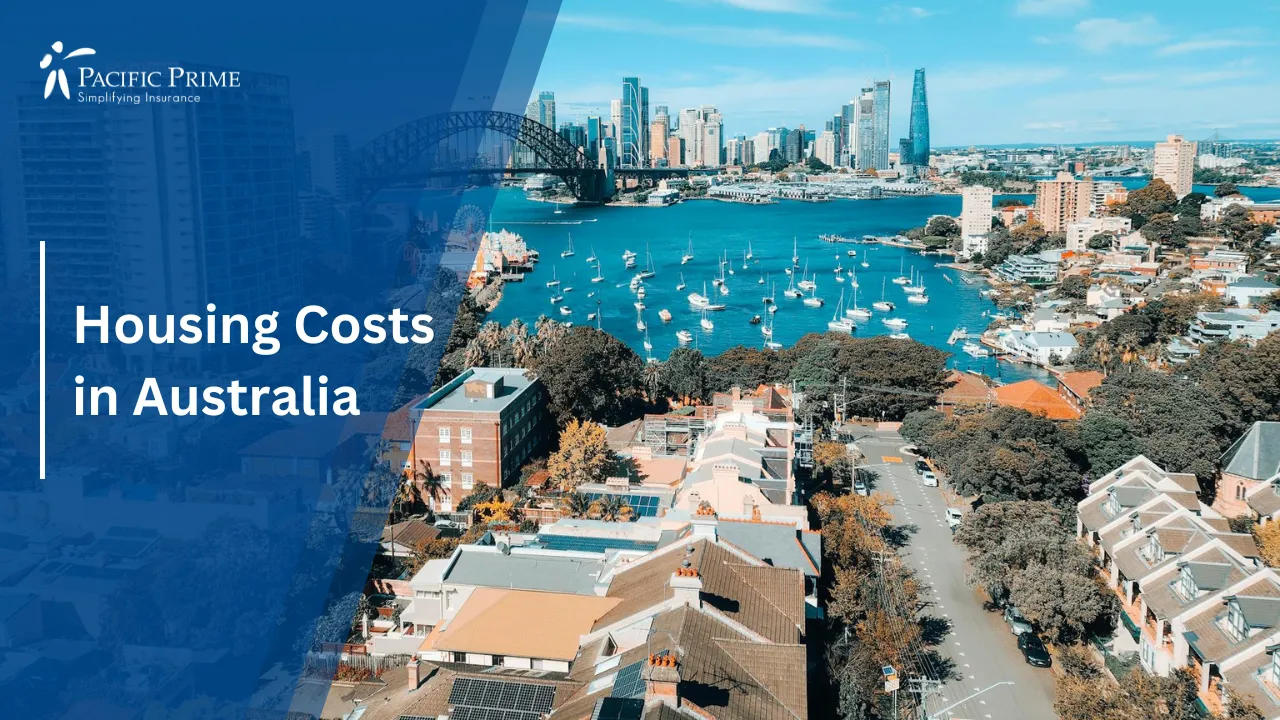
The median monthly rental prices are between AUD 2,400 and AUD 3,335 (USD 1,584 and USD 2,201), depending on the region, while the average property purchase price has reached AUD 1 million (USD 651,280) in all major cities across Australia.
Rental Costs in Australia
To rent in Australia, it will cost on average AUD 2,120 or USD 1,380 per month for a one-bedroom apartment in the city center. The price will differ greatly between cities. For example, for Sydney specifically, the monthly rental price for a similar room is AUD 3,325 or USD 2,160.
The table below shows the comparisons for rent in major cities in Australia.
| Apartment Type | Melbourne | Sydney | Brisbane | Perth |
| One-bedroom
City Center |
AUD 2,345
(USD 1,525) |
AUD 3,325
(USD 2,160) |
AUD 2,435
(USD 1,585) |
AUD 2,310
(USD 1,500) |
| Three-bedroom
City Center |
AUD 4,660
(USD 3,030) |
AUD 6,780
(USD 4,475) |
AUD 4,025
(USD 2,620) |
AUD 3,900
(USD 2,540) |
| One-bedroom
Outside Center |
USD 1,840
(AUD 1,200) |
AUD 2,280
(USD 1,504) |
AUD 1,900
(USD 1,235) |
AUD 1,775
(USD 1,155) |
| Three-bedroom
Outside Center |
USD 2,990
(AUD 1,945) |
AUD 4,080
(USD 2,692) |
AUD 2,920
(USD 1,900) |
AUD 2,790
(USD 1,815) |
Purchasing Costs in Australia
While the average price of a house in major cities is AUD 900,000, which is equivalent to USD 584,685, housing costs will depend greatly on the size of the home and the city you are interested in. See the table below for the prices per square meter of apartments in different cities.
| Apartment Location | Melbourne | Sydney | Brisbane | Perth |
| City Center | AUD 10,640/m²
(USD 6,920/m²) |
AUD 20,590/m²
(USD 13,390/m²) |
AUD 13,585/m²
(USD 8,835/m²) |
AUD 7,800/m²
(USD 5,075/m²) |
| Outside Center | AUD 8,910/m²
(USD 5,795/m²) |
AUD 11,915/m²
(USD 7,750/m²) |
AUD 9,280/m²
(USD 6,035/m²) |
AUD 6,570/m²
(USD 4,270/m²) |
Utilities and Bills in Australia
On average, basic utilities, including electricity, heating, cooling, water, and garbage, for an 85 m² apartment can range from AUD 150 to 510 (USD 97 to USD 330). This can fluctuate due to seasonal needs, alternating between heating and cooling.
As for home internet, a plan offering 60 Mbps or more can cost between AUD 65 and AUD 110 (USD 43 and USD 72.5), which is relatively similar throughout the country.
On the other hand, a monthly mobile plan with calls and 10GB+ data in Melbourne, Sydney, and Brisbane shares similar prices of around AUD 30 to AUD 40 (USD 20 to USD 26), while plans in Perth are known to be pricier than the rest of the country, at an average of AUD 44 (USD 28).
Food and Grocery Prices in Australia
On average, Australians are spending AUD 204 (USD 135) per week on groceries, which makes the total monthly grocery cost around AUD 800 (USD 540).
Listed below are the average prices of some common grocery items in Australia.
- Milk (1 liter): AUD 2.36 / USD 1.55
- Loaf of Fresh White Bread (500g): AUD 3.79 / USD 2.50
- Rice (white, 1 kg): AUD 3.15 / USD 2.10
- Eggs (12): AUD 6.67 / USD 4.40
- Local Cheese (1 kg): AUD 13.52 / USD 8.95
- Chicken Fillets (1 kg): AUD 12.92 / USD 8.50
- Beef Round (1 kg): AUD 21.40 / USD 14.10
- Apples (1 kg): AUD 4.92 / USD 3.25
- Bananas (1 kg): AUD 4.24 / USD 2.80
- Tomatoes (1 kg): AUD 6.61 / USD 4.35
- Potatoes (1 kg): AUD 3.83 / USD 2.50
- Onions (1 kg): AUD 3.31 / USD 2.20
- Lettuce (1 head): AUD 3.43 / USD 2.25
Inflation, however, is also affecting grocery prices. Reportedly, from 2024 to 2025, egg prices have risen by 11%, and cooking oil has increased by 7%. The cost of fruit and vegetables is also up by around 6%.
Eating Out Prices in Australia
Monthly, Australians spend AUD 116 (USD 76.55) of their dining budget on restaurants and AUD 111 (USD 73.25) on cafes. Here, we provide a summary of the estimated price ranges for dining and drinking out in Australia.
- Meal at an inexpensive restaurant: AUD 15–AUD 48 / USD 9.90–USD 31.70
- Three-course meal for 2 people at a mid-range restaurant: AUD 80–AUD 200 / USD 52.80–USD 132.00
- McMeal at McDonald’s: AUD 14–AUD 18 / USD 9.25–USD 11.90
- Domestic Beer (0.5 liter draught): AUD 7–AUD 15 / USD 4.60–9.90
- Imported Beer (0.33 liter bottle): AUD 8–AUD 15 / USD 5.30–9.90
- Cappuccino (regular): AUD 4–AUD 7.5 / USD 2.65–4.95
Keep in mind that prices will vary and can be on the pricier side in tourist and urban areas.
Transportation Costs in Australia
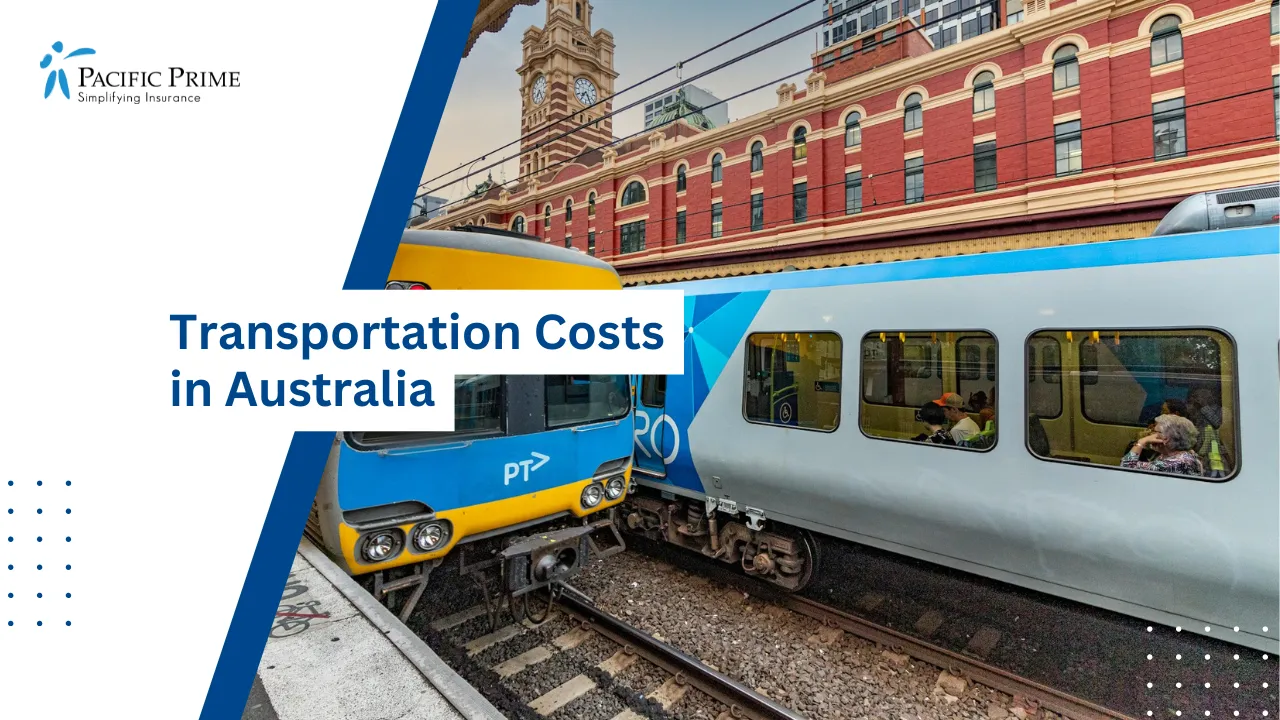
The costs of transport in Australia depend on cities and the modes of transportation. On average, a person driving to work will spend AUD 99 or USD 65 on weekly transportation expenses, while it costs only AUD 40 or USD 26 per week for a person who takes public transportation.
Costs of Public Transportation in Australia
In 2023, Australia ranked as the third most expensive country for transportation in the world. This is due to having one of the most expensive monthly passes at an average price of AUD 165 or USD 107. The average one-way fare is AUD 4.5 or USD 2.9.
Generally, you have four main options for public transportation in Australian cities: trains, buses, ferries, and light rail (or trams). Most cities now use electronic or prepaid cards instead of one-time tickets, though the availability of each mode and the system itself varies between cities.
| City | Card System | Types of Transportation | Weekly Cost |
| Melbourne | Myki | Trains, trams, and buses | AUD 50
/ USD 32.5 |
| Sydney | Opal Card | Trains, trams, buses,
and ferries |
AUD 50
/ USD 32.5 |
| Brisbane | Translink Go Card | Trains, trams, buses,
and ferries |
AUD 5
/ USD 3.25 |
| Perth | SmartRider | Trains, trams, and buses | AUD 46 / AUD 30 |
Costs of Intercity Travel in Australia
The most common way to travel between cities in Australia now is by plane. Ticket prices depend on the type of airline, ticket class, and the departure and arrival cities.
The table below shows the 2024 average flight costs of the most popular domestic flights in Australia.
| Melbourne – Sydney | AUD 193 / USD 125 |
| Brisbane – Sydney | AUD 195 / USD 126 |
| Adelaide – Melbourne | AUD 201 / USD 130.5 |
| Melbourne – Perth | AUD 543 / USD 352.5 |
| Perth – Sydney | AUD 603 / USD 391.5 |
For more economical choices, intercity buses and trains are available, but the journey is time-consuming.
A train from Melbourne to Sydney costs between AUD 80 and AUD 100 (USD 52 and USD 65) and takes around 11-12 hours to arrive at the destination.
Meanwhile, an intercity bus from Melbourne to Sydney can cost anything between AUD 65 and AUD 130 (USD 42 and USD 84.5) with a 12-hour travel time, depending on the fare and schedule of each bus company.
Costs of Using Private Cars in Australia
Aside from the purchase price, cars bring monthly costs like fuel, tires, insurance, and servicing, all of which can add up quickly.
For example, not counting loan repayments, a Toyota Corolla may cost around AUD 370 (USD 240.50) per month to run. This number also excludes toll fares or parking fees, which depend on location and use.
As of May–June 2025, the average retail prices for Unleaded 91 (the most common petrol in Australia) in Sydney, Melbourne, and Brisbane range between AUD 1.65 and AUD 1.95 (USD 1.09 and USD 1.29), while in Perth, it is slightly cheaper at between AUD 1.52 and AUD 1.87 (USD 0.99 and USD 1.22).
Entertainment and Leisure Costs in Australia
Popular activities in Australia, such as surfing, swimming, sunbathing, and beach sports activities, are usually free of charge. In addition to these activities, Australia offers a variety of entertainment and leisure options for both expats and residents.
| Activity | Price |
| Group surf lesson | ~ AUD 65 to AUD 100 (USD 43 to USD 66) |
| Monthly gym membership | ~AUD 38 to AUD 125 (USD 25–USD 82) |
| National Parks’ Annual Pass | ~AUD 190 (USD 125.5) |
| Movie ticket | ~AUD 21.5 (USD 24) |
For those who are particularly interested in breathtaking nature scenes, it’s also worth exploring the cost of living in New Zealand and Oceania to see alternative destinations.
Education Costs in Australia
In Australia, the total cost of primary and secondary education typically ranges from AUD 80,000 to AUD 350,000 (approximately USD 51,000 to USD 225,000), depending on the location and type of school.
Higher education can also be costly, with annual fees ranging from AUD 20,000 to AUD 50,000 (around USD 12,845 to USD 32,110).
Compulsory Education Costs in Australia
Australia provides free public education in government schools from primary through secondary levels. However, 40% of students attend private schools, which are generally divided into two types: independent schools, which are secular, and religious schools, most of which are catholic.
While tuition at public schools is free, there are often ancillary charges, which include school uniforms, school supplies, and a voluntary financial contribution that parents are often expected to pay.
According to the guide, the estimated total cost of 13 years of primary and secondary education varies by school type, as presented in the table below.
| Location | Government | Catholic | Independent |
| Major Cities | AUD 123,294 /
USD 81,374 |
AUD 193,666 /
USD 127,820 |
AUD 350,158 /
USD 231,104 |
| Regional areas | AUD 81,141 /
USD 53,552 |
AUD 153,144 /
USD 101,072 |
AUD 244,075 /
USD 161,089 |
Higher Education
The majority of the universities in Australia are public, and tuition fees are subsidized for domestic students. International students, however, are required to pay the full price, and these fees can be substantially higher than for domestic students.
Below is the summary of average tuition fees per year for international students.
- Bachelor’s Degree: AUD 20,000–AUD 45,000 / USD 13,200–USD 29,700
- Master’s Degree: AUD 22,000–AUD 50,000 / USD 14,520–USD 33,000
- Doctoral Degree: AUD 20,000–AUD 42,000 / USD 13,200–USD 27,720
The actual costs may vary depending on your university and subject of study. For example, the world’s top-ranked universities, like the University of Melbourne and the University of Sydney, may have average annual fees of AUD 40,000–AUD 50,000 (USD 26,400–USD 33,000).
Healthcare Costs in Australia

The Australian government provides free to low-cost public healthcare to Australian citizens and permanent residents through the Medicare system. Expats and temporary residents, however, are not eligible for Medicare, making private insurance essential for covering healthcare costs in Australia.
Generally, the Medicare system covers part or all of these services:
- A visit to a GP or specialist
- Tests and scans
- Surgery and procedures performed by doctors
- Eye tests by optometrists
- Mental health services, including mental health assessments, treatment plans, and medications
- Health checks
To check if you are eligible for Medicare and enroll in Medicare, please visit Services Australia’s Enrolling in Medicare.
Without Medicare, expats and temporary residents must bear their healthcare costs in Australia by themselves. Here are some examples of healthcare costs in Australia:
Cost of Outpatient Consultation in Australia
The cost of outpatient consultation can vary depending on the type of service. Below is a general guide to typical pricing per visit.
| Service Type | Price (per visit) |
| General Consultation | AUD 80–AUD 120
(USD 52.80–USD 79.20) |
| Specialist Consultation | AUD 480
(USD 316.80) |
| Allied health clinic | AUD 300
(USD 198.00) |
Cost of Inpatient Stay in Australia
The cost of an inpatient stay depends on the hospital, the level of care required, and the type of ward you are admitted to. Below is an estimated cost for an overnight hospital bed, excluding consultation fees and other procedures.
| Service Type | Price |
| Overnight bed fee
(Common medical conditions) |
AUD 2,000
(USD 1,320) |
| Overnight bed fee
(Surgery procedures) |
AUD 2,000
(USD 1,320) |
| Overnight bed fee
(Intensive Care Unit) |
AUD 7,548
(USD 1,320) |
Cost of Common Diagnostic Tests in Australia
| Service Type | Price |
| Chest X-ray | AUD 118
(USD 78) |
| Brain CT Scan | AUD 360
(USD 237.5) |
| Head Injury MRI | AUD 553
(USD 365) |
| Spirometry | AUD 103
(USD 68) |
Cost of Surgical Procedures in Australia
The following table shows the typical fees for common surgery treatments in private hospitals, which include both hospital and specialists’ fees.
| Service Type | Price |
| Cataract Surgery | AUD 4,650
(USD 3,069) |
| Cesarean Section (C-Section) | AUD 12,300
(USD 8,118) |
| Coronary Artery Bypass Grafting (CABG) | AUD 51,310
(USD 33,864.6) |
| Hip Replacement | AUD 24,800
(USD 16,368) |
| Knee Replacement | AUD 22,700
(USD 14,982) |
Cost of Medications in Australia
Over-the-counter medications in Australia are on the affordable side, with the average price for 10 common OTC medications, including paracetamol, aspirin, laxatives, and nasal spray, being AUD 7.96 (USD 5.25).
Prices for generic and “brand-name” medications also differ. See the table below for price comparisons for those sold in Australian grocery stores.
| Medication Type | Brand | Generic |
| Paracetamol (500mg) 20 tablets | Panadol
AUD 6.50 (USD 4.25) |
Paracetamol
AUD 0.80 (USD 0.52) |
| Ibuprofen (200mg) 24 tablets | Nurofen
AUD 6.99 (USD 4.55) |
Ibuprofen
AUD 2.99 (USD 1.95) |
| Rosuvastatin (20mg) 30 tablets | Crestor
AUD 12.99 (USD 8.45) |
Sandoz
AUD 8.99 (USD 5.86) |
| Sertraline (50mg) 30 tablets | Zoloft
AUD 13.99 (9.11) |
Sandoz
AUD 6.70 (USD 4.36) |
For private prescriptions, which are not subsidized by the government, the costs will vary between pharmacies.
Overall, despite efforts from multiple sources to provide estimated healthcare costs, actual prices may vary depending on several factors, such as location, specific treatment required, and the coverage you are eligible for.
For the most accurate information, it is recommended to consult directly with official sources or your healthcare provider.
Budgeting Strategies for Living in Australia
Follow these few tips to optimize your spending in Australia:
- Your rent should not exceed 30% of your total monthly income. Consider house-sharing to split costs or living further from the city centers, where rents are lower.
- Consider online tools like Energy Made Easy to help you compare different energy providers and choose the best plan for you
- Always plan for unexpected costs. Navigating life in a new country can bring unforeseen expenses such as visa-related fees, car repairs, and, most importantly, medical bills.
- Secure private medical insurance to safeguard you from significant out-of-pocket medical costs in case of any illness or unexpected accidents.
Getting the Right Insurance in Australia with Pacific Prime
For expats and foreigners moving to Australia, securing the right health insurance is essential and in many cases, mandatory. Even for those with long-term resident status and access to Medicare, having private health insurance is still strongly encouraged.
In addition, certain visa types require applicants to have adequate health insurance, particularly if they are not eligible for Medicare, to help cover healthcare expenses and provide access to private hospitals and specialist care with shorter waiting times.
With over 25 years of specialized experience, Pacific Prime understands the unique challenges expats face when navigating the complex Australian healthcare system.
As an insurance broker, we can provide unbiased guidance to help you select and personalize comprehensive health insurance, which can offer instant coverage and give a confident head start to your new life in Australia.
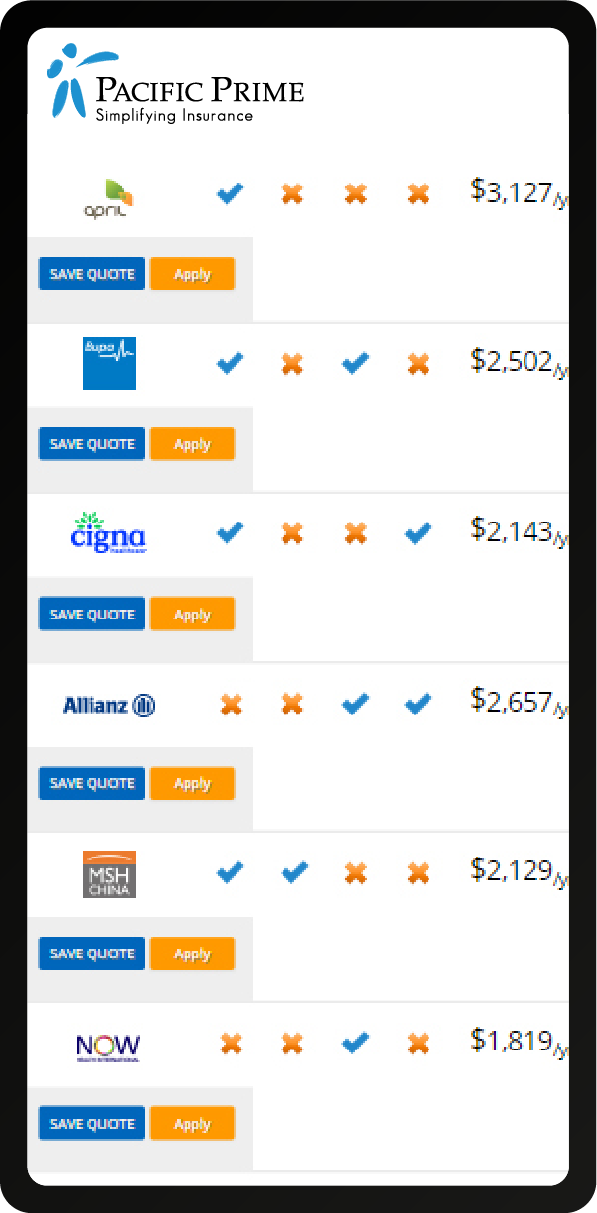
Contact us today to discover our plans and no-obligation quote comparisons.
Frequently Asked Questions
Which part of Australia is best to live in?
Melbourne, Sydney, Brisbane, Perth, and Adelaide are among the top cities to live in Australia. Each city offers unique benefits, so it is advisable to choose one based on job prospects, cost of living, and personal preferences.
What is the minimum wage in Australia?
Starting from July 1, 2025, the minimum wage in Australia will be AUD 24.95 (USD 16.45) per hour, or AUD 948 (USD 625.70) per week, which reflects a 3.5% increase from an hourly rate of AUD 24.10 (USD 15.90) in 2024.
What is the average monthly Australian income?
The average salary for Australians in 2025 is between AUD 7,900 and AUD 9,000 (USD 5,214 and USD 5,940), depending on industry, experience, and location. The median salary, however, is AUD 6,675 or USD 4,345 per month, with entry-level jobs starting at AUD 4,000 or USD 2,605.
Do international students in Australia get Medicare?
Generally, international students in Australia do not have access to the Medicare system. They are required to obtain Overseas Student Health Cover (OSHC), which is a type of private health insurance designed specifically to cover the medical expenses of international students in Australia.
What is the Reciprocal Health Care Agreement (RHCA)?
The RHCA allows visitors from 11 countries to access public healthcare in Australia if medically necessary at lower costs, and vice versa. The list includes visitors from Belgium, Norway, Finland, Italy, Malta, the Netherlands, New Zealand, Ireland, Slovenia, Sweden, and the UK.
- Thailand Digital Nomad Visa 2025: How to Apply – October 20, 2025
- Top Health Insurance in Thailand for Spanish Expats: Options and Benefits – October 20, 2025
- Arab Orient Insurance and GIG Health Insurance for Expats in Dubai – October 15, 2025

Comments