300x85-png.webp)


 Hong Kong
 Singapore
 China
China Dubai
Dubai Thailand
 United Kingdom
 Mexico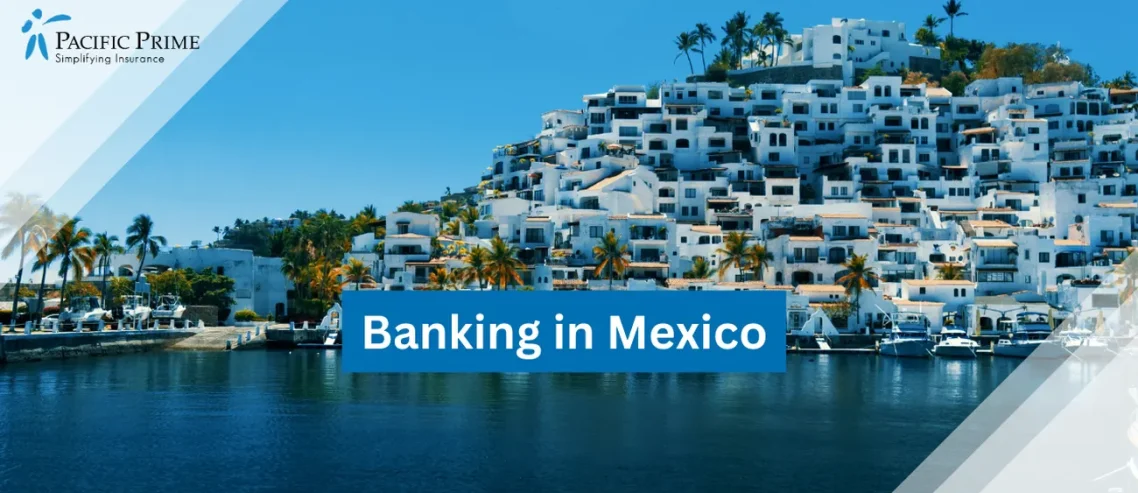
To open a bank account as a non-resident or expat in Mexico, you’ll need to provide documentation verifying your identity and demonstrate sufficient funds to cover associated charges. These include passport photos, utility bills, and proof of legal entry into Mexico.
Discover the world’s top
health insurers.
Compare quotes with
a click of the button.
Do you want to settle down in Mexico? Are you looking to open a bank account in Mexico? Keep reading this article to be informed on all the procedures. You may also read up on the top 10 international insurance companies in Mexico for expats.
This Pacific Prime article will detail how expats can open bank accounts in Mexico, the tax advantages for foreign individuals and corporations, and the importance of securing health insurance before making your way there.
How Can Expats Open Bank Accounts in Mexico?
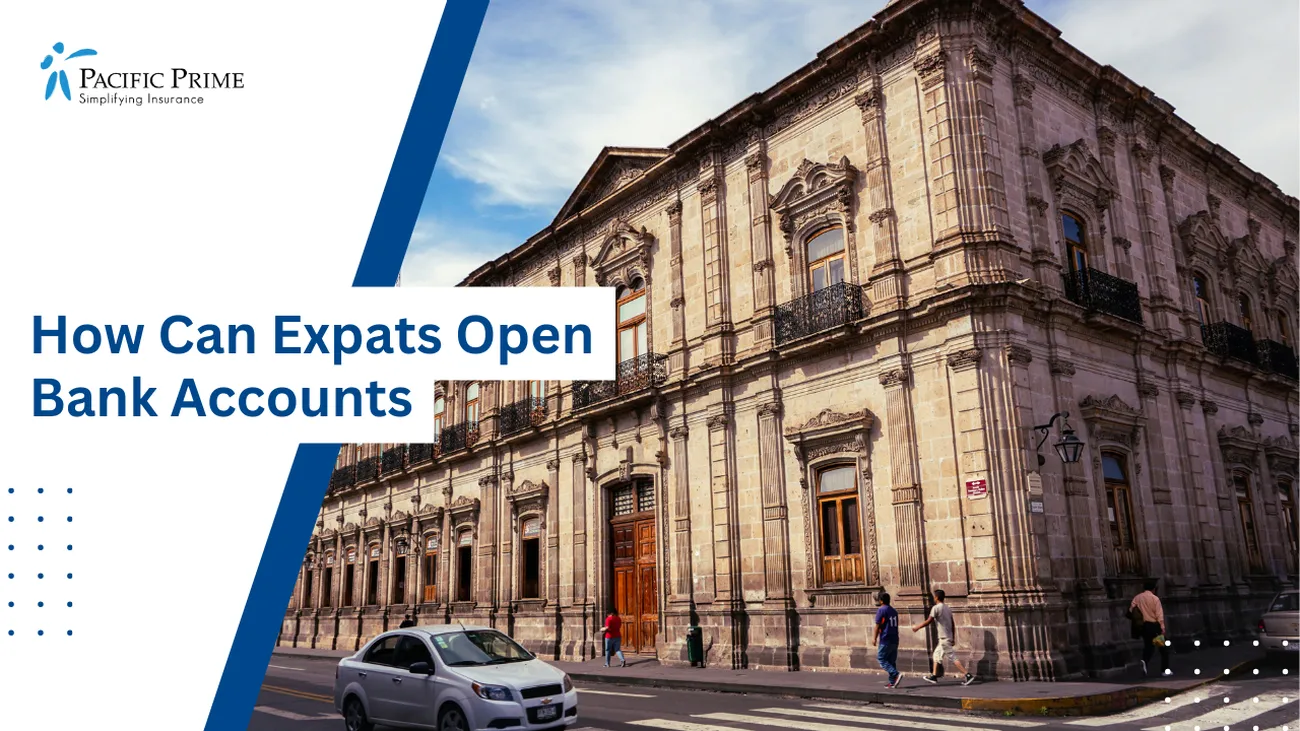
Expats can open a bank account by visiting a local bank branch and providing their passport, residency card, proof of address, foreign ID, and a Mexican phone number. These are standard requirements for most bank applications; however, it is advisable to also check each bank’s respective website.
Listed below are the extensive requirements to open a bank account in Mexico:
- Valid government-issued photo identification (like a Passport)
- A letter confirming your address issued within the past three months (such as a utility bill)
- Documentation proving your legal entry into Mexico, such as a residency card, visa card, or FM2 form
- Providing a minimum deposit of around MXN $800-1000 or USD$40-50
Which Banks Should Expats Open an Account With?
While there are many banks to choose from, InterNations and ADV Ratings list BBVA Bancomer, Banorte, Banco Santander, and Citibanamex as the banks that expats prefer the most, which provides them with an option to open an international bank account.
Listed below are the details of each bank and why they are most popular among expats:
- BBVA Bancomer: Presently holds the top position among Mexico’s banks based on total assets. Offering extensive services catering to private individuals, retail clients, and corporations, it stands as a major player in the Mexican banking sector.
- Banorte: Currently the second-largest bank in Mexico in terms of total assets, predominantly owned by Mexican investors. Renowned for its widespread network of POS terminals and bank branches, it offers convenient accessibility to its customers.
- Banco Santander: Positioned as the third-largest bank in Mexico by total assets, Banco Santander serves a customer base exceeding 20 million. Its offerings include competitively priced credit cards, insurance, and retirement products, along with cash management solutions.
- Citibanamex: Ranked fourth in Mexico’s banking landscape by total assets, Citibanamex caters extensively to corporate clients and small to medium-sized enterprises (SMEs), including those in the retail sector.
To register for online banks, expats can rely on Hey Banco, SuperDigital, and Amazon Rechargeable cards. Their details are as follows:
- Hey Banco: Comprehensive banking services tailored for both personal and business needs, encompassing credit card management, payroll solutions, loan administration, and investment management.
- SuperDigital: A digital platform designed specifically for the Latin American market, addressing the financial requirements of both banked and unbanked individuals by offering a diverse array of services.
- Amazon Rechargable: A globally accepted cash card usable at ATMs worldwide, devoid of monthly charges or obligatory minimum balances. Deposits can be conveniently made at Bonarte ATMs and branches.
To register for international banks that operate in Mexico, expatriates can look into the following. Please note that these banks are more catered to investors and business owners in Mexico:
- HSBC Mexico: HSBC operates as one of the major banking institutions in Mexico, offering a wide range of financial services, including retail banking, wealth management, corporate banking, and investment banking. It caters to both individual and corporate clients with a diverse portfolio.
- Mitsubishi Bank: Mitsubishi UFJ Financial Group (MUFG) operates in Mexico through its subsidiary, Mitsubishi UFJ Financial Group Mexico (MUFG Mexico). It provides corporate and investment banking services, including financing, advisory, and treasury services, primarily serving large corporations.
- Scotiabank Inverlat: Scotiabank Inverlat is a subsidiary of the Canadian multinational bank, Scotiabank. It offers retail and commercial banking services in Mexico, including personal banking, mortgages, loans, and investment products.
- ING Bank: ING Bank operates in Mexico as a provider of wholesale banking services, focusing on corporate and investment banking solutions. It offers a range of financial products and services, including financing, advisory, risk management, and capital markets services.
- UBS Bank: UBS operates in Mexico as a provider of wealth management and investment banking services. It offers tailored wealth management solutions, investment advisory services, and access to global capital markets for high-net-worth individuals, institutional clients, and corporate clients.


Mexico’s Tax System
In a calendar year, Mexico’s tax system incorporates corporate tax, VAT, wage taxes, social security, capital gains, and real estate as part of banking tax, so it is advisable for all expats to understand the main taxes and their types prior to conducting any type of banking.
- Corporate Tax: Mexican companies are obligated to pay tax on all income earned, irrespective of business type, at a rate of 30%. Foreign companies are subject to identical tax regulations, although there are exemptions aimed at attracting foreign investment.
It’s also noteworthy that, unlike many Latin American nations, Mexico primarily imposes taxes at the federal level. Additionally, companies may face a 10% tax on employee profit-sharing.
- VAT: Known as Impuesto al Valor Agregado (IVA), the standard rate is 16% and is applicable to goods and services. However, staple foods, water, agricultural supplies, books, and magazines are exempt. Certain services, such as immovable property, financial services, and insurance, are also exempt.
- Wage Taxes and Social Security: Under the Impuesto Sobre la Renta (ISR), employers may be required to pay a monthly wage tax of around 2-3%, varying by location. All employees must be registered with the Mexican Institute of Social Security, which provides unemployment and disability benefits.
- Capital Gains and Real Estate: Property taxation in Mexico encompasses acquisition tax, which can reach up to 5.9% in Mexico City; annual predial tax paid to the municipality, and capital gains tax, also classified under Impuesto Sobre la Renta (ISR).
Although this may seem complex; fret not. Mexico’s taxation system is very advantageous for expatriates and foreign investors who aim to establish and run businesses. Our next section will provide you with extensive details on the tax advantages.
Tax Advantages for Expats in Mexico
Mexico offers a highly favorable tax framework, simplifying property ownership and business ventures for expatriate residents. These advantages include a 10% tax on dividends, exemption from capital duty, no payroll taxes, transfer taxes ranging from 2% to 5%, no stamp duty, and more.
Here’s a breakdown of the tax incentives available to Mexican expatriates:
- 10% Tax on Dividends: Mexico imposes a flat 10% tax rate on dividends, promoting investment and benefiting shareholders with a lower tax burden compared to other countries.
- Absence of Capital Duty: Unlike certain jurisdictions, Mexico does not impose capital duty, streamlining asset transfers like stocks and real estate transactions without additional tax burdens.
- No Payroll Taxes: Businesses in Mexico are exempt from payroll taxes, reducing administrative costs and fostering business growth and employment opportunities.
- Transfer Taxes Ranging From 2% to 5%: Mexico levies transfer taxes, typically ranging from 2% to 5%, on real estate transactions, maintaining accessibility and affordability in property markets.
- No Stamp Duty: Mexico does not enforce stamp duty on legal documents or transactions, alleviating financial burdens for individuals and businesses.
- Non-Residents Taxed Solely on Mexico-sourced Income: Non-residents earning income in Mexico are taxed only on income generated within the country, preventing double taxation and encouraging international investment.
- No Capital Acquisition Tax: Mexico does not impose capital acquisition taxes on assets like stocks, bonds, or real estate transfers, promoting investment and facilitating asset transactions.
Before Setting Up a Bank Account, Secure Health Insurance
Living in Mexico requires careful consideration of healthcare, and health insurance plays a crucial role for expatriates and foreign residents in Mexico, ensuring access to top-tier medical services. It acts as a protective measure, providing both peace of mind and financial stability.
Listed below are the advantages of taking out health insurance as an expat living in Mexico:
- Choice and Flexibility: Health insurance provides expatriates with the freedom to select their preferred healthcare providers and facilities. They can opt for private hospitals or clinics, which often offer shorter wait times, English-speaking staff, and personalized attention.
- Peace of Mind: With health insurance coverage, expatriates can rest assured that their medical expenses are taken care of. This eliminates worries about facing significant healthcare costs in the event of accidents or illnesses.
- Emergency Assistance: In case of a medical emergency, policyholders have access to 24/7 helplines and assistance from their insurance provider. This includes arranging emergency medical evacuations and offering guidance on local healthcare options.
- Language and Cultural Support: For expatriates who may not speak Spanish fluently or are unfamiliar with the local healthcare system, health insurance offers language support services. This facilitates effective communication between patients and healthcare providers.
- Additional Services and Benefits: Some health insurance plans may include extra services like preventive care, wellness programs, mental health support, and coverage for pre-existing conditions.
- Access to Quality Healthcare: Health insurance grants expatriates access to a wide network of healthcare providers and facilities, allowing them to receive medical care from reputable hospitals, clinics, and specialists.
- Comprehensive Coverage: Typically, health insurance plans for expatriates in Mexico offer comprehensive coverage, including doctor consultations, hospitalization, surgeries, laboratory tests, prescription drugs, and emergency services. Without such coverage, these expenses could be expensive.
Frequently Asked Questions
Can expatriates establish a bank account in Mexico?
Expatriates are eligible to open bank accounts. However, Mexican banks necessitate the submission of legal documentation verifying residency status before an account can be opened. Additionally, providing a passport photo and other supplementary documents is mandatory.
Is it possible for tourists to open bank accounts in Mexico?
Similar to expatriates, possessing Mexican citizenship is not a prerequisite for opening a bank account. Documentation demonstrating temporary or permanent residency, such as utility bills, suffices.
What is the process for temporary residents to open a bank account in Mexico?
Temporary residents can conveniently visit any nearby bank branch in Mexico. They are required to furnish passport photo identification, evidence of residency for the preceding three months (e.g., utility bills), and proof of lawful entry into the country, such as a residency or visa card.
Conclusion
In conclusion, navigating banking in Mexico as an expatriate involves understanding the requirements for opening accounts, choosing the right bank, and grasping the country’s tax system.
With an array of banking options and tax advantages, coupled with the importance of securing health insurance, expatriates can confidently embark on their journey in Mexico, ensuring financial stability and access to quality healthcare.
However, prior to embarking on their life in Mexico, expatriates must give careful thought to health coverage. With over 20 years of experience, Pacific Prime stands out for finding affordable, tailored solutions to meet your needs. Additionally, our expert advice is always free of charge.
Furthermore, we offer resources to expand your knowledge, covering topics such as the top 10 insurance companies in Mexico for expats, driver’s license requirements in Mexico for Americans, and the cost of living in Mexico in 2024.
Whether you opt to compare quotes or reach out to us directly, take the proactive step today to ensure your peace of mind.

Upon graduating from Mahidol University International College’s International Relations program, he spent his career in marketing and business development, working for an international subcontractor, a marketing research firm, an international news agency, a software development company, and a creative agency. His journey now continues at Pacific Prime, where he hopes to make an impact by simplifying insurance and writing a gargantuan amount of SEO articles to draw in billions of leads.
In his free time, Piyanat is an avid martial artist and musician, spending most of his time at boxing gyms in Nakhon Pathom and music studios with his friends in the music industry.
- Chiang Mai Travel Insurance: A Comparison Of The Top Providers – August 22, 2025
- Last-Minute Travel Insurance: How to Get Covered After Departure – August 18, 2025
- Childbirth Coverage in Singapore: Maternity Health Insurance Explained – August 18, 2025


Comments