300x85-png.webp)


 Hong Kong
 Singapore
 China
China Dubai
Dubai Thailand
 United Kingdom
 Mexico
The benefits of giving birth in Singapore include experiencing some of the lowest risks for infant and maternal fatality in the world. Permanent residents have additional maternity benefits through the MediSave program, and citizens have even more monetary and leave benefits.
Discover the world’s top
health insurers.
Compare quotes with
a click of the button.
Are you planning to start or grow your family while living abroad in Singapore? Are you a permanent resident or citizen?
Keep reading to learn about the benefits of giving birth in Singapore. Pacific Prime will compare the infant and maternal fatality rates in Singapore to the United States and other developed countries. We’ll also explain the benefits available to citizens and permanent residents.
Don’t forget to secure maternity insurance in Singapore! Medical costs add up quickly, and maternity coverage has a waiting period before medical expenses are paid for by insurance.
Benefits of Giving Birth Abroad in Singapore
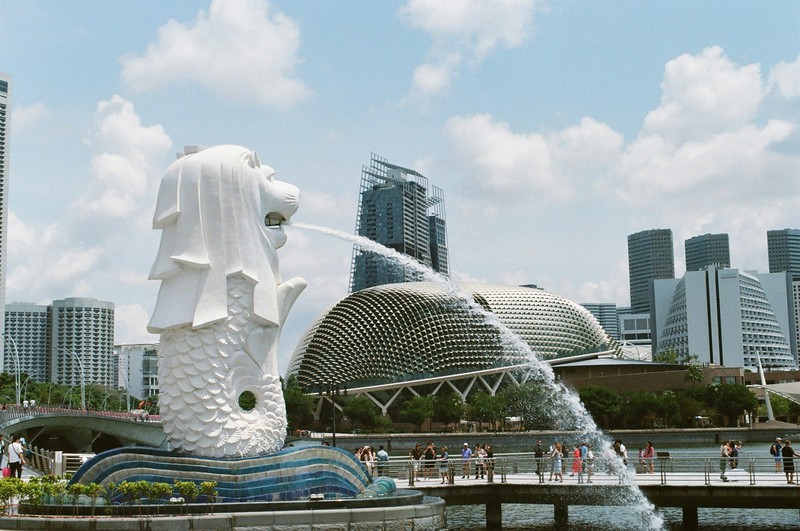
Singapore has some of the lowest maternal and infant mortality rates in the world, and Singapore’s rates are lower than the US, which has higher medical costs. Expatriates who are permanent residents of Singapore can claim MediSave benefits to help cover the medical costs of pregnancy and delivery.
Singapore’s Low Infant Mortality Rate
Singapore had one of the lowest infant mortality rates worldwide in 2023. Singapore’s rate of 1.54 infant deaths per 1,000 live births is much better than the United States rate of 5.4 infant deaths per 1,000 live births, and medical costs are higher in the United States than Singapore.
The following points compare the top five lowest infant mortality rates worldwide. These countries were the only ones with infant mortality rates under 2.0 infants per 1,000 live births in 2023.
- Slovenia had 1.51 infant deaths per 1,000 live births in 2023.
- Singapore had 1.54 infant deaths per 1,000 live births in 2023.
- Iceland had 1.63 infant deaths per 1,000 live births in 2023.
- Monaco had 1.75 infant deaths per 1,000 live births in 2023.
- Japan had 1.88 infant deaths per 1,000 live births in 2023.
Singapore’s Low Maternal Mortality Rate
Singapore had a maternal mortality rate of 2.8 deaths per 100,000 live or stillbirths in 2021. By comparison, the United States had a maternal mortality rate of 32.9 deaths per 100,000 live or stillbirths in 2021 despite higher average medical costs.
Maternal mortality rate is a measure of how many women die due to pregnancy-related causes. Here are the five countries in Southeast and Eastern Asia with the lowest maternal fatality rates in 2020 per 100,000 live or stillbirths:
- Japan
- Singapore
- South Korea
- Malaysia
- China
Find out more about maternity mental health support in Singapore.
MediSave Maternity Benefits for Permanent Residents in Singapore
Permanent residents and citizens of Singapore can select a MediSave maternity package with benefits to help cover the medical expenses of pregnancy and delivery. MediSave benefits are available for assisted conception, maternity care, and newborn care.
Here are the MediSave withdrawal limits for pregnancy and delivery-related expenses:
- SGD $900 limit for pre-delivery expenses, including ultrasounds, tests, pre-natal consultations, and medications
- Depending on the delivery procedure, there is a limit of SGD $750 to $2,600
- Up to SGD $500 per day for the first two days and $400 per day subsequently
Benefits of Giving Birth for Singapore Citizens
If one or both parents of the baby born in Singapore are citizens and the parents are legally married, then the family, child, or parents are eligible for benefits unique to citizens of Singapore. There’s a cash bonus, MediSave benefits to cover medical expenses, and paid leave options for parents.
We’ll give more information about each benefit available.
Singapore Baby Bonus Scheme
The families of babies born after February 14, 2023, to legally married parents, at least one of whom is a citizen of Singapore, are eligible for the enhanced Singapore Baby Bonus Scheme. This scheme supplies cash payments every six months, grants, and matching options up until 6.5 years of age.
Singapore Baby Bonus Cash Gift
Singapore’s Baby Bonus Cash Gift (BBCG) is paid out over the course of the child’s first 6-and-a-half years of life. The following table shows how the cash bonus payment amounts every six months for families of children who are eligible for the Baby Bonus Cash Gift.
|
Singapore Enhanced Baby Bonus Cash Gift |
||
| Age of Eligible Child |
BBCG Payment Amounts |
|
| Baby Birth Order: 1st or 2nd Child | Baby Birth Order: 3rd or Subsequent Children | |
| Birth | SGD $3,000 | SGD $4,000 |
| 6 Months | SGD $1,500 | SGD $2,000 |
| 1 Year | SGD $1,500 | SGD $2,000 |
| 18 Months | SGD $1,000 | SGD $1,000 |
| 2 Years | SGD $400 | SGD $400 |
| 2.5 Years | SGD $400 | SGD $400 |
| 3 Years | SGD $400 | SGD $400 |
| 3.5 Years | SGD $400 | SGD $400 |
| 4 Years | SGD $400 | SGD $400 |
| 4.5 Years | SGD $400 | SGD $400 |
| 5 Years | SGD $400 | SGD $400 |
| 5.5 Years | SGD $400 | SGD $400 |
| 6 Years | SGD $400 | SGD $400 |
| 6.5 Years | SGD $400 | SGD $400 |
| Total Cash Benefit: | SGD $11,000 | SGD $13,000 |
Singapore First Step Grant and Co-Matching
Singapore’s First Step Grant and Co-Matching funds are placed in a Child Development Account at an approved bank. These funds can be used until the last day of December of the year your child turns 12 on approved medical and educational expenses.
The following table illustrates the deposit amounts available without parent contribution through the First Step Grant and maximum amounts for co-matching based on parent contributions to an approved Child Development Account.
| First Step Grant and Co-Matching Child Development Account Benefits in Singapore | ||
| Birth Order of Child | First Step Grant (not family contribution dependent) | Co-Matching Maximum (dependent on family contribution) |
| First Child | SGD $5,000 | SGD $4,000 |
| Second Child | SGD $7,000 | |
| Third Child | SGD $9,000 | |
| Fourth Child | SGD $9,000 | |
| Fifth and Subsequent Children | SGD $15,000 | |
The following list includes allowed expenses for the First Step Grant and related benefits:
- Fees for registered childcare centers and early intervention programs
- Fees for kindergarten and special education schools
- Medical expenses at hospitals and general practitioner clinics
- Premiums for Singapore’s MediShield Life
- Premiums for Medi-Save approved private plans
- Assistive technology devices
- Approved healthcare expenses at pharmacies
- Eye-related expenses and products at optical centers
MediSave Maternity Benefits for Citizens in Singapore
MediSave offers medical maternity benefits to offset the costs of conception support, maternity care, and newborn care. There are withdrawal limits for each type of maternity care. For example, prenatal care has a limit of $900, and delivery benefit limits depend on the delivery method.
Here are the MediSave withdrawal limits for pregnancy and delivery-related expenses:
- SGD $900 limit for pre-delivery expenses, including ultrasounds, tests, pre-natal consultations, and medications
- Depending on the delivery procedure, there is a limit of SGD $750 to $2,600
- Up to SGD $500 per day for the first two days and $400 per day subsequently
Singapore Government-Paid Maternity Leave (GPML)
Singapore offers government-subsidized maternity leave (GPML) for the mother of infant citizen of Singapore. The mother must have been working at least three continuous months for an employer in Singapore before the birth of the child. Paid maternity leave is for up to 16 weeks.
Leave may begin up to four weeks before the birth of the child up until the delivery. The first 8 weeks of leave are continuous. The second 8 weeks may be taken anytime within one year of the child’s birth as agreed upon with the mother’s employer.
Self-employed mothers are still eligible for this benefit as long as they have been employed in their current vocation for at least three continuous months and will not be able to earn income due to maternity leave.
Maternity Cash Benefit in Singapore
The Government-Paid Maternity Benefit (GPMB) is designed for mothers of infant citizens of Singapore. To be eligible, the mother must be ineligible for government-subsidized maternity leave and worked at least 90 days out of the last 12 months.
For your first and second child, the government pays 56 days’ worth of your income. For third, fourth, or subsequent children, the government in Singapore pays 112 days of your income. The cap is SGD $10,000 per 28 days.
Paternity Benefits in Singapore
Fathers of newborn citizens in Singapore are eligible for up to four weeks of paid paternity leave (GPPL). Fathers of newborn citizens who do not qualify for GPPL may qualify for a government-paid paternity benefit (GPPB) for up to four weeks of pay, capped at SGD $2,500 per 7 days.
Qualifications for government-paid paternity leave include being married to the birth mother of the child at some point between conception and the end of the first twelve months of the child’s life. You must be self-employed with the same vocation or with the same employer for at least three continuous months.
To be eligible for the government-paid paternity benefit, the father of the newborn Singapore citizen must not be eligible for GPPL. He must be married to the birth mother at some point between conception and the end of the child’s first twelve months of life. He must also have worked at least 90 days out of the last twelve months.
GPPB cannot be claimed unless time off from work is used. The father cannot continue working and receiving income and receive GPPB.
Frequently Asked Questions
Can foreigners have a baby in Singapore?
Permanent residents in Singapore can have a child in Singapore and apply for a long-term visitor pass for the child. Foreign visitors in Singapore will have to apply for and receive permission to give birth in Singapore.
Is a baby born in Singapore automatically a citizen of Singapore?
Babies born in Singapore are not automatically citizens of Singapore. At least one of the baby’s parents must be a citizen of Singapore to be eligible for citizenship at birth. Babies of permanent residents are eligible to apply for a long-term visitor pass but not citizenship.
How long after birth can a newborn stay in Singapore if not a citizen?
Babies born to permanent residents of Singapore may be eligible for a long-term visitor pass (LTVP). The parents need to apply for the LTVP. Babies born to foreign citizens in Singapore may stay for up to 42 days.
Conclusion
Giving birth in Singapore has many benefits. Expats and visitors can afford the medical costs of giving birth in one of the safest countries for women and newborns by purchasing a robust maternity insurance plan with coverage in Singapore.
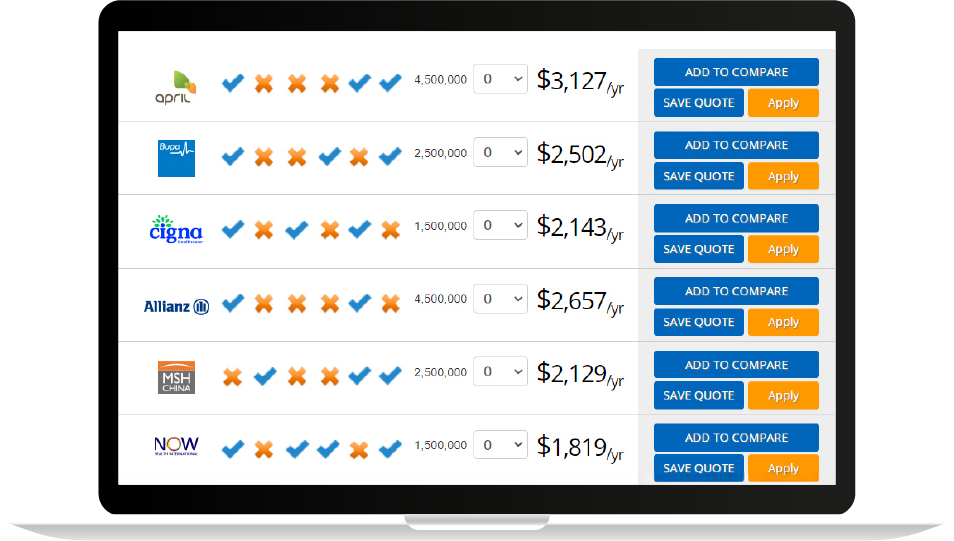
Pacific Prime makes it easy for clients to compare insurance quotes from multiple companies for free.
If you have questions or need specific advice, contact Pacific Prime online or by calling 1-800-868-1451.

Serena earned her Bachelor’s Degree in Psychology from the University of British Columbia, Canada. As such, she is an avid advocate of mental health and is fascinated by all things psychology (especially if it’s cognitive psychology!).
Her previous work experience includes teaching toddlers to read, writing for a travel/wellness online magazine, and then a business news blog. These combined experiences give her the skills and insights she needs to explain complex ideas in a succinct way. Being the daughter of an immigrant and a traveler herself, she is passionate about educating expats and digital nomads on travel and international health insurance.
- How to Compare Travel Insurance Plans the Smart Way – October 21, 2025
- Best Hospitals in the UAE: Top Picks in Dubai and Abu Dhabi – October 21, 2025
- How Much is a Doctor Visit in Dubai Without Insurance? – October 21, 2025



Comments