300x85-png.webp)


 Hong Kong
 Singapore
 China
China Dubai
Dubai Thailand
 United Kingdom
 Mexico
The World Health Organization states that a health outcome is a change in the health status of an individual, group, or population because of planned intervention. Healthcare providers, employers, and governments must focus on improving the health of patients, employees, and populations.
Discover the world’s top
health insurers.
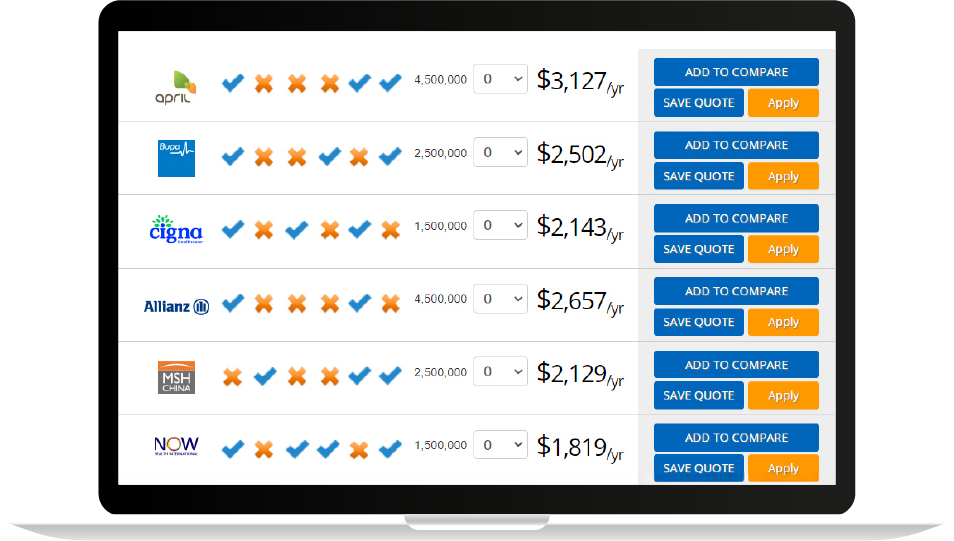
Compare quotes with
a click of the button.
To shed some light on the issue, this Pacific Prime article looks at the relationship between health insurance coverage, employee benefits, and employee health outcomes.
How Health Outcomes Are Measured

Quality of life encompasses physical, mental, emotional, and social functioning and is the key aspect to most definitions of health. Quality of life also plays a critical role in determining how health outcomes are measured.
Put differently, quality of life refers to how physically, mentally, emotionally, and socially healthy people feel. An oft-used measurement of quality of life is healthy days, which is generated by asking people about the number of physically or mentally unhealthy days they experience per month.
The Correlation Between Healthcare Costs and Health Outcomes
New medical technology, an imbalance of health resources, increased compensation for medical professionals, and healthcare overutilization all contribute to the rising cost of healthcare in 2025, as outlined in our Cost of Health Insurance Report 2024.
In the past 20 years, consumer price inflation (CPI) has grown at an average rate of about 2.2 percent, whereas the price of medical care has grown at an average rate of 3.6 percent: that’s about 70 percent faster. Explanations are not hard to find.
As healthcare spending continues to exceed economic growth, more people cannot afford and access quality care. Demographic changes such as aging populations and the growing incidence of noncommunicable diseases (NCDs) are further exacerbating the healthcare cost crisis.
Some commentators believe the challenge of delivering better health outcomes with lower overall costs can be attributed to ineffective cost measurement processes, leaving better value care out of reach for both providers and patients.
If healthcare costs are better controlled, people may have a greater ability to access the care they need to live healthier lives. For instance, patients can undergo more frequent screenings and health check-ups to ensure early detection of cancer and diabetes.
The Role of Health Insurance Coverage in Overall Health
Health insurance is a key tool for managing financial risk and offsetting the cost of care. According to the New England Journal of Medicine, there is abundant evidence that suggests having health insurance improves financial security.
From an employee benefits perspective, our annual Employee Benefit Trends Study has long reported the importance employees place on financial security. One of the key ways businesses address this need is by offering employer-provided health insurance as part of their employee benefits package.
In addition to bolstering employee financial security, there’s also a good chance that implementing the right employee health benefits leads to better workforce health outcomes, which translates to lower healthcare costs for employers in the long run.
How Health Insurance Provides Access to Medical Care
According to the aforementioned New England Journal of Medicine article, several studies have shown that health insurance coverage has been linked to higher rates of patients being able to afford care, a factor that is often associated with better health outcomes.
In recognizing the importance of ensuring universal access to quality care, a growing number of locations have made or are in the process of making health insurance mandatory.
Access to Preventative Services
Expanding health insurance benefits increases access to preventative services, which can help patients detect health issues early on. As many as 39 percent of employers globally offer preventative care and wellness programs, highlighting the importance of offering this coverage as part of employee benefits..
Self-Reported Health and Wellbeing
Health insurance coverage can also improve a patient’s perceptions of their health. According to the World Health Organization, subjective physical and mental well-being is one of the key goals that medical care should aim to achieve.
Additionally, people who report that their health is poor have been found to have mortality rates two to ten times higher than those who report being in the healthiest category.
How Health Insurance Can Affect Mental Health
Mental health has become a key factor to health outcomes. As employee stress continues to rise, 61 percent of global insurers now offer coverage for mental health treatment in their standard health insurance plans.
Our article written in partnership with Asia Care Group, further reveals the importance of addressing employee mental health:
- Demanding jobs increase the chances of physician-diagnosed illness by 35 percent, and long working hours increase mortality by almost 20 percent.
- Job insecurity increases the likelihood of reporting poor health by 50 percent.
- The global cost of mental disorders is expected to reach USD 6 trillion by 2030, which primarily includes the costs and strains to the healthcare sector.
While health insurance plays a significant role in enabling access to better mental health care, employers are advised to look beyond health insurance in order to employ a more holistic approach to employee benefits that includes considerations for wellness benefits that target mental health.
Examples of what employers can do to address mental health include:
- Inviting a mental health professional to talk to employees about various mental health topics.
- Providing mental health management resources, such as online counseling services.
- Partnering with an employee benefits specialist like Pacific Prime, who can help devise, implement, and manage your company’s benefits and mental wellness solutions.
Looking to Learn More about Improving Your Employees’ Health Outcomes?
As employee benefits specialists, Pacific Prime has had almost 20 years of experience delivering employee benefits solutions to companies of all sizes and industries. We can devise, implement, and manage optimal plans that improve employee health outcomes.
What’s more, we’re an insurance intermediary, which means we are not beholden to any one insurance provider. As such, we work for you, and not the insurer: you can rest assured that we’ll find you the best plan for your employee needs.
To learn more about how Pacific Prime can help your company, contact us today! Our corporate team is standing by to offer their impartial advice, as well as give you a no-obligation, free quote.
Frequently Asked Questions
How does health insurance coverage affect employee health outcomes?
Health insurance improves financial security by reducing unexpected medical costs and increasing access to care. This leads to more frequent screenings, early detection of diseases, and overall better health-related quality of life for employees.
What role do healthcare costs and preventive services play in shaping outcomes?
Rising healthcare costs can limit access to quality care. However, when insurers and employers manage costs effectively, employees gain better access to preventive services—like regular check-ups—which can lead to early disease detection and lower long-term healthcare expenses.
How is mental health integrated into employee benefits, and why is it important?
With increasing stress and burnout, mental health coverage is critical. Comprehensive benefits, including mental health resources and Employee Assistance Programs (EAPs), help reduce absenteeism and improve overall well-being, ensuring a healthier and more productive workforce.

Upon graduating from Mahidol University International College’s International Relations program, he spent his career in marketing and business development, working for an international subcontractor, a marketing research firm, an international news agency, a software development company, and a creative agency. His journey now continues at Pacific Prime, where he hopes to make an impact by simplifying insurance and writing a gargantuan amount of SEO articles to draw in billions of leads.
In his free time, Piyanat is an avid martial artist and musician, spending most of his time at boxing gyms in Nakhon Pathom and music studios with his friends in the music industry.
- Chiang Mai Travel Insurance: A Comparison Of The Top Providers – August 22, 2025
- Last-Minute Travel Insurance: How to Get Covered After Departure – August 18, 2025
- Childbirth Coverage in Singapore: Maternity Health Insurance Explained – August 18, 2025



Comments