300x85-png.webp)


 Hong Kong
 Singapore
 China
China Dubai
Dubai Thailand
 United Kingdom
 Mexico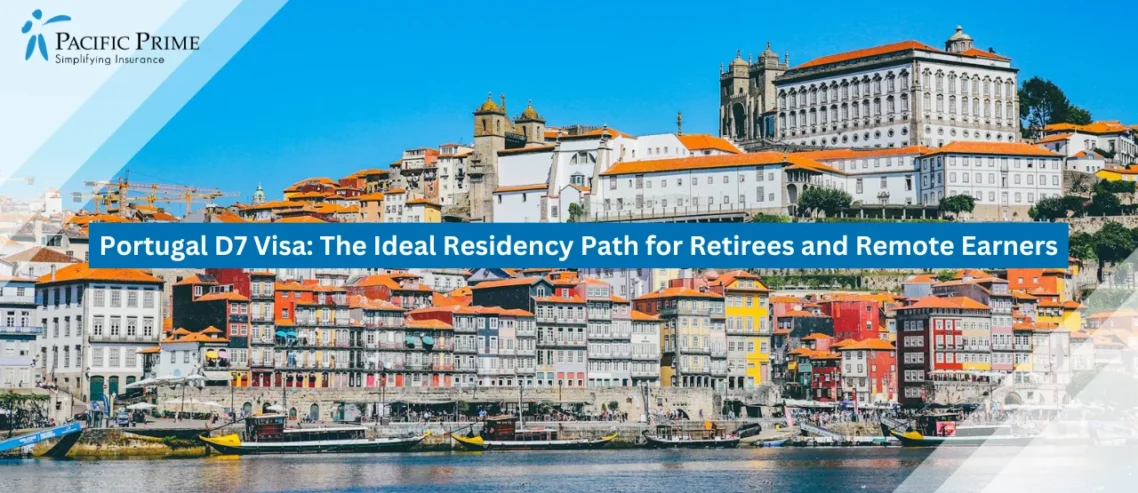
Portugal’s D7 Visa, also known as the passive income visa, is a popular visa among retirees and digital nomads due to its relatively low requirements. To qualify for the D7 Visa, you need to show regular monthly income above the Portuguese minimum wage.
Discover the world’s top
health insurers.
Compare quotes with
a click of the button.
Are you thinking about moving to Portugal via the D7 Visa? In this article, we will cover everything you need to know, from eligibility and application process to permanent residency and potential citizenship paths the visa offers.
Explaining Portugal’s D7 Visa

The Portugal D7 Visa is for non-EU retirees or remote workers seeking residency in Portugal. It requires proof of income and accommodation and can lead to permanent residency.
Initially, the D7 Visa is valid for a period of two years. After that, you can renew it for an additional three years. One of the most appealing aspects of this visa is that it provides a clear path to permanent residency and potentially Portuguese citizenship after five years.
Your income can come from various sources. The Portuguese authorities accept retirement pensions, rental income, dividends, remote work salary, intellectual property royalties, and investment returns. The key factor is that the income must be stable and regular.
Unlike some other residency options that require a large commitment, the D7 focuses simply on proving you have sufficient regular income to live comfortably in Portugal. This makes it an accessible option for those looking to make Portugal their home.
Portugal D7 Visa Requirements
To qualify for the D7 Visa, you’ll need to show regular monthly income above the Portuguese minimum wage €870 (approximately USD $1,011). If you’re bringing family members, you’ll need to show additional income—about €380 (USD $442) for a spouse and €255 (USD $296) for each dependent child.
Retirement pensions, whether public or private, investment dividends, rental income from properties, and regular returns from investments are all accepted as valid income sources. Remote work income is also acceptable.
Required Documents
There are many documents you have to prepare when applying for the D7 Visa, from personal documents to proof of income, housing documents, and proof of health insurance coverage. In this section, we will cover all the documents required.
Essential Personal Documents
- Valid passport with at least six months validity beyond visa request
- Four recent passport-sized photos (white background)
- Birth certificate with an apostille
- Marriage certificate (if applicable) with an apostille
- Criminal background check from the FBI with an apostille
- Must be issued within 90 days of application
- State-level background checks may also be required
Financial Documentation
- Proof of regular income:
- Bank statements for the last six months
- Investment portfolio statements
- Pension award letters
- Remote work contracts
- Rental income documentation
- Social Security benefit statements
- Portuguese bank account statements
- Portuguese tax number (NIF)
- Last two years of tax returns
- Proof of sufficient funds to support initial stay
- Usually 12 months of living expenses in a Portuguese bank account
Housing Documentation
- One of the following:
- Property deed if you’ve purchased property
- Rental contract (minimum 12 months)
- Term of lease must align with visa duration
- Utility bills or proof of address in your home country
Health and Insurance
- Private health insurance valid in Portugal
- Must cover minimum €30,000 (USD $34,851)
- Valid for the duration of visa
- Travel insurance for initial entry
- Medical report stating you’re in good health (some consulates may require this)
Application Process for the D7 Visa
When applying for the D7 Visa, you’ll want to start preparing around six months ahead of your intended relocation date. During this initial planning phase, you should research potential locations in Portugal and carefully calculate your income to verify that it meets requirements.
Then start to gather the required documents, including an FBI background check, apostilles for official documents, and certified translations into Portuguese. Also, obtain comprehensive health insurance valid in Portugal.
Before submitting your visa application, you’ll need to establish some essential connections in Portugal. This includes obtaining your Portuguese Tax Number (NIF), which can be done remotely through a representative.
Once you have your NIF, you’ll need to open a Portuguese bank account and transfer sufficient funds to demonstrate your financial stability.
When you have your NIF and bank account, you’ll need either a long-term rental contract (minimum 12 months) or proof of property purchase in Portugal. This demonstrates your commitment to residing in the country and provides a legitimate address for official correspondence.
When you have completed the steps above, you can start applying for your visa. You’ll need to schedule an appointment at the Portuguese consulate that serves your area. At this stage, you will pay the initial visa application fee for the D7 Visa. The fee is €90 (USD $105) per person.
The processing time may take up to four months, during which you should maintain regular income deposits in your Portuguese bank account and keep your housing arrangement active.
After your visa is approved, you’ll receive a visa stamp in your passport. You must enter Portugal within four months of the visa being issued. Once you arrive in Portugal, make sure that you register with the local health center and tax office.
It is crucial that you make an appointment with the Immigration and Borders Service (SEF) within four months of your arrival. During this appointment, your visa will be converted into a residence permit, and you’ll receive your residence card, which is initially valid for two years.
During your appointment with the SEF, you will also be required to pay the residence permit fee, which is around €170 (approximately USD $200). For children under 18, the fee is slightly lower at around €85 (approximately USD $100).
The entire process requires careful attention to detail and proper timing. Working with a local immigration lawyer or relocation specialist can help navigate the complexities of the application process and avoid common pitfalls.
Portugal D7 Visa Residency Paths
The D7 Visa is a great way for retirees and remote workers to obtain permanent resident status in Portugal. The initial visa is valid for two years, after which it can be renewed up to three times for a total of five years, which makes you eligible to apply for permanent residency.
Health Insurance for Expats in Portugal
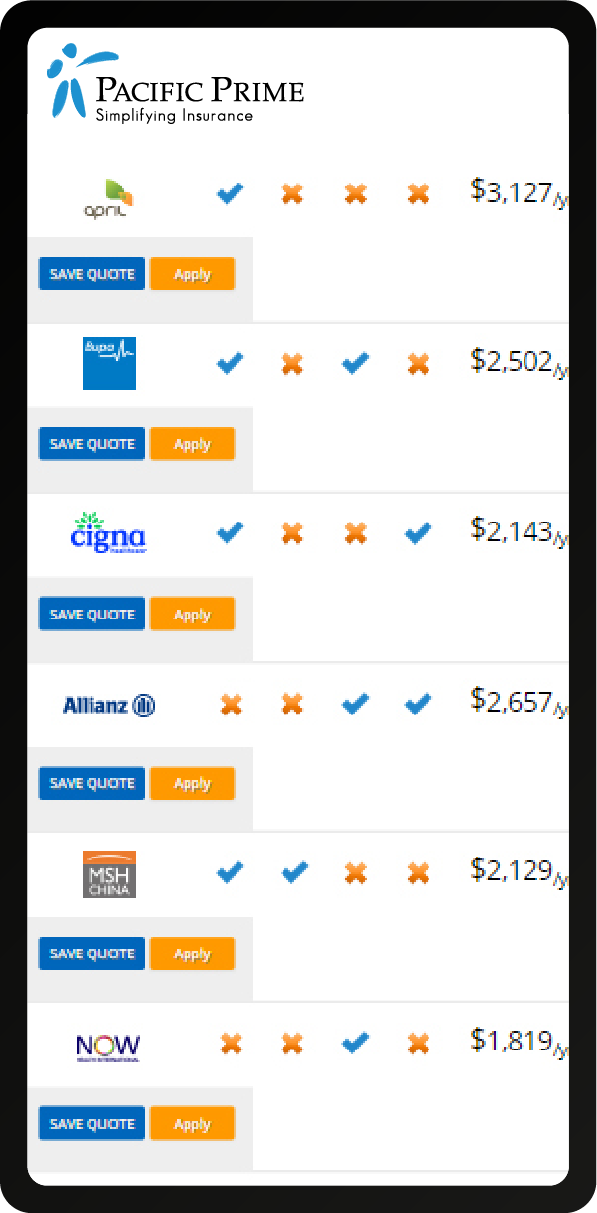
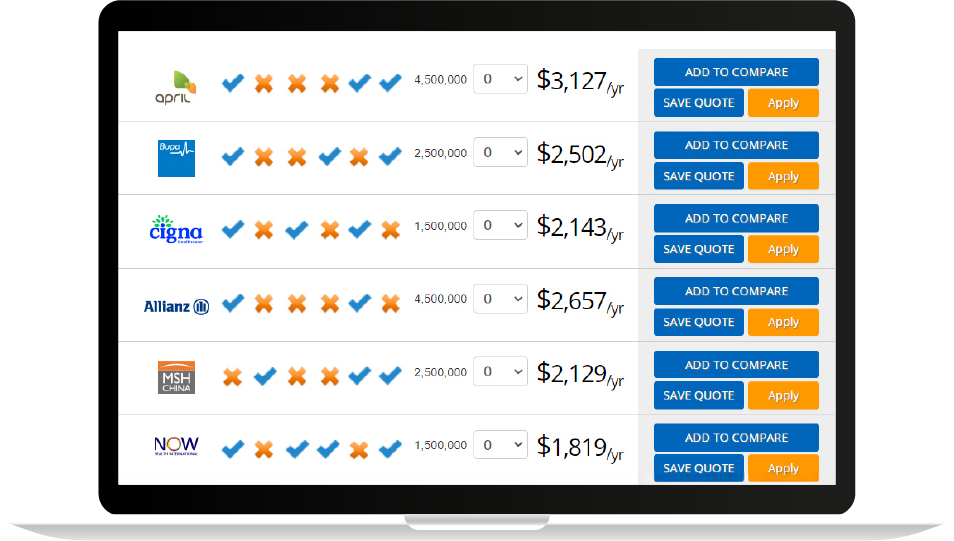
When securing health insurance for your visa, AXA, GeoBlue, Cigna, and NOW Health International are among the best private health insurers in Portugal for expats. Working with an international health insurance broker such as Pacific Prime can make this process a lot simpler.
Top Private Health Insurers in Portugal for Expats
AXA
AXA provides adaptable health insurance options to more than 95 million customers across over 50 countries. Their plans include five tiers (Foundation, Standard, Comprehensive, Prestige, and Prestige Plus) designed to meet the diverse healthcare requirements and budgets of expats.
GeoBlue
GeoBlue boasts one of the largest global direct billing networks, offers covered telemedicine services, and provides unlimited annual benefit limits for top-tier policyholders. Their plans’ comprehensive and flexible coverage makes them an ideal choice for expats in Portugal.
Cigna
Cigna‘s international health insurance plan offers comprehensive coverage for expats in Portugal. With a vast network of medical providers, accessing healthcare is easy, and their 24/7 customer support is a notable benefit as a global insurance provider.
NOW Health International
NOW Health International provides expats in Portugal with comprehensive and affordable plans that cover a range of medical services, including inpatient and outpatient treatments, emergency evacuation and repatriation, as well as dental and maternity care.
Get Your Insurance with Pacific Prime
Retiring or working remotely in Portugal can have many benefits, thanks to the relatively low cost of living and high quality of life. But it is crucial that you secure a comprehensive international health insurance policy not only for your visa, but also for your financial safety.
In order to find a plan that suits your needs, do proper research on different insurance plans and insurers to compare their plans, premiums, coverage limits, and other financial options, including deductibles and copays. This is where Pacific Prim can help you.
Pacific Prime is a global insurance broker with over 25 years of experience in the insurance industry. Our insurance experts can help you filter through different insurance plans from our extensive list of insurance partners to help you find a plan that suits you.
Contact us today for impartial advice or an obligation-free quote!
Frequently Asked Questions
How much money do I need in passive income for a D7 Visa in Portugal?
Retirees and remote workers hoping to get a D7 Portugal Visa requirements must prove they have a stable passive income of at least €870 per month (€10,440 annually), which is equivalent to Portugal’s minimum wage. This amount increases if the applicant has dependents.
How long can I stay in Portugal with a D7 Visa?
Expats moving to Spain with the D7 visa will first be allowed in Portugal for four months. During those four months, expats must apply for a residency permit through AIMA. Once that permit is granted, those on the D7 visa can stay for two years. With renewal, that time can be longer.
Can Americans retire and live in Portugal?
Americans who fulfill and then complete all application requirements are welcome to retire to and live in Portugal.

Born and raised in the cultural melting pot that is Hong Kong, and having studied at an international school, Vista has developed a multicultural perspective that he uses in his writing and strives to connect to people of different backgrounds.
In his free time, Vista enjoys immersing himself in different worlds, from video games to light novels and movies. His hobbies help him expand his writing style by putting himself in the point-of-view of different people and characters.
- Best International Health Insurance Plans for Expats in Fiji – October 17, 2025
- Best International Health Insurance Plans for Expats in Kosovo – October 17, 2025
- How to Get UAE Citizenship in Dubai – October 17, 2025



Comments