300x85-png.webp)


 Hong Kong
 Singapore
 China
China Dubai
Dubai Thailand
 United Kingdom
 Mexico
Private health insurance plans are more comprehensive, flexible, and portable than employer-sponsored plans, but corporate plans are typically more affordable, include direct billing, and automatically comply with the Dubai Health Authority’s health regulations for all Dubai residents.
Discover the world’s top
health insurers.
Compare quotes with
a click of the button.
Are you an expat in Dubai trying to decide between employee insurance and an individual private plan? Not sure which type will best meet your needs?
This article will detail not only the differences between these two types of health insurance in Dubai but will also break down the benefits and drawbacks of each and explain how you can decide between the two.
After you’ve finished this article, you’ll want to check out the top health insurance options for expats in Dubai and learn how Dubai’s healthcare system works.
What Employer-Sponsored Health Insurance is in Dubai
Employer-sponsored health insurance is coverage provided by companies to their employees as part of the employment package. In Dubai, health insurance is mandatory under Dubai Health Authority (DHA) regulations. Expats working in Dubai automatically gain access to this insurance.
Dubai employers are legally required to arrange and pay for at least a basic health insurance plan for each employee. An expats’ employer will enroll them in a compliant plan with an approved insurer.
Employees receive their insurance card through the employer, which allows access to medical services within the insurer’s network.
Key Features of Employer-Sponsored Health Insurance
Below are some of the key features of corporate health insurance plans for expats in Dubai.
- Legal Requirement: Employers must provide at least basic health insurance that meets DHA minimum standards.
- Premium Coverage: Employers cover the cost of employee premiums, reducing personal financial burden.
- Network Access: Policies typically include approved hospital and clinic networks with direct billing.
- Dependent Options: Some employers extend coverage to spouses and children, though this is not mandatory.
- Job-Linked Coverage: Insurance is tied to employment status and usually ends when the job contract ends.
- Basic Tier Plans: Most employer-provided policies offer limited benefits compared to comprehensive private plans.
What Private Health Insurance is in Dubai
Private health insurance is purchased directly by individuals from insurers or brokers. Unlike employer coverage, these policies are not tied to a job. Expats in Dubai choose private plans to secure tailored coverage, ensure portability, or cover dependents excluded from employer plans.
Private plans allow expats to select coverage based on lifestyle, medical needs, and budget. Options range from basic to comprehensive packages, including global coverage. Policies stay valid even if employment changes or relocation occurs.
Some expats in Dubai choose to complement their employer-sponsored insurance with a private plan to fill in their gaps of coverage.
Key Features of Private Health Insurance
Below are some of the key features of private health insurance plans for expats in Dubai.
- Custom Coverage: Plans can be tailored to include maternity, dental, vision, or mental health.
- Portability: Coverage continues regardless of job changes or career breaks.
- Wide Networks: Many private insurers offer broader hospital and clinic access than employer plans.
- Global Benefits: Some policies cover treatment abroad, including emergency evacuation.
- Premium Costs: Individuals pay the full premium, often higher than employer-sponsored coverage.
- Underwriting Rules: Applications may require health checks, with waiting periods for some conditions.
Employer vs. Private Health Insurance for Dubai Expats
Employer-sponsored health insurance in Dubai offers affordability and guaranteed compliance with DHA rules but is limited in flexibility. On the other hand, private health insurance gives individuals control, portability, and broader benefits.
Corporate insurance coverage depends on the employer’s chosen plan and usually ends when employment does. In contrast, private insurance allows for family coverage and global options. Private insurance usually comes at a higher personal cost and may involve medical underwriting or waiting periods.
See the following chart for a direct comparison between both types of coverage.
| Factor | Employer-Sponsored Insurance | Private Insurance |
| Cost | Premiums paid by the employer. Limited out-of-pocket costs for employees. | Full premium paid by individuals. Often higher cost but more flexible coverage. |
| Coverage Scope | Usually basic tier plans that meet DHA minimum standards. | Flexible coverage from basic to comprehensive, including global care. |
| Dependents | Some employers cover family, but not mandatory. Often limited benefits. | Individuals can add spouses, children, or parents with full customization. |
| Provider Choice | Restricted to employer’s insurer network. Limited hospital/clinic selection. | Wider networks, premium hospitals, and often international treatment. |
| Portability | Coverage ends when employment ends or visa status changes. | Plan remains valid regardless of job changes or relocation. |
| Pre-Existing Conditions | Covered under DHA-compliant policies, but with basic limits. | Coverage may require underwriting; waiting periods may apply. |
| Extra Benefits | Generally minimal beyond medical basics. | Options for wellness, dental, vision, mental health, and global evacuation. |
| Claims Process | Employer facilitates enrollment; direct billing at network providers. | Individual manages claims directly with insurer or through a broker. |
Our next sections break down the advantages and disadvantages of each type of coverage.
Pros of Employer-Sponsored Insurance in Dubai
- Lower Cost: Premiums paid by the employer reduce financial burden on employees.
- Regulation Compliance: Automatically meets DHA health insurance requirements.
- Direct Billing: Access to pre-approved hospitals and clinics with simplified claims.
- Family Coverage Options: Some employers extend policies to dependents.
Cons of Employer-Sponsored Insurance in Dubai
- Limited Customization: Coverage is predefined with little room for tailoring benefits.
- Employment Tied: Insurance ends when employment or visa sponsorship ends.
- Dependent Restrictions: Family members may not receive equal or full coverage.
- Basic Coverage: Many plans only meet minimum DHA standards, lacking extras.
Pros of Private Insurance in Dubai
- Flexible Coverage: Policies can be customized to include maternity, dental, or global care.
- Portability: Coverage continues despite job changes or relocation.
- Broad Provider Access: Wider networks, premium hospitals, and global treatment options.
- Additional Benefits: Access to wellness, mental health, and international evacuation services.
Cons of Private Insurance in Dubai
- Higher Premiums: Individuals bear full cost of coverage, often making it more expensive.
- Medical Underwriting: Applications may involve health checks or exclusions.
- Waiting Periods: Some benefits, such as maternity, may not activate immediately.
- Administrative Effort: Researching and comparing policies requires personal time and effort (unless you consult a broker to do that for you).
Dubai Cost Comparison: Corporate and Private Insurance
Employer-sponsored health insurance is usually the most affordable option. Employers cover the premium cost, leaving employees responsible mainly for copays, deductibles, and uncovered services. Private health insurance requires individuals to pay the full premium.
While more expensive, private health insurance provides flexibility, broader networks, and access to international coverage that corporate plans rarely offer.
Expats who travel frequently or who have pre-existing conditions and don’t want to lose coverage by changing plans often prefer private insurance.
Key Cost Drivers in Dubai:
- Age of Insured: Older individuals pay higher premiums in private plans.
- Family Size: Adding dependents increases costs significantly.
- Coverage Level: Basic plans are cheaper; comprehensive or global plans cost more.
- Pre-Existing Conditions: These conditions may increase premiums or require waiting periods.
- Network Access: Wider hospital and clinic networks typically mean higher prices.
To begin comparing plan quotes now, use our free insurance quote generator with over 50,000 private insurance plans logged into the database.
Family & Dependent Coverage in Dubai
Employer-sponsored insurance in Dubai may cover dependents, but this is not guaranteed. Many employers only insure the employee, leaving spouses, children, or parents to arrange private coverage. Private health insurance offers full flexibility for dependents.
Families can be added under one policy or through tailored plans that match specific medical and financial needs.
Key Points on Dependent Coverage:
- Employer Plans: Some include dependents, but often with limited benefits.
- Private Plans: Private plans allow for full customization for spouses, children, and sometimes parents.
- Cost Factor: Covering multiple dependents raises premiums significantly.
- Maternity & Children: Private policies often provide broader maternity and pediatric benefits.
Pre-Existing Conditions and Maternity Coverage in Dubai
Employer-sponsored insurance typically covers pre-existing conditions only to the extent required by DHA minimum standards. Coverage may be limited, and maternity benefits are often minimal or excluded. Private health insurance allows coverage for pre-existing conditions depending on underwriting.
Waiting periods may apply, but plans can include maternity, fertility, and specialized care tailored to family needs.
Key Considerations:
- Employer Plans: Private policies offer limited coverage for pre-existing conditions; maternity benefits vary.
- Private Plans: Private policies can include full maternity, fertility, and chronic condition coverage.
- Waiting Periods: Private policies often enforce waiting periods for certain benefits.
- Upgrades: Private plans allow add-ons for maternity and pre-existing condition coverage.
Reasons Expats in Dubai Choose Employer Insurance
Expats in Dubai choose to get employer-sponsored health insurance because it has a lower cost, meets Dubai’s health insurance regulations, simplifies the enrollment process, and has a list of pre-approved hospitals to choose from.
Direct billing through approved networks also reduces out-of-pocket costs and simplifies claims.
Top Reasons Expats Choose Employer Insurance:
- Lower Personal Cost: Employer covers most or all premiums.
- Regulatory Compliance: Meets Dubai health insurance requirements automatically.
- Simplified Access: Enrollment and claims handled by the employer.
- Network Convenience: Access to pre-approved hospitals and clinics.
Reasons Expats in Dubai Choose Private Insurance
Expats choose private health insurance because it gives them control over coverage, including hospital choice, benefits, and global treatment options. Expats also value that their plans remain valid regardless of job changes or relocation.
Private insurance plans allow inclusion of family members and tailored coverage for maternity, dental, vision, and mental health. Expats seeking flexibility and comprehensive benefits often prefer private plans.
Top Reasons Expats Choose Private Insurance:
- Full Control: Customize coverage to match personal health needs.
- Portability: Coverage continues despite job changes or leaving Dubai.
- Family Inclusion: Easily add spouse, children, or parents.
- Comprehensive Benefits: Access maternity, dental, vision, mental health, and global care.
How to Choose Between Employer and Private Insurance
Expats must compare their personal needs against the benefits of each plan to decide between employer or private insurance in Dubai. We recommend you focus on cost, coverage, dependents, and long-term flexibility. Use the following checklist to make an informed decision.
Decision Checklist:
- Employment Stability: If your job is secure, employer coverage may suffice; frequent changes favor private plans.
- Family Needs: Check if dependents are included or require separate private coverage.
- Budget: Consider premiums, copays, and deductibles for both options.
- Coverage Scope: Compare basic DHA requirements vs comprehensive private benefits.
- Pre-Existing Conditions: Assess how each plan handles chronic conditions or previous illnesses.
- Maternity & Children: Ensure maternity and pediatric coverage meets your needs.
- Portability: Determine if coverage continues if you change jobs or leave Dubai.
- Extra Benefits: Evaluate wellness programs, telemedicine, and international coverage.
Frequently Asked Questions
Can expats have corporate and personal health insurance in Dubai?
Expats in Dubai can have both corporate and personal health insurance. Employer plans cover mandatory requirements, while private plans offer extra benefits, broader networks, and coverage for dependents or global care.
Does corporate health insurance cover pre-existing conditions in Dubai?
Corporate health insurance in Dubai may cover pre-existing conditions, but coverage is limited to DHA minimum requirements. For broader protection, expats often supplement with private insurance.
Is employer or private health insurance better for Dubai expats?
Employer or private health insurance choice depends on needs. Employer plans are cost-effective and compliant, while private insurance offers flexibility, portability, and comprehensive benefits for families or global coverage.
Do expats in Dubai have to have private health insurance?
Expats in Dubai are not required to have private health insurance if their employer provides compliant coverage. Private insurance is optional but recommended for added flexibility, family coverage, or more comprehensive benefits. However, it is legally required to have health insurance coverage.
Conclusion
In the end, deciding between employee-sponsored and private health insurance comes down to your needs and budget and personal situation. Many expats find corporate insurance packages to be insufficient for their needs, so they need a private insurance plan, but that may not be the case for you.
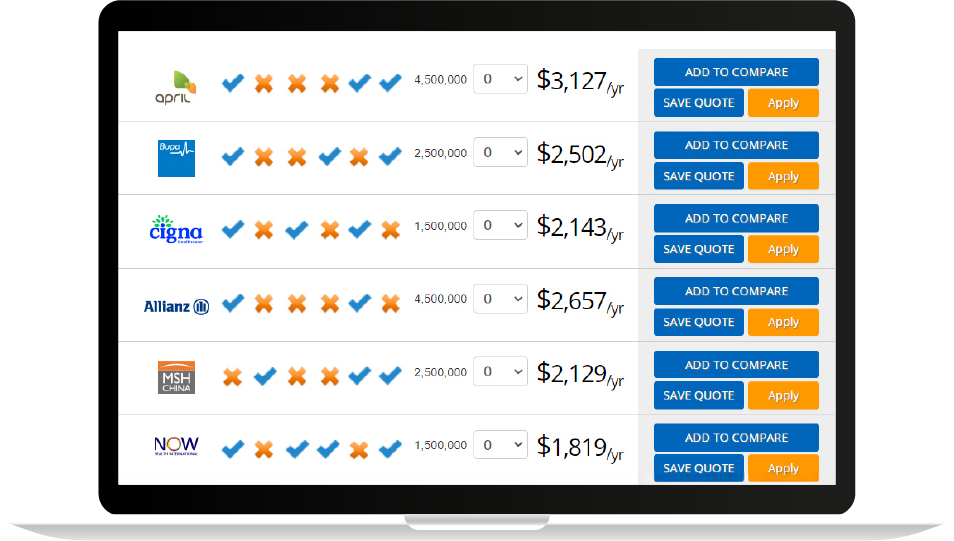
Once you’re ready to pick a plan, you’ll want to check out our free, online insurance plan comparison tool that has over 50,000 plans saved in our database.
With it, you can compare multiple plans side by side, save your favorite plans for later reference, and get real quote estimates for plans according to your personal information and travel itinerary. Get started today!
If you’d rather speak to a Dubai insurance expert, contact our team online or over the phone at 1-800-868-1451.
Be sure to read our posts Student Health Insurance in Dubai: What International Students Need and What Happens to Your Health Insurance If You Lose Your Job in Dubai? as well.
Safe travels!

Serena earned her Bachelor’s Degree in Psychology from the University of British Columbia, Canada. As such, she is an avid advocate of mental health and is fascinated by all things psychology (especially if it’s cognitive psychology!).
Her previous work experience includes teaching toddlers to read, writing for a travel/wellness online magazine, and then a business news blog. These combined experiences give her the skills and insights she needs to explain complex ideas in a succinct way. Being the daughter of an immigrant and a traveler herself, she is passionate about educating expats and digital nomads on travel and international health insurance.
- How to Compare Travel Insurance Plans the Smart Way – October 21, 2025
- Best Hospitals in the UAE: Top Picks in Dubai and Abu Dhabi – October 21, 2025
- How Much is a Doctor Visit in Dubai Without Insurance? – October 21, 2025

Comments