300x85-png.webp)


 Hong Kong
 Singapore
 China
China Dubai
Dubai Thailand
 United Kingdom
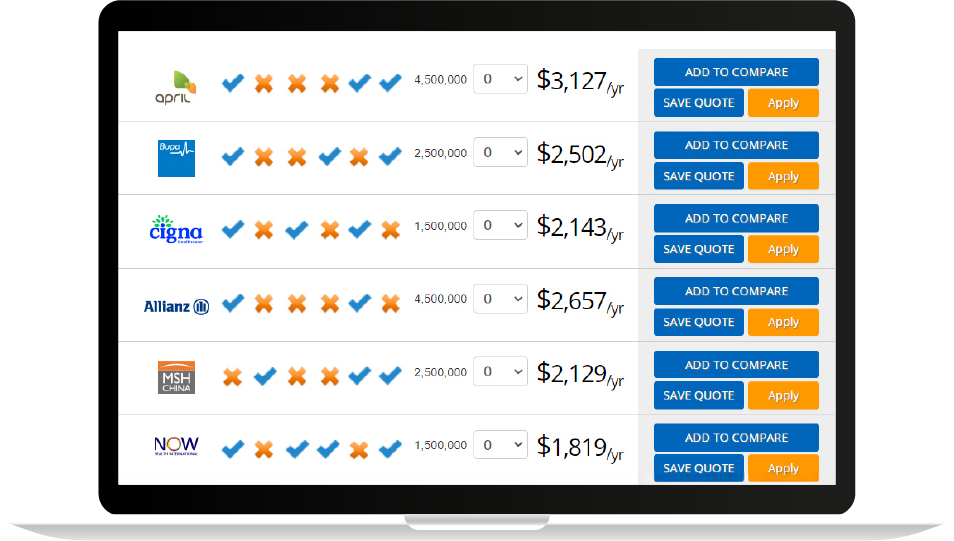
 Mexico
U.S. citizens in Bali needing emergency medical care must call 118 on a landline or +62-118 on an international phone. Foreigners should secure travel insurance in case they develop severe Bali Belly, dengue fever, or have a road accident while abroad because ER visits can cost USD $200–$300+.
Discover the world’s top
health insurers.
Compare quotes with
a click of the button.
Are you a U.S. citizen heading to Bali and want to be prepared in case you have a medical emergency abroad? Perhaps you’re already in Bali and need to know what to do because you already have a medical emergency?
This article is meant for you. We’ll discuss how U.S. citizens can seek emergency medical care in Bali, the five most common emergencies foreigners have and how to prevent them, average costs of emergency care, which providers have the best travel or health insurance in Bali, and even more!
By the end of this guide, U.S. citizens will have a solid idea of what to do in an emergency. It will also be beneficial to learn how the healthcare system in Bali works before you travel.
How U.S. Citizens Request Emergency Medical Care in Bali
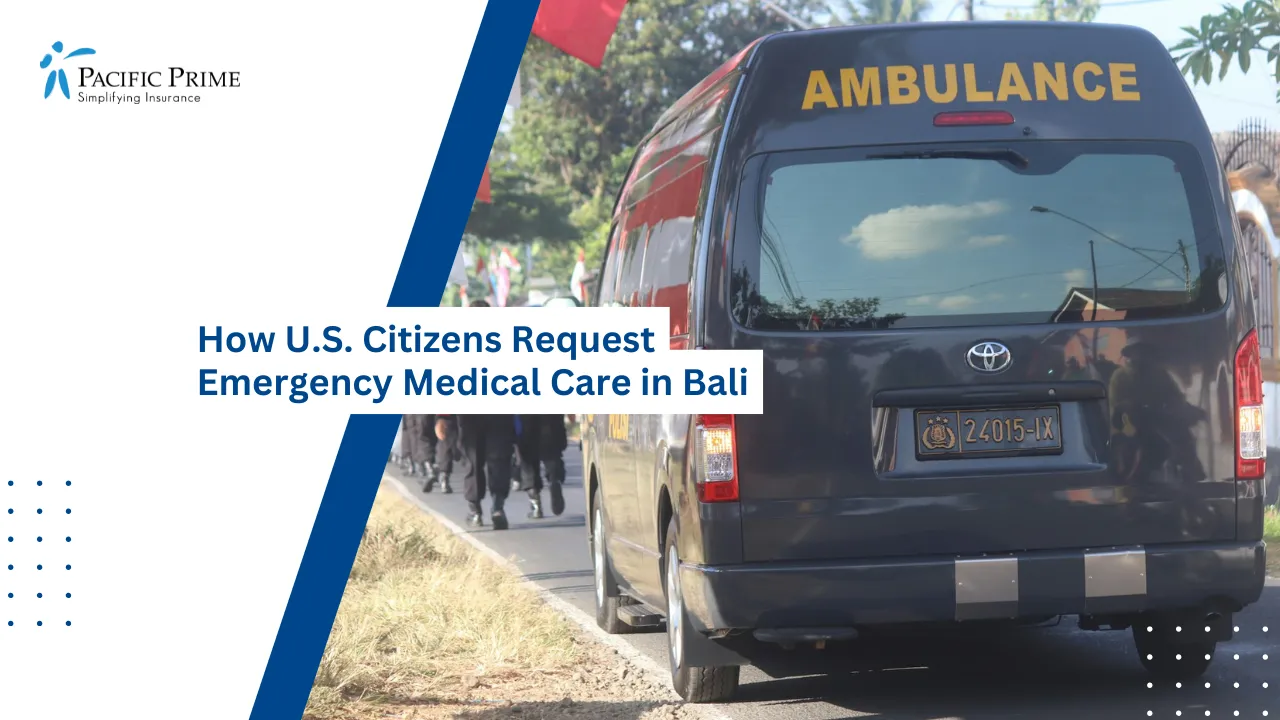
U.S. citizens visiting Bali can request an ambulance for a medical emergency by calling 118 or 119 on a landline. If you’re using an international SIM, dial +62 first and then 118/119. If you’re using a local SIM, dial 0361 first. There is a fee charged to the patient for this service.
In most cases, it is cheaper and faster to simply use a taxi, Gojek, or Grab than wait for an ambulance.
Here are the emergency numbers U.S. citizens will want to know in Bali:
- Ambulance: 118 or 119
- Main Emergency: 112 (like 911 in the U.S.)
- Police: 110
- Fire Department: 113
- Search and Rescue: 111, 115, and 151
Response times can vary, especially in rural areas.

5 Common Medical Emergencies for U.S. Citizens in Bali
The five most common medical emergencies in Bali for U.S. citizens are Bali Belly, dengue fever, surfing and diving accidents, road accidents, and dehydration or heatstroke. Learn their symptoms and how to protect against them below.
- Bali Belly (or Traveler’s Diarrhea): This is a very common stomach bug Bali travelers get, and it’s most often from exposure to contaminated water or food. It can cause vomiting, diarrhea, dehydration, and abdominal cramps.To protect against this, always drink bottled water or filtered water, don’t brush your teeth with tap water, don’t swallow shower water, and be cautious around swimming pools.
- Dengue Fever: This mosquito-borne disease is common in the tropics, and it can cause high fevers, severe headaches, nausea and vomiting, and a rash. It is not contagious.To prevent exposure, use bug spray in the morning and just before sunset when they are most active or stay inside during these hours; and wear long, lightweight, loose clothing.
- Surfing and Diving Injuries: Water sports enthusiasts may experience reef cuts, sprains, or pressure-related injuries while surfing, diving, or swimming in the ocean. Extreme cases can require professional medical attention.To protect yourselves, you should warm up properly, use proper techniques, know your limits, wear appropriate gear, learn about the ocean conditions, and surf with a buddy.
- Road Accidents: Scooter and motor vehicle accidents are frequent in Bali, so U.S. citizens traveling will want to be particularly careful if they plan to use these modes of transportation.To be cautious of this, always remain alert, avoid aggressive driving, wear a helmet if riding a scooter or bike, follow traffic signals, maintain a safe distance, and check that your bike or vehicle is in working order.
- Dehydration and Heatstroke: Bali’s tropical climate makes U.S. travelers susceptible to dehydration and heat-related illnesses. Early signs of heat exhaustion are weakness, headache, nausea, and sweating, and heatstroke signs are dizziness, confusion, and a high body temperature.To prevent this, drink lots of water regularly; wear proper clothing, headware, and sunscreen; seek shade and rest; and be mindful of early symptoms to seek medical care.

Costs of Emergency Medical Care in Bali for U.S. Expats
An ER visit with lab tests and IV fluids can cost a U.S. citizen around USD $167–$200. For locals, this may cost only USD $67–$133. Foreigners are often charged 150% more for emergency medical care than locals, if not even higher, so U.S. citizens and expats need to be prepared for this.
Compared to Western prices, though, these costs can still be considered low.
Patients usually need to show proof of health insurance before healthcare workers will agree to treat you. If you don’t have insurance, you’re expected to pay all fees upfront in cash to receive treatment.
Disclaimer: The following costs are not exact figures but estimates intended to give an idea of possible differences in cost for foreigners and locals.
Foreigner vs. Local Costs for Medical Care in Bali |
||
| Type of Treatment | Local Patient Fee | Foreigner/ Tourist Fee |
| Public Clinic GP Visit | IDR 50 000–100,000
USD $3–$7 |
IDR 75,000–150,000
USD $5–$10 |
| Private Clinic GP visit | IDR 200,000
USD $13 |
IDR 200 000
USD $13 |
| Inpatient Specialist Consult | IDR 400,000–1,000,000
USD $27–$67 |
IDR 75,000–150,000
USD $5–$10 |
| ER Visit + Labs + IV Fluids | IDR 1,000,000–2,000,000
USD $67–$133 |
IDR 2,500,000–3,000,000
USD $167–$200 |
| Ambulance Transfer | Not typical for locals | IDR 600,000–1,000,000
USD $40–$67 |
| In‑House Mobile Visit | Not typical for locals | IDR 2,665,000
~ USD $177 |
| Complex Trauma | Minimal access; covered by BPJS, but capacity is limited | IDR 700,000,000+
~ USD $46,000* |
*Bills for major brain or reconstructive surgery can reach USD $60k–$75k (~IDR 900,000,000– 1,125,000,000).
There can be hidden fees for:
- After hours
- Holiday surcharges
- Lab tests
- IV fluids
- Registration fees
- Transportation
Here are some factors to consider when considering cost for emergency services in Bali as a U.S. citizen:
- Hospital Fees: It is common for private hospitals, especially in tourist areas, to cost significantly more for emergency care and overnight stays than public hospitals. Though, expats tend to prefer to seek the higher quality of care offered in private facilities.
- Lab Tests and IV Therapy: It can be hard to predict the cost for lab testing. The fees can range from a few hundred thousand IDR (about USD $30) to several million IDR (about USD $180) not including foreign inflation, depending on the complexity of the case.
If you have travel health insurance, these costs can be partially or fully reimbursed, so keep detailed medical receipts and reports to submit for claims later.
It may be interesting to compare the cost of living in Bali to the U.S. to give you an idea of the differences.
Private vs. Public Hospitals in Bali: Expat Comparison
U.S. citizens and foreign expats in Bali tend to prefer seeking treatment in private hospitals and facilities like BIMC because they offer higher quality of care, more English-speaking doctors and nurses, more privacy and comfort, and they accept international insurance.
A Comparison of Private and Public Hospitals in Bali |
||
| Category | Private Hospitals | Public Hospitals |
| Quality of Care | High-quality, modern facilities; often meet Western standards | Basic to moderate facilities; some are outdated or under-resourced |
| Staff & Language | English-speaking doctors and nurses; expat-friendly | Limited English; communication barriers common outside of major cities |
| Wait Times | Short, often same-day service for non-emergencies | Long waits common; priority given to Indonesian citizens with BPJS |
| Pricing | Higher costs (IDR 1M–3M for minor emergencies); transparent billing | Very low fees (IDR 50k–100k), but foreigners pay more than locals |
| Accepted Insurance | Accepts most international travel insurance and direct billing | Rarely accepts foreign insurance; upfront payment usually required |
| Medical Equipment | Modern diagnostics (MRI, CT scan, etc.); international infection control | May lack advanced equipment or modern sanitation in some areas |
| Comfort & Privacy | Private rooms, air conditioning, more attentive service | Shared rooms, basic amenities |
| Emergency Services | 24/7 ERs in most private hospitals; fast ambulance dispatch | Emergency care available, but ambulance response can be slow |
| Location | Located in tourist areas: Kuta, Nusa Dua, Ubud, Denpasar | Centralized in Denpasar (e.g., Sanglah Hospital) |
Private Hospitals
BIMC Hospital Nusa Dua
- Address: Kawasan ITDC Blok D, Jl. Nusa Dua, Benoa, Kec. Kuta Sel., Kabupaten Badung, Bali 80363, Indonesia
- Phone Number: +62-361-300-0911
- Website: https://bimcbali.com/bimc-siloam-nusa-dua
Siloam
- Address: Jl. Sunset Road No.818, Kuta, Kec. Kuta, Kabupaten Badung, Bali 80361, Indonesia
- Phone Number: +62-361-779-900
- Website: https://www.siloamhospitals.com/en/
Kasih Ibu Hospital
- Address: Jl. Teuku Umar No. 120, Denpasar – Bali 80114
- Phone Number: (0361)-300-3030
- Website: https://kih.co.id/our-hospital/
Trijata
- Address: Jl. Trijata No.32, Sumerta Kelod, Denpasar Utara, Denpasar City, Bali 80233, Indonesia
- Phone Number: +62-361-472-3350
- Website: https://rstrijata.com/
International SOS Bali Clinic (SOS Medika Partner)
- Address: Jl. Bypass Ngurah Rai No. 194, Sanur Kaja, Denpasar Selatan, Denpasar 80227, Bali, Indonesia
- Phone Number: +62-361-2014-505
- Website: https://www.internationalsos.com/locations/indonesia/sos-medika-bali?utm_source=chatgpt.com

Public Hospitals
Prof. Ngoerah Central General Hospital (Sanglah Hospital)
- Address: Jl. Diponegoro No. 45, Dauh Puri Klod, Denpasar, Bali, Indonesia
- Phone Number: +62-361-227-911
- Website: profngoerahhospitalbali.com
RSUD Badung (Badung Regency Hospital)
- Address: Mangupura area, Badung Regency, Bali
- Phone Number: No direct number listed
- Website: N/A
Puskesmas Clinics (Public Health Centers)
- Address: Jalan Srikandi No. 40A, Benoa Village, South Kuta District, Badung Regency, Bali 80361
- Phone Number: +62-361-771-957
- Website: https://puskesmaskutaselatan.badungkab.go.id/
Medicine and Pharmacies in Bali for U.S. Citizens
U.S. citizens and all Bali residents don’t need a prescription to get medication. Instead, you can enter any pharmacy, talk to the pharmacist, and purchase the medications you need. Most medications can be found in South Bali, but it is wise to stock up on what you need before going to rural areas.
Tip for the wise: ignore the “salespeople” in the aisles of pharmacies who try to scam you into buying overpriced vitamins. Just talk to the pharmacist with your questions.

Emergency Medical Evacuation in Bali for U.S. Expats
Emergency medical evacuation (medevac) in Bali for U.S. expats involves transporting a patient from Bali to a better-equipped medical facility—often in Jakarta, Singapore, or Australia—if local care is insufficient. Without insurance, this can cost USD $25,000–$100,000 or more.
With travel or expat insurance, this cost is often fully covered if evacuation is deemed medically necessary and pre-approved by the insurer.
Some serious or complex medical cases that might call for emergency evacuation would be:
- Major trauma or head injury
- Severe cardiac or neurological emergencies
- Cases needing surgery or ICU care not available in Bali
- Life-threatening infections requiring advanced care
It is highly recommended for all U.S. travelers to secure medical evacuation coverage in the event that they require medical transportation out of Bali. This benefit almost always comes with international health insurance and often can come with travel insurance.
Bali International Health Insurance vs. Travel Insurance
International health insurance is for living abroad in Bali and travel insurance is for visiting Bali. International health insurance is designed for long-term stays and provides comprehensive medical coverage while living abroad.
It typically includes:
- Routine doctor visits
- Chronic condition management
- Prescription drugs
- Hospitalization
- Sometimes dental or maternity care
This type of insurance is best suited for expats, digital nomads, or U.S. citizens relocating to Bali for several months or years. It may also cover pre-existing conditions and allow access to private hospitals with direct billing.
Travel insurance is meant for short-term trips, usually under 90 days. It primarily covers:
- Unexpected emergencies like sudden illness
- Injury
- Hospitalization while abroad
- Trip cancellation
- Travel delays
- Lost or stolen baggage
Travel insurance is more affordable upfront, but it doesn’t cover routine or long-term medical needs. It’s ideal for tourists, short-term visitors, or those passing through Bali on vacation.
Check out our guide on top providers to get the best travel insurance in Bali, and keep reading to get a sneak peak below.
GeoBlue: International Health Insurance
GeoBlue is a top-tier provider of international health insurance for U.S. citizens abroad, backed by the Blue Cross Blue Shield reputation. Their Xplorer Essential and Xplorer Premier (Select) plans are ideal for long-term stays in Bali.
These plans offer:
- Unlimited annual and lifetime global medical coverage
- Immediate coverage for pre‑existing conditions (with prior U.S. coverage)
- Prescription drug benefits
- Telemedicine services
- Direct billing with private hospitals overseas—great for navigating Bali’s private healthcare system efficiently
NOW Health International: Health Insurance
NOW Health International provides comprehensive international health insurance tailored to expats, students, and long-term visitors in Indonesia. Their two core product lines—SimpleCare and WorldCare—cover inpatient and outpatient treatment, dental, maternity, and emergency evacuation globally.
WorldCare comes in tiered levels (Essential, Advance, Excel, Apex), offering flexible benefits up to high annual limits (e.g. US $1.5 M). This makes it a strong choice for U.S. citizens relocating to Bali who want robust coverage and access to private-sector healthcare.

IMG Global: International Health and Travel Insurance
IMG Global offers both travel insurance and international health plans, making them versatile for short or extended stays. For Bali travelers, their iTravelInsured line is notable with the following plans:
- Travel SE provides primary medical coverage up to US $250,000 and emergency medical evacuation up to US $500,000
- Travel LX, the most comprehensive plan, increases medical coverage and emergency evacuation to USD $1,000,000, plus optional Cancel‑For‑Any‑Reason coverage, trip interruption, baggage, and adventure cover
Their extensive adventure cover and affordability make them popular with American tourists and digital nomads in Bali.
Allianz Travel: Travel Insurance
Allianz Global Assistance (also Allianz Travel Insurance) provides reliable travel insurance products for U.S. residents. Their most popular plans for Bali travelers include OneTrip Basic, OneTrip Prime, and the AllTrips Prime Annual Plan, each offering 24/7 emergency assistance.
Their plans cover:
- Emergency medical and hospital expenses
- Evacuation
- Trip cancellation/interruption
- Lost baggage
- And more!
Allianz is A.M. Best rated A+ and includes multilingual support and global assistance, making it a strong option for short-term or frequent visitors to Indonesia.
AIG Travel Guard: Travel Insurance
AIG’s Travel Guard is a well-established travel insurance brand offering multiple plan tiers—Basic, Preferred, and Deluxe—alongside tailored add‑on bundles for cancellation, rental cars, and more.
AIG’s global reach and robust claims support make Travel Guard a reliable travel‑only option for U.S. visitors to Bali who want predictable support abroad.
These plans include:
- Emergency medical coverage
- Medical evacuation and repatriation
- Trip interruption
- Baggage protection
- 24/7 assistance support
Alternative Medicine and Natural Healthcare in Bali

Alternative medicine and natural healthcare in Bali, such as Balinese massage, herbal medicine, and yoga, are widely practiced and deeply rooted in Balinese culture. Many of these practices are influenced by ancient Hindu, Chinese, and indigenous Balinese traditions.
U.S. citizens visiting or living in Bali will find a range of holistic healing options including:
- Traditional Balinese massage
- Herbal medicine (jamu)
- Acupuncture
- Energy healing
- Reflexology
- Yoga therapy
Wellness centers and retreat-style clinics across Bali—especially in areas like Ubud—offer services that promote mind-body balance, detox, and natural healing. These are commonly used as complementary therapies to modern medicine for wellness, stress relief, or chronic pain management.
At-Home Healthcare Services
At-home healthcare services are available for U.S. citizens and expats in Bali. These services can include home doctor visits, nursing care, and rehabilitation, to name a few. You can also use the Halodoc app to have medicine delivered to your home, talk to a doctor, and schedule a home lab test.
Some at-home services can include:
- Doctor home visits
- Nursing care
- Physiotherapy
- Rehabilitation
- 24/7 emergency assistance
- Medical equipment rental
- Minor wound care
- Vaccinations
- IV drips
- STD screening
Here are some phone numbers for various at-home services:
- Sanur Medical Clinic (for house calls in Sanur): +62 823-3969-9820
- Hydro Medical (for IV Drips, Rabies vaccine, doctor house calls): +62-822-9829-8911
- Dr. Kadek Martini: +62-819-9942-5751
Frequently Asked Questions
What travelers should do in a medical emergency in Bali?
The fastest way for U.S. travelers in Bali to get to a hospital in a medical emergency is by calling a taxi, Gojek, or Grab; this is if the patient can be transported easily and safely. If it would be dangerous to move the patient, call for an ambulance by dialing +62-188 on an international phone.
Do ambulances cost money in Bali?
On average, it costs a foreigner or tourist in Bali USD $40–$70 to use an ambulance. There may also be a fee from the phone operator who connected you to the ambulance. It can be more affordable, and you may reach the hospital sooner, if you call for a taxi, Gojek, or Grab instead.
How good are healthcare services in Bali?
Private hospitals and international clinics in Bali offer high-quality modern care, English-speaking staff, and shorter wait times. They are well equipped for infections, minor surgery, and childbirth. Public hospitals lack advanced equipment, consistent cleanliness, and English-speaking staff.
Conclusion
We’ve now discussed how U.S. citizens in Bali can seek emergency medical care in the event that they develop a serious condition needing immediate attention. You also have a better idea of how much services may cost, and thus, how much having travel or health insurance would benefit you.
We recommend consulting an insurance expert online or via a call at 1-800-868-1451 to weigh your insurance options and find the best type of insurance plan for your needs. We also have an invaluable, free resource that can help you find and compare over 50,000 insurance plans in the same database!
You can begin comparing now!
If you found value in this article, you won’t want to miss our articles International Insurance vs. Local Indonesian Plans: Which is Better for U.S. Expats? and How to Get a Bali Visa for US Citizens: Types and Steps.
Before you’re ready to hop on a plane to Bali, you also need to research the best places to live in Bali, and our guide can help you out.
Happy travels!

Serena earned her Bachelor’s Degree in Psychology from the University of British Columbia, Canada. As such, she is an avid advocate of mental health and is fascinated by all things psychology (especially if it’s cognitive psychology!).
Her previous work experience includes teaching toddlers to read, writing for a travel/wellness online magazine, and then a business news blog. These combined experiences give her the skills and insights she needs to explain complex ideas in a succinct way. Being the daughter of an immigrant and a traveler herself, she is passionate about educating expats and digital nomads on travel and international health insurance.
- How to Compare Travel Insurance Plans the Smart Way – October 21, 2025
- Best Hospitals in the UAE: Top Picks in Dubai and Abu Dhabi – October 21, 2025
- How Much is a Doctor Visit in Dubai Without Insurance? – October 21, 2025



Comments