300x85-png.webp)


 Hong Kong
 Singapore
 China
China Dubai
Dubai Thailand
 United Kingdom
 Mexico
The Portuguese Digital Nomad Visa allows remote workers and digital nomads from non-EU/EEA countries to legally reside in Portugal for one year while working as freelancers, entrepreneurs, or employees of companies based abroad.
Discover the world’s top
health insurers.
Compare quotes with
a click of the button.
Are you a digital nomad looking to relocate to Portugal? This guide by Pacific Prime will provide everything you need to know about Portugal’s Digital Nomad Visa, from its pros and cons, eligibility criteria, required documents, and steps to take to ensure visa approval.
We will also emphasize the importance of obtaining health insurance for your peace of mind while living abroad in Portugal.
Understanding the Portugal Digital Nomad Visa
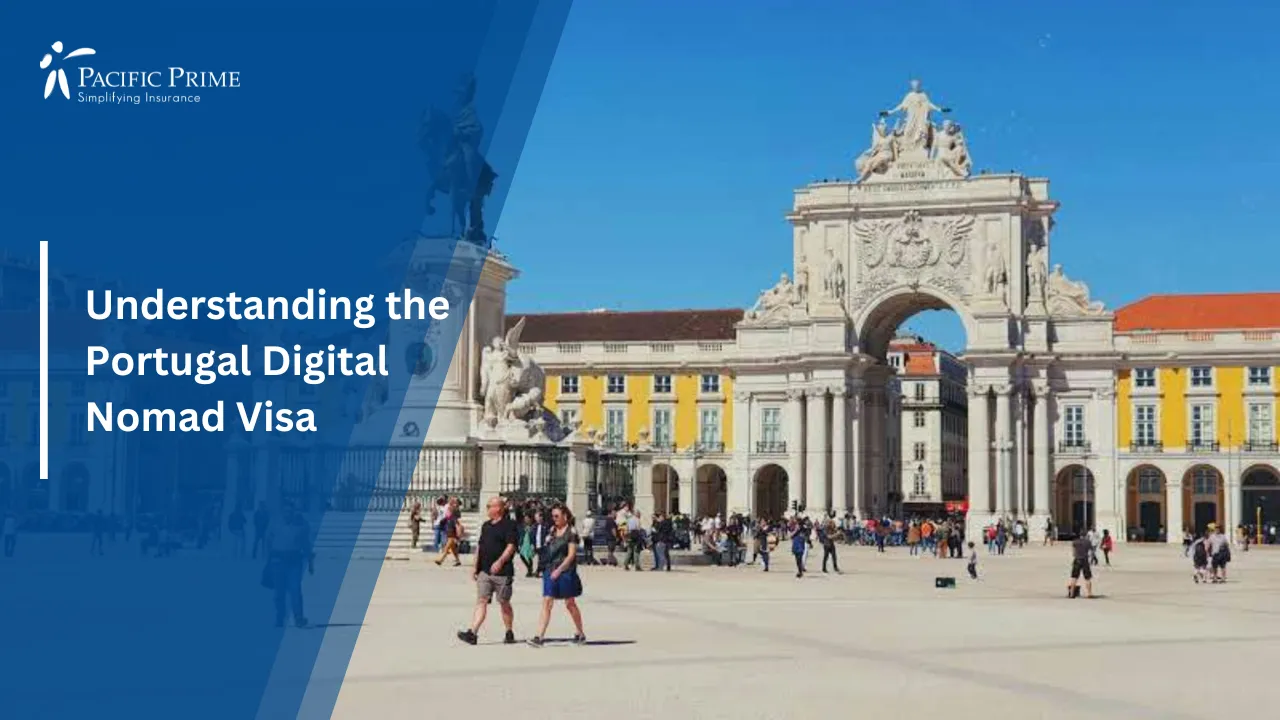
In 2022, Portugal introduced the Digital Nomad Visa (D8), designed for freelancers, entrepreneurs, or employees of companies based outside the country.
The visa offers individuals from non-EU/EEA countries the opportunity to live and work remotely for one year in the country while enjoying its rich culture, pleasant climate, and affordable cost of living in any city throughout Portugal—including some of the best cities for expats to live in.
Who Can Apply for Portugal’s Digital Nomad Visa?
The D8 Visa is open to non-EU/EEA nationals who wish to live in Portugal while working remotely for a foreign employer, as freelancers, or as self-employed individuals. Applicants must meet the following criteria:
- Nationality: Only non-EU/EEA citizens can apply.
- Age: Applicants must be over 18 years old
- Remote work status: Applicants must work remotely for a company outside of Portugal or international clients.
- Financial requirements: Applicants must have a monthly income four times higher than the Portuguese minimum wage and savings equivalent to at least 12 times the minimum wage. For those bringing family members, the required savings are higher.
As of 2025, the figures are as follows:
| Application Type | Monthly Income Required | Savings Required |
| Single | €3,480+
(USD $4,065) |
€10,440+
(USD $12,205) |
| With spouse/partner (50% more) | €3,480+
(USD $4,065) |
€15,660+
(USD $18,307.25) |
| Per child/dependent (30% more) | €3,480+
(USD $4,065) |
€18,792+
(USD $21,969) |
- Criminal record: You must have a clean criminal record issued by your country of residence for the past five years.
- Health insurance: Applicants must have comprehensive health insurance valid in Portugal.
If you are a U.S. citizen, check out our article on Portugal Visas for Americans to explore the visa options that best fit your needs and circumstances.
Types of the Portugal Digital Nomad Visa
There are two types of visas available for digital nomads, depending on their long-term goals. While income and document requirements are similar, duration and certain benefits vary.
- Temporary Stay Visa: This type of visa is best for those who want to live in Portugal temporarily, require flexibility, and don’t have a long-term plan to obtain Portuguese residency.
-
-
- Valid for up to 12 months, with multiple entries allowed
- Can be renewed but does not lead to permanent residency or citizenship
- Family members cannot be included
-
- Long-Term Residency Visa: This type of visa is an ideal pathway for digital nomads interested in obtaining long-term residency and eventually Portuguese citizenship.
-
- Entry visa valid for four months, during which you apply for a two-year residence permit
- The residence permit can be renewed for an additional three years
- After five years, you may apply for permanent residency or citizenship if all requirements are met
- You are allowed to bring your spouse and dependents
Visa Fees and Costs for the Portugal Digital Nomad Visa
The total costs for the Portugal Digital Nomad Visa are generally between €300 and €600. This figure includes the visa application fee, residence permit fee, and other additional costs, which may vary by applicant.
Below is a breakdown of key expenses:
- Digital Nomad Visa application fee: €75–€90 (USD $87.60–$105)
- Residence permit application fee: €80–€170 (USD $93.45–$198.55)
- Document-related costs (apostille and translation): Varies
Additional costs may also apply for required documents such as health insurance, a criminal record certificate, and proof of accommodation, which can vary by individual.
Tax Residency in Portugal
Holding Portugal’s Digital Nomad Visa does not automatically make you a tax resident. Tax residency is based on your physical presence—specifically, if you spend 183 days or more in Portugal within a 12-month period or if you establish a habitual residence there.
Once considered a tax resident, your worldwide income becomes subject to progressive tax rates, currently ranging from 13% to 48%.
Although Portugal has long attracted digital nomads and expats as a low-tax destination, the Non-Habitual Resident (NHR) tax regime, which offered significant tax benefits to new residents, was abolished on 1 January 2024.
The transitional period for those who qualified under the old rules ended in March 2025, and the regime is no longer available.
A Complete List of Required Documents
Applicants for the Portugal D8 Visa should prepare the following documents to ensure timely visa approval:
- Visa application form: Duly completed and signed.
- Valid passport and its copy: Your passport must be valid for at least six months from the intended entry date.
- Two passport-sized photos: Ensure that the photos follow the Schengen Visa passport photo requirements
- Proof of remote work: This part of your document may vary depending on your job.
- For employees, the acceptable documentation can include:
- A work contract with a remote work allowance clause from your employer
- An official letter from your employer confirming remote work
- For digital business owner:
- Proof of business establishment outside Portugal
- For freelancers:
- Client contracts or service agreements
- Invoices issued to your clients
- A cover letter or declaration explaining your remote work
- Proof of income
- Bank statements for the last three or six months
- Pay slips from the last three or six months
- Annual tax returns confirming income
- Proof of accommodation: Rental or lease agreement in Portugal (minimum four months for temporary stay visa, 12 months for long-term visa)
- Criminal record certificate: A criminal record certificate, issued within the last six months, confirming no convictions or offenses in the past five years, is required. However, if you were convicted but served less than one year, you may still be eligible for the visa.
- Health insurance policy: Your plan must provide at least €30,000 (USD $35,037.5) coverage, including medical expenses, emergencies, and medical repatriation.
Those bringing family members must provide these additional documents, depending on the relationship:
- Marriage certificate: For your spouse
- Birth certificate: For children
Note that some documents issued outside of Portugal must be apostilled and translated if not in Portuguese or English. Those documents generally include the criminal record certificate, proof of relationship, bank statements, and proof of tax residence.
How to Apply for the Portugal Digital Nomad Visa
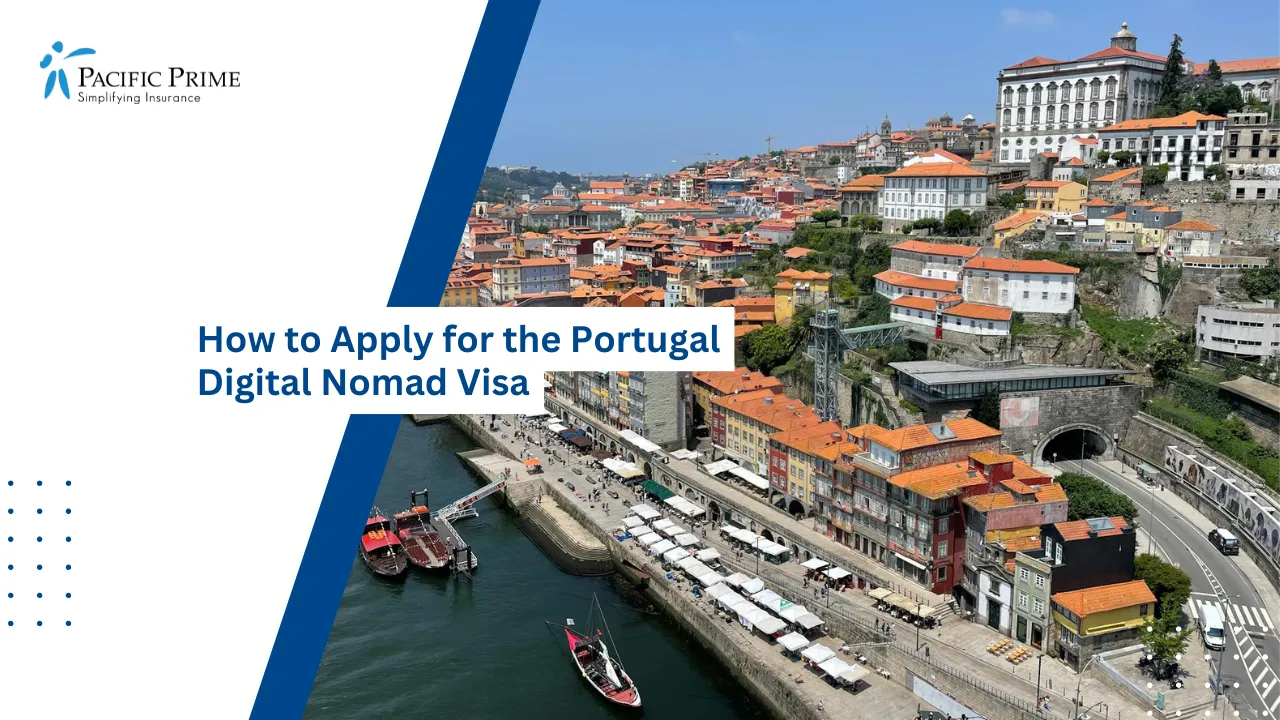
The major application process for the Portugal D8 Visa includes document preparations, submitting the application at the Portugal consulate or embassy in your country of residence, collecting your visa once approved, and applying for your residency permit in Portugal.
Here, we will break down all the necessary steps for your visa application.
Step 1: Prepare All the Required Documents
After checking that you meet the eligibility criteria, start gathering the required documents according to the list provided above. Also, ensure that your documents are translated and apostilled.
This process may begin three to four months before your intended entry date to avoid any processing delays.
Step 2: Schedule an Appointment with the Consulate or Embassy
Please visit your local consulate’s or embassy’s website to schedule an appointment. Depending on each location, this process is usually done via email, an online portal for visa applications, or service providers such as VFS Global and TLS Contact.
Since slots are limited, we recommend booking in advance.
Step 3: Submit Your Application
Arrive before or on time at the consulate, embassy, or visa submission center, bringing all the required documents. Submit your application, pay the visa application fee, and provide biometric data in person here.
Step 4: Wait for Visa Processing
Processing typically takes around 60 to 90 days after submitting your application. In the meantime, use the online tracking system provided by the embassy or consulate, or contact them directly to monitor your application progress.
Step 5: Receive Your Visa and Travel to Portugal
Once approved, you will be notified that your passport and visa are ready for collection or have been delivered through the mail. You’ll need to enter Portugal within 90 days of the issue date.
Step 6: Residency Registration in Portugal
After arriving in Portugal on the Digital Nomad Visa, you must register as a resident through Portugal’s immigration authority within 120 days to complete the process. An appointment to retrieve your residence permit must be made with the AIMA (Agency for Integration, Migration, and Asylum).
However, due to the overwhelming amount of pending applications, the system will likely assign you an appointment date upon your visa approval; if not, then a booking request can be made directly with AIMA, via phone, email, or their website.
Basic documents to prepare include:
- Valid passport (with a valid visa or entry stamp)
- Recent passport-sized photos
- Rental contract, utility bill, or residence certificate from the Junta de Freguesia
- Proof of income
- Proof of remote work
- Criminal record certificate from your country of origin, translated and apostilled
- Health insurance
It is important that applicants prepare and obtain all the required documents upon application, as incomplete or inaccurate documentation will result in immediate rejection.
Pros and Cons of the Portugal Digital Nomad Visa
While the Portugal Digital Nomad Visa allows non-EU/EEA citizens to legally reside in Portugal and experience the country’s high quality of life at a relatively affordable cost and visa-free Schengen travel, there are some minor concerns that applicants should consider.
The D8 Digital Nomad Visa comes with relatively high income requirements, starting at a minimum of €3,480 (USD $4,065) per month. This threshold increases if you plan to bring dependents or family members, which may pose a challenge for some remote workers.
With that said, all income must be generated outside the country, as the visa does not allow holders or their family members to take up local employment.
In addition, unlike Spain’s Digital Nomad Visa, with the option to apply from within the country, you must have completed the application process at a Portuguese embassy, consulate, or visa application center in your country of residence before you travel to Portugal.
Frequently Asked Questions
What is the minimum income requirement for the Digital Nomad Visa in Portugal?
The minimum income requirement for Portugal’s Digital Nomad Visa is €3,480 per month. This amount is four times the Portuguese minimum wage and must be proven through pay slips, contracts, or bank statements to ensure you can support yourself while living in Portugal as a remote worker.
Where is the best digital nomad city in Portugal?
Lisbon and Porto are the best digital nomad cities in Portugal. While Lisbon offers a lively atmosphere, top coworking spots, and a strong expat network, Porto is smaller and more affordable, with a creative vibe and scenic riverside views.
Can I bring my family on a digital nomad visa?
Only the Long-Term Residency Digital Nomad Visa (D8) in Portugal allows family reunification. You can bring your spouse, children, and dependent parents if you meet the income and documentation requirements. The temporary stay D8 visa does not support family reunification.
Conclusion
Although the application process can be demanding, Portugal offers a haven for digital nomads, particularly in vibrant cities like Lisbon and Porto or along the stunning Algarve coastline.
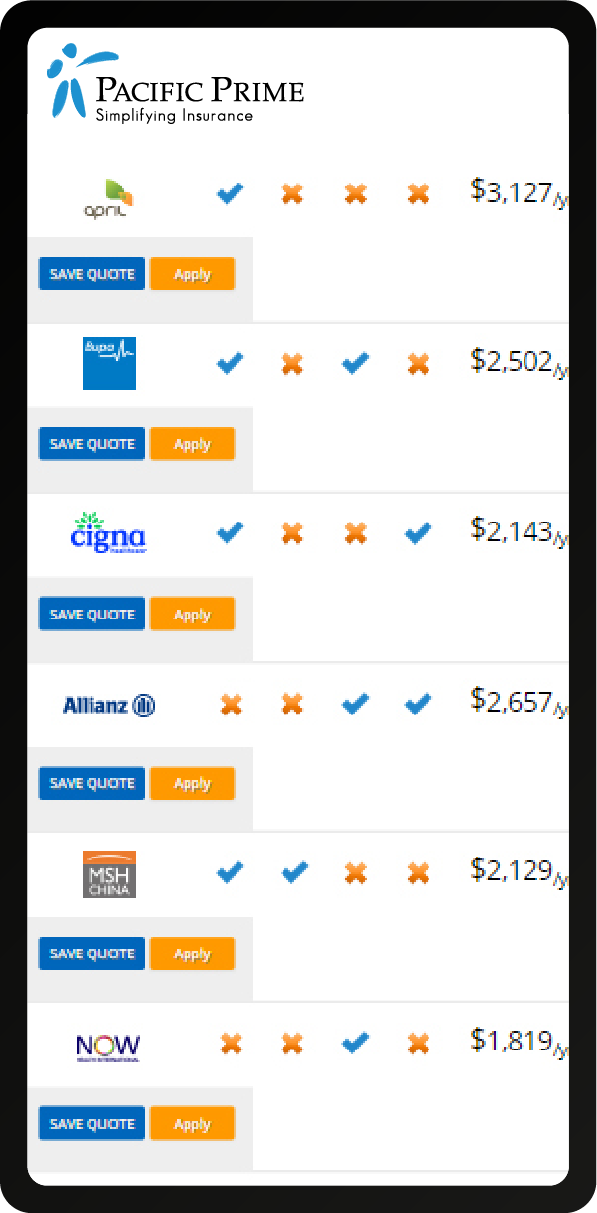
That said, anyone planning to live there as a digital nomad must have comprehensive health insurance to ensure financial protection in case of illness or injury.
Are you still looking for insurance coverage for your time in Portugal? Pacific Prime is a trusted insurance brokerage with 25 years of experience in helping international clients find the right insurance plan from top providers for themselves and their loved ones.
Contact us today for impartial advice and a free, no-obligation quote comparison.
Coming to Portugal from Latin American countries? Explore our article on Living in Portugal as a Latin American.
- Thailand Digital Nomad Visa 2025: How to Apply – October 20, 2025
- Top Health Insurance in Thailand for Spanish Expats: Options and Benefits – October 20, 2025
- Arab Orient Insurance and GIG Health Insurance for Expats in Dubai – October 15, 2025



Comments