300x85-png.webp)


 Hong Kong
 Singapore
 China
China Dubai
Dubai Thailand
 United Kingdom
 Mexico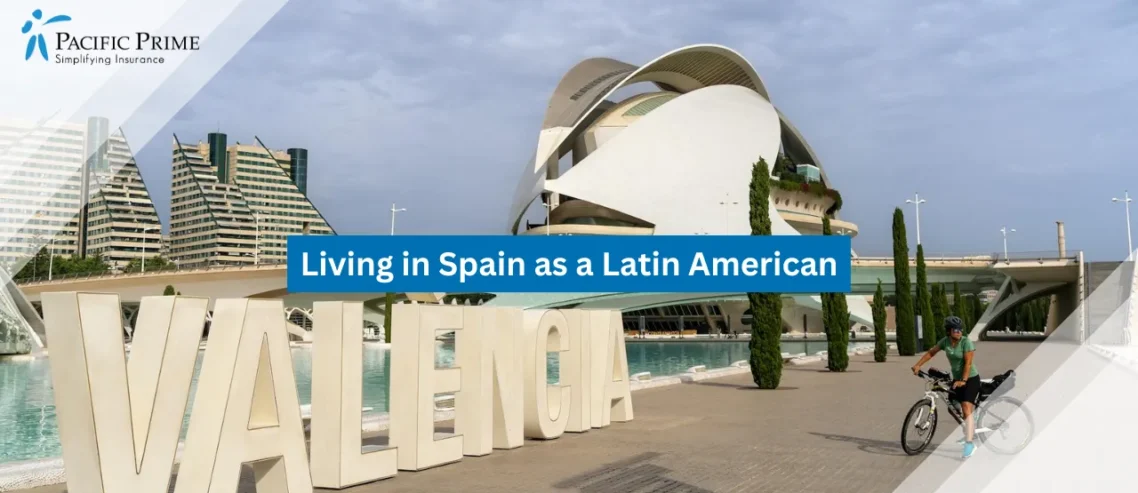
Spain has become a top choice for Latin Americans seeking a fresh start. With a shared language, familiar culture, and access to EU benefits, it offers a comfortable yet exciting opportunity to live abroad in a welcoming environment.
Discover the world’s top
health insurers.
Compare quotes with
a click of the button.
Thinking of relocating to Spain? Wondering what daily life, costs, and integration will look like for you or your family?
In this article by Pacific Prime, we explore what life in Spain is like for Latin Americans, outlining visa options and living costs, to integration tips and cultural differences. We also explain why securing international health insurance is essential for peace of mind abroad.
Why Spain Appeals to Latin Americans

Spain offers a familiar yet elevated lifestyle for Latin Americans. The shared language, similar customs, and strong historical ties make it easier to adapt. Many also find comfort in Spain’s food, religion, and family-oriented way of life.
Beyond cultural connections, Spain provides access to top-notch healthcare, public services, and the broader EU. Its cities are safe, walkable, and diverse—ideal for those seeking stability, career growth, or simply a higher quality of life abroad.
For many Latin Americans, Spain feels like an extension of home. Cultural festivals, Latin American supermarkets, and community networks are easy to find, especially in major cities. This helps ease homesickness and creates a strong sense of belonging.
Spain also serves as a springboard to Europe. Once you secure legal residency, you can travel freely within the Schengen Area. Whether you’re visiting family or exploring new destinations, the mobility Spain offers is a major draw for many Latin Americans.
Visa and Residency Options for Latin Americans in Spain
Spain offers several legal pathways for Latin Americans to live in the country long term. Whether you’re retiring, studying, or reuniting with family, understanding your visa options will help you settle in smoothly and legally.
Many Latin Americans benefit from historical and legal ties that can speed up the process of becoming a resident or even a Spanish citizen. Below are the most common options used by Latin Americans today.
Non-Lucrative Visa
The Non-Lucrative Visa is ideal for retirees and those with steady passive income. You cannot work in Spain with this visa, but you can live comfortably and renew it over time. You’ll need private health insurance and proof of income or savings.
To qualify, you must earn at least €2,400 (USD $2,588) per month or €28,800 (USD $31,050) per year. For each dependent, add €600 (~USD $650) monthly. The visa is issued for one year and can be renewed for two years at a time, leading to permanent residency after five years.
Citizenship by Descent and Latin American Agreements
If you have Spanish ancestry, you may qualify for Spanish citizenship by descent. Requirements depend on your parents’ or grandparents’ citizenship status, and legal advice is often needed to process the visa correctly.
Latin Americans also benefit from shortened naturalization timelines. Nationals from Ibero-American countries can apply for Spanish citizenship after just two years of legal residence instead of the usual ten required for other foreigners.
Cost of Living in Spain for Latin Americans
The cost of living in Spain is generally more affordable than the U.S. and much of Western Europe, and many Latin Americans find it comparable—or even cheaper—than major cities back home.
A single person can live well on €1,600–€1,700 (USD $1,730–$1,840) per month, while families will spend more based on location and lifestyle.
- National average: €1,671 (USD $1,808) per month
- Family of four: ~€4,014 (USD $4,340) per month
- Average monthly income: ~€2,250 (USD $2,430)
Housing Costs
Rent prices vary widely by region, with city centers costing more. You can save 25%–30% by renting outside central areas. Cities like Alicante, Valencia, and Granada offer great value with modern amenities and healthcare access.
- One-bed (city center): ~€960 (USD $1,037) per month
- One-bed (outside center): ~€715 (USD $773) per month
- Property purchase price: ~€1,750 (USD $1,891) per m²
Groceries and Dining
Spain makes it easy to eat well without overspending. Supermarkets are affordable, and eating out is a daily habit for many. “Menu del día” lunch specials and tapas bars are budget friendly and social.
- Monthly groceries: €200–€300 (USD $216–$324)
- Meal at mid-range restaurant: €13 (USD $14)
- Café/fast food options: From €3 (USD $3.25)
Utilities and Internet
Utilities cover water, gas, electricity, and waste. Prices rise in winter due to heating, but overall costs remain manageable. Internet and mobile plans are cheap and reliable, with combo deals available.
- Utilities: €120–€133 (USD $130–$144) per month
- Internet + mobile: €18–€32 (USD $19–$35) per month
Transportation
Spain’s public transit is reliable and affordable. Buses, metros, and trams are efficient in cities. Many areas are walkable, and long-distance travel is easy via train and bus networks.
- Monthly transit pass: €40–€60 (USD $43–$65)
- Gasoline: ~€1.60 (USD $1.73) per liter
- Intercity travel: Affordable and accessible
Entertainment and Lifestyle
Spain offers low-cost leisure. Cinema tickets and gym memberships are reasonable, and many museums, parks, and events are free or discounted, especially for retirees.
- Gym membership: €20–€50 (USD $22–$54) per month
- Movie ticket: €7–€10 (USD $8–$11)
- Free activities: Festivals, museums, public parks
Cultural Similarities and Differences Between Latin America and Spain

Spain and Latin America share deep cultural roots, which makes adapting easier for many Latin Americans. The common language, Catholic traditions, and strong family values create a familiar atmosphere. Social gatherings, food, and festivals often feel like home away from home.
However, differences exist. Spaniards tend to be more formal and punctual compared to some Latin American cultures, where time can be more flexible. Regional accents and slang vary widely, so newcomers may need time to adjust their ears and expressions to fit local customs.
Language and Communication
While Spanish is spoken in both Spain and Latin America, there are notable differences in vocabulary, pronunciation, and slang. For example, Spaniards use vosotros for the plural you” while most Latin Americans use ustedes. Understanding these nuances helps smooth social interactions.
Additionally, some words have different meanings, which can cause funny or confusing moments. Adapting to Spain’s more direct communication style may take practice, but it also helps build clear and honest relationships.
Social Norms and Daily Life
Latin Americans often find Spain’s social pace more relaxed but structured. For instance, the famous Spanish siesta slows business during midday, while meals happen later in the evening compared to Latin America. Embracing these rhythms helps with cultural integration.
Family remains central in both cultures, but Spaniards often emphasize independence earlier, especially among young adults. Understanding and respecting these subtle lifestyle differences fosters smoother relationships and community acceptance.
Challenges Latin Americans May Face While Living in Spain
Latin Americans may face hurdles like accent bias, cultural differences, or red tape during visa or residency processes. Adapting takes time, patience, and an open mind.
Understanding Spain’s laws, systems, and expectations can take effort. Some Latin Americans arrive expecting full cultural alignment, only to find differences in attitude, pace, or bureaucracy. But with persistence, most obstacles become manageable over time.
Accent and Stereotypes
Although Spanish is shared, some locals may view Latin American accents as informal or associate them with stereotypes. This can impact how you’re perceived in workplaces or official settings, though it’s more about unfamiliarity than malice.
It helps to stay confident and assertive when speaking while also picking up on local expressions. Over time, most people will focus more on your attitude and professionalism than on where your Spanish comes from.
Bureaucracy and Paperwork
Spain’s administrative processes are often slow and repetitive. Latin Americans may feel frustrated by the need to schedule appointments, prepare translations, or provide certified copies for even simple tasks like opening a bank account or registering an address.
Many offices operate by region and follow inconsistent rules. Patience and planning are key. Consider hiring a gestor (paperwork assistant) to help with forms, legal terms, and filing. This can save time, stress, and costly mistakes.
Building a Community as a Latin American in Spain
One of the best ways to settle into life in Spain is by finding a sense of community. Latin Americans often feel welcome thanks to shared cultural ties, but building friendships still takes effort, especially in cities where locals may keep to their circles at first.
Fortunately, Latin American communities are thriving in cities like Madrid, Barcelona, and Valencia. These networks can offer emotional support, practical advice, and a strong social connection, helping you feel at home while adjusting to new surroundings.
Cultural Groups and Social Hubs
Major cities host cultural centers, meetups, and associations geared toward Latin Americans. You’ll find Brazilian capoeira classes, Peruvian restaurants, Colombian dance nights, and community festivals that make it easier to connect with others.
Places of worship, Latin supermarkets, and Spanish-language events are also great ways to meet people. Expats often connect through apps, Facebook groups, and even embassy-organized activities, especially during holidays or national celebrations.
Balancing Integration and Identity
While Latin American culture is widely respected, integrating into Spanish society means adapting to new customs without losing your roots. Embracing both worlds helps you feel more connected and accepted while maintaining your own cultural identity.
Simple things like learning regional dialects, joining neighborhood events, or even watching local TV can help you feel more involved. Over time, many Latin Americans find a balance, keeping their heritage while growing into their new Spanish life.
Healthcare and Insurance for Latin Americans in Spain

Spain’s healthcare system is one of the best in Europe, offering a high standard of care across public and private facilities. Latin American residents with legal status can usually access the public system, though wait times for non-urgent care can be long in busy regions.
Private healthcare is fast, modern, and widely used—especially by expats and retirees. Many Latin Americans choose to supplement or replace public access with private insurance, giving them more control over when and where they receive treatment.
Access to Healthcare in Spain
Residents registered with the local system (via employment, residency, or special agreements) can access Spain’s public healthcare network. EU agreements may also allow some coverage transfers. Services are generally free or low cost but may require copays for prescriptions.
Latin Americans not yet eligible for public coverage will need private health insurance. This is a requirement for most visa types, such as the Non-Lucrative Visa. It’s important that the plan includes full coverage across Spain and complies with visa application rules.
Hospitals and Health Providers in Spain
Spain is home to many world-class hospitals. In Madrid, the Hospital Universitario La Paz and Clínica Universidad de Navarra are highly rated. In Barcelona, Teknon Medical Center and Hospital Quirónsalud Barcelona are top choices for private care.
These facilities offer English-speaking staff and international patient departments. Having insurance that includes these hospitals ensures faster appointments, specialist access, and peace of mind for both routine and emergency care.
Why International Health Insurance Matters in Spain
For Latin Americans newly relocating or staying temporarily, international health insurance is the safest option. It ensures continuous coverage, including during travel or visa transitions, and grants access to top-tier private clinics across Spain.
Pacific Prime helps expats compare plans, ensure compliance with visa rules, and find coverage that matches both budget and lifestyle. Whether you’re staying short term or settling in long term, the right insurance will give you confidence abroad.


Education and Opportunities for the Next Generation
Many Latin American families move to Spain not just for themselves, but for the future of their children. Spain offers free public education and access to reputable universities, making it a solid choice for families looking to invest in long-term opportunities.
Public schools follow a structured curriculum and are taught entirely in Spanish, while private and international schools offer bilingual or English instruction. These are popular among expat families and can ease the transition for children who may not speak fluent Spanish yet.
Public vs. Private Schooling in Spain
Public schools are free and widely available to residents. Classes are taught in Spanish and follow a structured curriculum. Once you’re registered locally, enrollment is straightforward and managed by regional education offices.
Private and international schools offer bilingual programs and smaller classes. Top picks include International College Spain, King’s College (Madrid), BFIS and St. Peter’s (Barcelona), The English School of Asturias, and Sunny View School (Málaga).
University and Career Pathways in Spain
Spain’s universities are well-regarded across Europe and offer degrees at a fraction of U.S. prices. Public tuition typically ranges from €1,000–€3,000 (USD $1,080–$3,240) per year. Latin American students may qualify for scholarships or bilateral fee reductions.
Top institutions include Universidad Autónoma de Madrid, Universitat de Barcelona, Universidad de Navarra, and Universitat Pompeu Fabra. These schools offer programs in Spanish and English, with international offices supporting students from Latin America and beyond.
Stay Protected with Pacific Prime While Living in Spain
Relocating to Spain as a Latin American can be a rewarding journey, but to fully enjoy it, securing the right international health insurance is key. It ensures you’re protected throughout your stay, from routine care to unexpected emergencies.
Not sure which plan is best for you or your family? With over 25 years of experience, Pacific Prime partners with top insurers in Spain to help Latin American expats compare international health insurance, expat insurance, or family insurance options that meet both their health needs and budget.
Contact us today for a free consultation and plan comparison.
If you enjoyed this article, check out our other guides like How to Move to Spain from Latin America and Is Spain a Good Country for Digital Nomads?
Want to learn more about the best expat health insurance providers in Spain? Read our article here.

Frequently Asked Questions
Does Spain give citizenship to Latin Americans?
Latin Americans can obtain Spanish citizenship through a fast-track process. Citizens of Ibero-American countries may apply after just two years of legal residence, instead of the standard ten.
Is the Spanish Golden Visa going away?
Spain, once known as a top destination in Europe for residency by investment through its Golden Visa program, officially ended the scheme on April 3, 2025. The country no longer grants residence permits to non-EU citizens purchasing property worth €500,000 or more.
What are the alternatives to the golden visa in Spain?
Spain offers residency options for Latin Americans through visas like the Digital Nomad Visa, ideal for remote workers and freelancers with foreign income, and the Non-Lucrative Visa, which suits those who wish to live in Spain without working, perfect for retirees or long-term stays.
What salary is needed to live comfortably in Spain?
Earning €35,000/year (~USD $37,800) is above Spain’s national average and provides a comfortable lifestyle in most areas. In bigger cities, you’ll need to budget for higher costs, but in smaller towns, this income allows for a very comfortable and relaxed standard of living.
Does Spain allow dual citizenship?
Spain permits dual citizenship in specific cases, mainly for nationals of countries with historic ties to Spain. However, this is not the standard. In most situations, gaining Spanish citizenship requires renouncing your original passport.

After obtaining his Bachelor’s Degree in Social Sciences, International Relations from Mahidol University International College, Veerabhatr has forged his career as a content writer in the travel, lifestyle, and real estate industries, writing in both English and Thai. He now continues to hone his skills as a writer at Pacific Prime, looking to engage and educate the audience by simplifying insurance.
Writer by day, and a DJ by night, Veerabhatr is a staunch music lover, and listens to all spectrums of genres available. He also loves to drink beer (moderately), eat all types of food, go to the beach, and learn about different cultures across the globe. He is also a die-hard fan of football and motorsports.
- How Much Salary Do You Need to Live Comfortably in Thailand? – October 22, 2025
- Guide on Moving to Thailand from Canada as An Expat – October 20, 2025
- Top Health Insurance in Thailand for Russian Expats: Options and Benefits – October 16, 2025



Comments