300x85-png.webp)


 Hong Kong
 Singapore
 China
China Dubai
Dubai Thailand
 United Kingdom
 Mexico
Expats moving to Spain can streamline the process by following a checklist that includes steps such as researching before the move, securing your finances in the country, and more. By following each step carefully, foreigners can simplify their move to the beautiful country of Spain.
Discover the world’s top
health insurers.
Compare quotes with
a click of the button.
Are you interested in relocating to Spain? Are you overwhelmed by the task of moving abroad? Pacific Prime has prepared this checklist to provide you with the most efficient steps to moving to Spain.
We will share nine different steps on our checklist and explain in detail each action. We will discuss a variety of important topics, from expat health insurance to Spanish culture. Keep reading to learn more, or click here for a free health insurance quote!
A Comprehensive Checklist for Moving to Spain

Foreigners should follow these nine steps before moving to Spain: research before your move, decide where to live, apply for a visa, send your items overseas, secure health insurance, find a job, secure your finances, learn Spanish basics, and educate yourself on Spanish culture.
By following this comprehensive checklist, expats can simplify the process of moving internationally and will begin enjoying their time in Spain more quickly. We’ll discuss these steps below in the following sections.
1. Research Before Your Move to Spain
Researching the quality of life, cost of living, the housing market, and other important topics in Spain should come before all other steps. Relocating to Spain is a big decision, and it’s important to ensure you understand everything you can about your new home.
You can research through travel blogs, the official Spanish government website, expat online forums in Spain, Facebook groups, and other online resources. You can also consult with professionals like immigration lawyers.
A basic list of things to research in Spain is:
- The cost of living
- The housing market
- The education system
- Expat communities
- The quality of life
- The healthcare system
2. Decide Where in Spain You Want to Live
After you’ve done your research, you should feel comfortable deciding where in Spain you would like to live. Each city has different things to offer different people, and your desired experience in the country will affect your decision of where to live.
Do you want to live near the beach? How important is nightlife to you? Do you want more of a slow-paced lifestyle? Are you looking for a city with more job opportunities? All of these questions are important to ask when deciding where to live in Spain.
Some of the most popular places for expats to live in Spain are Barcelona, Madrid, Valencia, Granada, and Seville. To learn more about these cities and other popular expat destinations in Spain, check out our article here!
3. Apply For a Spanish Visa
You should apply for your Spanish visa at least three months before your planned relocation, as visa processing times can vary and may take around 90 days. Applying for your Spanish visa will look different depending on where you live currently.
If you are a citizen of the European Union, you can live and work in Spain through the right of free movement. If you’re not a citizen of a European Union country, you will need a visa to enter Spain.
The visa requirements for moving to Spain will depend on your nationality, whether you’re planning to work or retire in Spain, and how long you are going to stay. Foreigners moving to Spain for longer than 90 days are often required to secure private health insurance and a Spanish residence permit.
Some long-term Spanish visas are:
- Non-Lucrative Visa: This visa is for foreigners looking to retire in Spain. This visa’s duration is one year, with the option for indefinite two-year renewals.
- Digital Nomad Visa: This visa is available for international remote workers, freelancers, consultants, and digital nomads. The visa lasts for one year, with the option for indefinite two-year renewals.
- Entrepreneur Visa: This visa was created for individuals looking to start a new business in Spain. The duration of this visa is one year, with an option to renew for an additional four years.
- Highly Skilled Professional Visa: This visa was designed for senior professionals with a qualifying job offer in Spain. The visa lasts an initial two years with options to renew.
- Spain work permit: This visa is for expats with a qualifying job offer from a Spanish company. The work permit’s duration is one year, with the option for indefinite two-year renewals.
- Study visa: International students accepted for a course of study in Spain can apply for this visa, with the duration lasting as long as the course.
- Job search visa: This visa is for international students who have completed their course of study in Spain and are now looking for employment in the country. The visa lasts one year.
To learn more about applying for a Spanish visa, visit the BLS International Spain Visa website.
4. Send Your Belongings to Spain
Sending your belongings to Spain can be done via air freight, sea freight, car, or by rail. The method you choose will depend on where you live, as expats who do not live in Europe will likely be unable to use the car or rail system to transport their items.
Transporting your items via air is generally the fastest option, but it is the most expensive as they charge by weight. A cheaper option is through cargo ships, but this method is also slower than air freight.
Expats can hire an international relocation company to transport their items to Spain. These companies will work together with you to collect your items and deliver them to Spain through your chosen method.
Some popular international relocation companies are:
In addition to your personal belongings, some international relocation companies can also work with you to send your pet to Spain. You will want to check the requirements for importing pets before you book your pet’s journey.
5. Secure Health Insurance for Spain

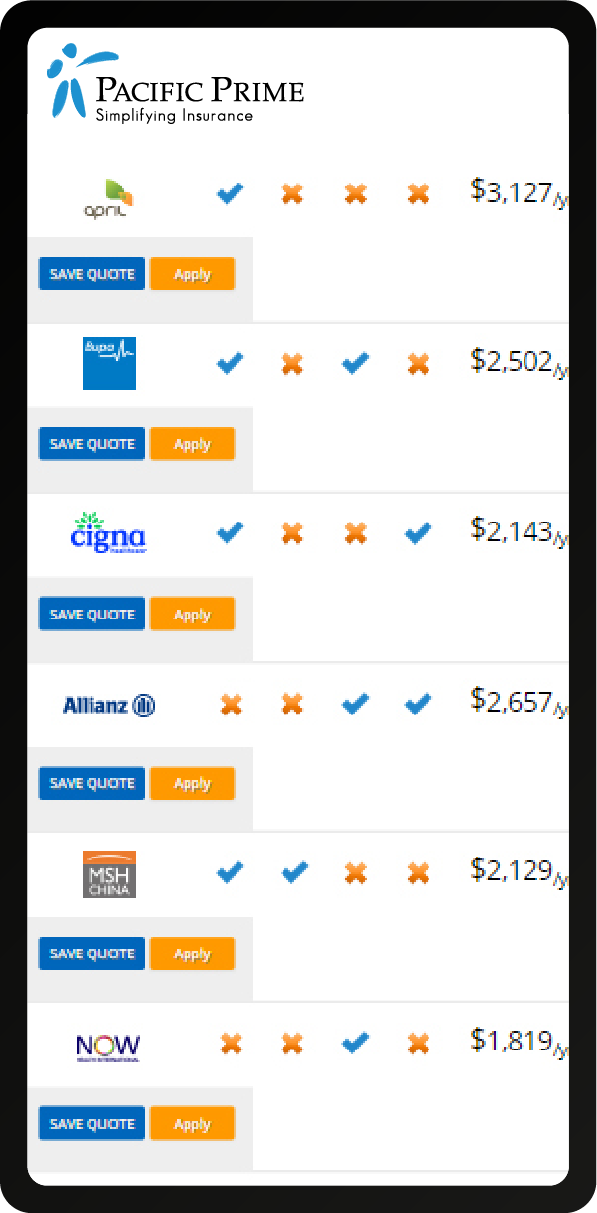
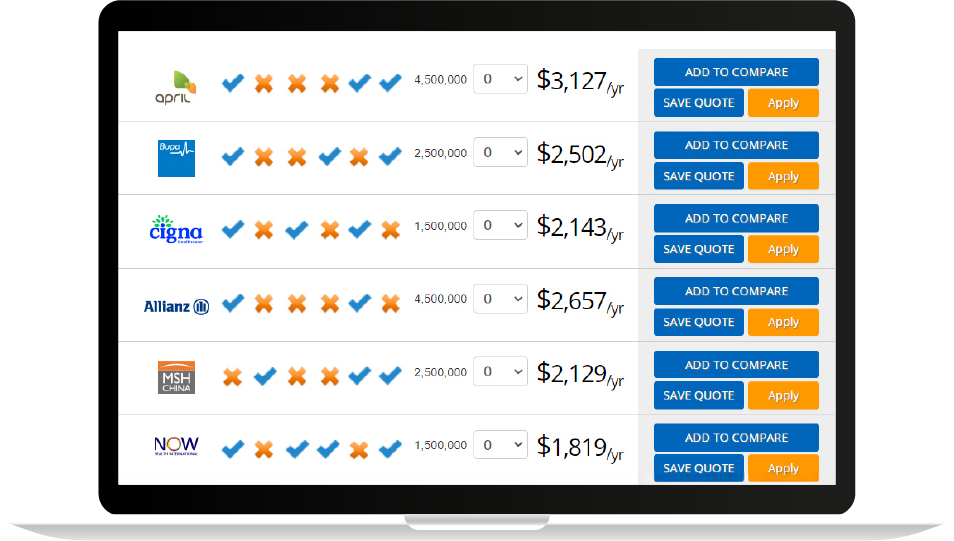
Many long-term visas require private health insurance coverage for Spain, so it is important expats secure their own health insurance plans for their time in the country. Top international health insurance providers for expats in Spain include:
International health insurance is a great fit for expats as the coverage is globally portable, meaning expats will be covered in Spain and any of the surrounding countries if they choose to travel. International health insurance also provides comprehensive and customizable coverage options.
International insurance brokers like Pacific Prime can help you find the right expat health insurance plan for your needs. We offer unbiased and free advice for expats all over the world.
If you’re interested in comparing plans from international health insurance providers, visit our free quote generator here.
6. Find a Job in Spain
Finding a job in Spain can be done through word of mouth and networking and by applying at companies that welcome foreign talent. Spain’s job market is not the easiest for foreigners to break into, but personal connections can help you land a job in the country.
Some popular jobs for foreigners in Spain include:
- Business consultants to multinational companies
- Tourism and hospitality work
- IT sector jobs
- Industrial engineers
- Mechanical engineers
- Healthcare assistants
- English language teachers
The jobs available will vary by location, as large cities like Madrid or Barcelona will provide more opportunities in the business sector, while coastal cities may provide more tourism jobs. For networking opportunities, visit events provided by the Spanish Chamber of Commerce.
7. Secure Your Finances in Spain
When you move to Spain, you should open an account with a Spanish bank and transfer your money into your new account. To open a bank account in Spain, you typically need the following information:
- A proof of identification (passport or national ID card)
- Proof of address
- Your NIE number (Número de Identificación de Extranjero)
- Proof of employment or income (not always required)
After you have opened your account in Spain, you can wire transfer money from your previous accounts at home to your new accounts. Be aware that wire transfers often come with fees.
Some popular banks for expats in Spain include CaixaBank and Santander UK.
8. Learn Spanish Language Basics
Learning Spanish language basics is an important part of relocating to Spain as it will help your integration into Spain. Without understanding basic Spanish, traveling, grocery shopping, and other tasks will be significantly more difficult. Knowing Spanish can also open up more job opportunities.
You can learn basic Spanish through a wide range of online resources and apps, or even through more traditional methods like courses at your local university. Understanding Spanish will significantly improve your quality of life while living in Spain.
9. Educate Yourself on Spanish Culture
Educating yourself on Spanish culture is an important step in moving to Spain as it can help you feel more at home in the country, help you build relationships more easily with locals, and help you make the most out of your expat experience.
Some various ways to educate yourself about Spanish culture include exploring cultural customs and local traditions. Take time to learn about the history of the country and the city that you choose to settle in. Visit local festivals, museums, and other sightseeing stops.
You can also visit online forums, Facebook groups, and similar communities to make friends and investigate more into Spanish culture.
If you have the extra time, taking a course dedicated to Spanish culture, such as those provided by websites like Culturago, can help you assimilate more easily into your new home.
Frequently Asked Questions
What are the essential steps for moving to Spain as an expat?
The essential steps for moving to Spain include researching your destination, finding a place to live, finding a job, applying for a visa, moving your belongings, securing health insurance, and learning Spanish culture and language.
What are some Spanish visa requirements?
Spanish visa requirements will vary based on a variety of factors, such as how long you plan to stay, your nationality, and the circumstances surrounding your time in Spain. Generally, you will need a current passport, proof of financial means, and proof of accommodation.
What is the first step I should take when moving to Spain?
The first step you should take when moving to Spain is research. Research your move thoroughly before you make any plans. You should research the cost of living, housing market, education system, the quality of life, healthcare system, and whatever other topics interest you.
Conclusion
Moving to Spain can be exciting but overwhelming, which makes having a basic checklist an essential resource for expats. Thorough research and planning can help minimize the stress of moving internationally and give expats more time to enjoy soaking up the sun in Spain.
Are you ready to begin shopping for your health insurance in Spain? Reach out to the international health insurance experts at Pacific Prime. We have over two decades’ worth of experience in helping expats find the best coverage for their needs, and we offer our advice for free.
You can call us toll-free at 1-800-868-1451 or visit us online at our website. For a free quote from a wide variety of our partnered international health insurance providers, click here.
For further reading, check out our similar blog post: How to Move to Spain from the USA!

Jantra curates and reports on the results of Pacific Prime’s monthly newsletters, as well as manages Pacific Prime’s Deputy Global CEO’s LinkedIn posts. Complemented by her background in business writing, Jantra’s passion for health, insurance, and employee benefits helps her create engaging content – no matter how complex the subject is.
Growing up as a third-culture kid has given her a multicultural perspective that helps her relate to expats and their families while 8 years of working remotely have given her unique insight into hybrid work arrangements and enthusiasm for employee benefits.
- Jobs in Italy for Americans: Visa, Salary & Career Guide – October 15, 2025
- Healthcare in Singapore vs USA : Funding, Coverage, and Key Differences – August 15, 2025
- Living Abroad in the Philippines : Costs, Visas, and Expat Tips – August 12, 2025



Comments