300x85-png.webp)


 Hong Kong
 Singapore
 China
China Dubai
Dubai Thailand
 United Kingdom
 Mexico
H-1B visa holders are not immediately required to have comprehensive health insurance when they arrive in the United States, but after 6 to 10 months, they must purchase a plan that meets Affordable Care Act (ACA) standards. This shift happens once they are considered U.S. residents for tax purposes, making health coverage essential to avoid high out-of-pocket medical costs.
Discover the world’s top
health insurers.
Compare quotes with
a click of the button.
As a foreign professional preparing to work in the United States, understanding your health insurance options is critical. From short-term and travel medical coverage to employer-sponsored or long-term private plans, the right insurance can protect your health and finances throughout your stay.
Keep reading to learn about the type of insurance offered to H-1B visa holders, why health insurance is necessary in the United States, what to consider when choosing a plan, and more. We’ll also help you compare some of the best health insurance plans out there for H-1B visa holders.
Please note that all monetary amounts in this article are valued in United States dollars, or USD.
Overview of Health Insurance for H-1B Workers

For H-1B visa holders working in the United States for less than 6–10 months, consider short-term insurance, international travel medical insurance, or employer-sponsored insurance. For those staying longer, opt for long-term insurance, whether purchased through your employer or a private insurer.
Workers in the United States who only stay for 6–10 months are considered “nonresident aliens,” which means they don’t have to pay taxes and so are not under the same obligations to maintain ACA-compliant coverage. Once workers become residents, they must pay taxes and find adequate coverage.
Let’s review your options for coverage.
Temporary Health Insurance for New H-1B Arrivals
Short-term health insurance is meant as temporary coverage until you can purchase a long-term plan either within the U.S. where you’re working or back home. While short-term health insurance is flexible and often more affordable than other health insurance, it also tends to be less comprehensive.
Many short-term plans cover preventative care, emergency care, urgent care, and medical tests, with some even offering discounts on medications; but, most plans don’t cover more costly care, like pre-existing conditions, mental health services, maternity care, or substance abuse.
International Travel Insurance for H-1B Visa Holders
Sometimes called visitor’s insurance, international travel medical insurance is medical health insurance that functions within the United States like normal health insurance would in your home country.
Travel medical insurance coverage varies widely depending on the plan you choose, with many companies choosing not to cover pre-existing conditions.
Travel medical insurance is not the same as traditional travel insurance, which covers trip mishaps and emergency medical costs only. If you choose to purchase travel insurance in addition to your health insurance, check out this article or the best traditional travel insurance options on our page.
Full-Year Health Coverage Options in the U.S.
Usually called domestic, private, or individual health insurance, long-term comprehensive coverage usually lasts for a year with renewal options. Because it offers more variety and breadth of care, premiums tend to be higher than short-term insurance or travel medical insurance.
Long-term insurance in the U.S. must cover:
- Ambulatory services
- Emergency services
- Maternity and newborn care
- Rehabilitative services
- Hospitalization
- Mental health and substance abuse services
- Wellness and chronic disease management
- Prescription drugs
- Pediatric services
- Laboratory services
Your employer may offer private health insurance (often with your employer covering part of the cost). You may purchase it on the ACA Marketplace, or you can get help buying the right international health insurance plan through a private insurance broker like Pacific Prime.
Employer Health Insurance Plans Explained
Employers in the United States often offer private insurance. While many employers help cover the cost of health insurance, you may choose to purchase separate private coverage if:
- You are seeking extra coverage through add-ons that are unavailable through your employer’s insurance plans
- Your employer does not offer health insurance
- You are waiting for coverage to begin
- If you are seeking out coverage for a dependent that your employer’s coverage doesn’t offer
In discussing health insurance with your employer, consider the following questions:
- How much does your employer contribute toward your insurance and how much do you pay?
- Is there a waiting period before coverage begins, and if so, how long is that waiting period?
- What does the plan cover?
- What are the costs within the plan, such as deductibles and out-of-pocket maximums?
Why U.S. Health Insurance Matters for H-1B Workers

Some workers coming to the United States wonder why health insurance is necessary and why the government regulates insurance. The United States is one of the few countries in the world that does not have a nationalized health system, so most hospitals and care facilities are private.
Because most hospitals and care facilities in the United States are private and run for profit, either individuals or health insurance must pay for all medical care. This makes medical expenses in the United States very costly, even for simple or routine care.
To ensure that United States residents are receiving coverage for their healthcare in a more affordable way, the government passed the Affordable Care Act in 2010, which, in part, requires individual and small-group health insurance plans to cover what the act calls the essential health benefits.
In short, health insurance is the way residents in the United States receive affordable coverage. For that reason, short-term insurance in the United States is discouraged other than for temporary needs because it is not ACA-compliant and could leave individuals to pay expensive medical costs.
Top Health Insurance Plans for H-1B Visa Holders
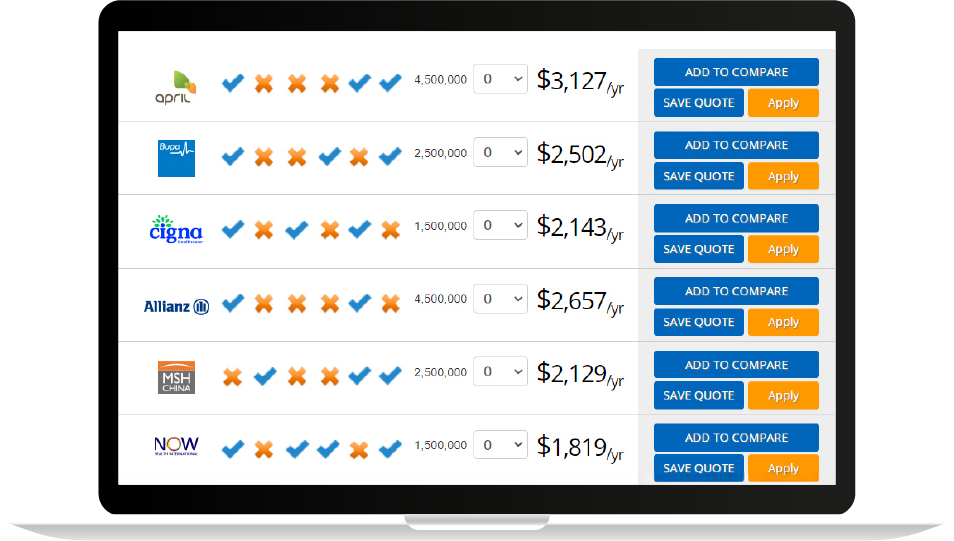
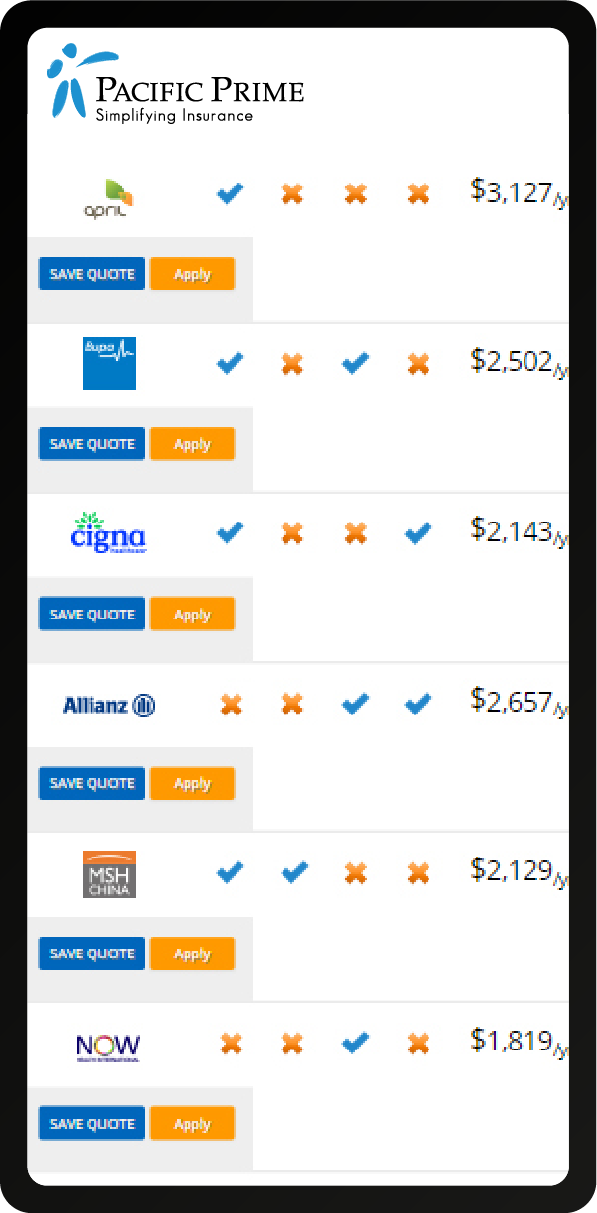
With so many plans to choose from, weeding through your options can feel daunting. We’ve done the work to compile some of the best health insurance plans for H-1B visa holders. Check them out below.
Recommended Short-Term Plans for H-1B Workers
While short-term coverage is less ideal than long-term plans, Pacific Prime’s partners offer some exceptional temporary coverage for your time in the United States. We suggest GeoBlue or April International.
GeoBlue
GeoBlue offers top-notch plans for those living in the United States as well as for those overseas. Because GeoBlue’s network within the United States includes Blue Cross Blue Shield—which covers 80% of physicians and 90% of hospitals in the U.S.—you’re sure to find quality coverage in your network.
If you’re undecided on which type of coverage you’d prefer, look through GeoBlue’s international short-term plans and travel insurance plans on their page, or keep reading below. They also offer quality long-term international coverage whenever you’re ready for it.
GeoBlue Xplorer Premier
GeoBlue’s Xplorer Premier plan includes comprehensive coverage in the United States for up to 9 months, with unlimited annual and lifetime benefits, whether you use them in or out of the United States. Benefits differ whether you use them in the U.S. or not, but all costs apply to your deductible.
Here is how those deductibles stack up to one another:
| Xplorer Premier Deductible Selection | Deductible Outside of USA | USA Deductible In-Network | USA Deductible Out-of-Network | Annual Coinsurance Maximum |
| 10,000 Plan | $10,000 | $10,000 | $10,000 | $10,000 |
| 5,000 Plan | $2,500 | $5,000 | $10,000 | $10,000 |
| 2,000 Plan | $1,000 | $2,000 | $4,000 | $8,000 |
| 1,000 Plan | $500 | $1,000 | $2,000 | $4,000 |
| Elite | $0 | $0 | $1,000 | $2,000 |
Office visits, exams, immunizations, labs, and X-rays are covered 100% outside the United States. For these services in network within the U.S., 80% is paid until you meet your coinsurance maximum, after which 100% is covered. For out-of-network care, 60% is paid until your coinsurance maximum, after which 100% is covered.
Healthcare visits are common, and GeoBlue’s Xplorer Premier plan offers:
Outside the United States
- 100% coverage after a $10 copay for all primary care or specialized office visits
- 100% coverage for urgent care given at a facility
- 100% coverage for up to 12 sessions of physical and occupational therapy per year
- 100% coverage after a $10 copay for outpatient mental health care
- 100% coverage after a $10 copay for outpatient substance abuse
In Network in the United States
- 100% coverage after a $30 copay for all primary care or specialized office visits
- 100% coverage after a $75 copay for urgent care given at a facility
- 100% coverage for up to 12 sessions of physical and occupational therapy per year
- 100% coverage after a $30 copay for outpatient mental health care
- 100% coverage after a $30 copay for outpatient substance abuse
Out of Network in the United States
- 60% coverage until coinsurance is met, then 100% coverage for primary care or specialized office visits
- 60% coverage until coinsurance is met, then 100% coverage for urgent care given at a facility
- 100% coverage for up to 12 sessions of physical and occupational therapy per year
- 60% coverage until coinsurance is met, then 100% coverage for outpatient mental health care
- 60% coverage until coinsurance is met, then 100% coverage for outpatient substance abuse
If you anticipate extra needs, such as emergency dental care, cover for prescription medications, or chiropractic services, you can find the details on GeoBlue’s page or simply get a quote.
GeoBlue Essential with Add-On
You can also consider GeoBlue’s Essential plan with add-ons for United States coverage if you’re looking to save a little money.
| Coverage Benefits | Xplorer Essential with Add-on | Xplorer Premier |
| Medical Maximum Benefit Amount (USD) | $1,000,000 | Unlimited |
| Coverage Duration within the United States (for US Citizens) | Maximum of three trips per calendar year, 21 days per trip | Capped at 9 months |
| Preventative Care within USA | Not Covered | Yes |
| Ability to Travel to USA for Treatment | No | Yes |
| Outpatient Prescription Drug Coverage (USD) | $1,000 for prescriptions only related to emergency medical care, illness, and accidental injury | $2,500 for Basic Benefit Package, $25,000 with Enhanced Prescription Upgrade |
| Birth Control Coverage in USA | Not Covered | See plan outpatient drug limit |
| Inpatient Mental Health Benefits within the USA | Not Covered | In-network: 80%, Out-of-network: 60% |
| Outpatient Mental Health Benefits within the USA | Not Covered | In-network: 100% after $30 copay; Out-of-network: 60% |
| USA Benefits for Covered Pre-existing Condition (USD) | $500 | Unlimited |
| Co-pay for each USA In-Network Physician Office Visit (USD) | $50 | $30 |
| USA Physician Network | Blue Cross Blue Shield PPO Network | Blue Cross Blue Shield PPO Network |
April International
The MyHealth International plan from April International makes it easy for H-1B visa holders and their families to find the coverage they need with their five tier options. Choose coverage for 1–12 months, with a one-time extension option for up to 6 months.
The annual benefit limit for each plan is:
- Emergency plan: $272,538.75
- Formule basic plan: $545,077.50
- Essential plan: $1,090,155.00
- Comfort plan: Unlimited
- Premium plan: Unlimited
Hospitalization for emergencies, accidents, or medical repatriation are completely covered under all plans. Under every plan except for the Emergency plan, all hospitalizations that are not emergencies are also fully covered.
Compare coverage for hospitalization needs like cancer or a private room with this table:
| Coverage Benefits | Cancer Care Coverage | Private Room Coverage |
| Emergency Plan | Accidents or Emergencies Only | Not Covered |
| Formule Basic | Coverage for Comprehensive Cancer Care | Not Covered |
| Essential Plan | $81.76 per day | |
| Comfort | Fully Covered | |
| Premium Plan | Fully Covered |
For more common outpatient care, April International offers medium coverage on their Essential plan, high coverage on their Comfort plan, and deluxe coverage on their Premium plan, but note that they do not offer outpatient coverage on their Emergency or Formule Basic plans.
April International also offers dental and vision coverage on all plans but their Emergency plan, with limits of:
- Forumule Basic plan: $545.08 per year for dental and $163.52 every two years for vision
- Essential plan: $1,090.15 per year for dental and $272.54 every two years for vision
- Comfort plan: $2,180.31 per year and $545.08 every two years
- Premium plan: $4,360.62 per year and $763.11 every two years
If you anticipate needing maternity coverage, April International has options on their higher-tiered plans.
Get a quote on April International plans, or find out more about their travel insurance through Pacific Prime.
Top Travel Medical Insurance for H-1B Workers
Vumi Travel VIP and IMG Global provide quality travel medical insurance to give you the temporary coverage you need if you only plan to work in the United States briefly.
Vumi Travel VIP
VUMI’s travel insurance blends coverage for medical needs with traditional travel insurance for extra coverage. Medical coverage from VUMI VIP’s travel insurance includes $5,000,000 in maximum lifetime benefits, 100% hospitalization coverage, and even possible coverage for pre-existing conditions.
Choose between single-trip coverage (which you can extend as many times as necessary for up to 1 year of coverage) or annual coverage, with coverage across multiple trips within 30, 45, or 90 consecutive days (with options to extend for an extra cost).
If you have a pre-existing condition and prefer to purchase travel medical insurance, VUMI VIP is one of the few companies with strong coverage for you: they cover up to $500,000 for pre-existing conditions as long as you show 6 months of stability without symptoms or without medication changes.
VUMI VIP also covers 100% of:
- Treatment from authorized medical professionals
- Hospitalization with a semi-private room
- Surgery and anesthesiology fees
- Medications prescribed during a hospital stay
- Medically necessary medical equipment
- Emergency transportation, whether a ground or air ambulance
- Repatriation of a relative or traveler after medical evacuation or death
- Repatriation of remains
- Emergency visits to qualified
- Return trip after medical evacuation
- Non Medical evacuation
- Acute emergency sickness or injury
VUMI is known for their maternity coverage, including their maternity-specific insurance. For their travel insurance, they cover up to $10,000 for maternity complications up to 20 weeks for normal pregnancies or 12 weeks for those with multiple pregnancies or who used fertility treatments.
Care from a physiotherapist is covered up to $2,500 per trip; emergency dental care up to $500 per trip; and accommodations after an acute illness or injury, including serious accidents, up to $300 per day with a $6,000 maximum.
If you’re looking for more flexible options, VUMI’s other international health insurance plans include comprehensive medical coverage, with options for maternity care, routine dental, and optical care. With five different tiered plans, you’ll find coverage that’s suitable for your needs and budget.
IMG Global
IMG offers travel medical insurance, traditional travel insurance, and international health insurance that cater to the needs of individuals, families, and companies. Their top travel insurance plans are their GlobeHopper plan and their Patriot plans.
IMG GlobeHopper
IMG’s GlobeHopper plan offers maximum coverage for:
- Hospital room and board in a semi-private room
- Intensive care
- Medical expenses
- Out-patient medical expenses
- Ambulance fees
- Prescription medications
- Emergency room accidents
- Emergency room illnesses with in-patient admission
- Dental care due to an injury
For more information, check out this article all about the GlobeHopper plan.
IMG Patriot Plans
IMG’S Patriot Lite, Patriot Plus, and Patriot Platinum travel medical plans also cover those looking for care in the U.S.—with their Patriot Plus plan only available for those traveling to the United States. Here is the breakdown of their three plans:
| Coverage Benefits | Lite | Plus | Platinum |
| Maximum Limits | Up to $1 million | Up to $1 million | Up to $8 million |
| Deductible | $0 to $2,500 | $0 to $2,500 | $0 to $25,000 |
| Acute Onset of Pre-existing Conditions | Not covered | Covered | Covered |
| Travel intelligence | Not covered | Not covered | Covered |
| Telehealth | Not covered | Not covered | Covered |
| Evacuation Plus | Not covered | Not covered | Covered |
IMG also offers add-ons through their Adventure Sports rider, their Enhanced AD&D rider, their Citizenship Return rider, and their Evacuation Plus rider, which can be applied to their GlobeHopper or Patriot plans.
See full details and get your quote for IMG GlobeHopper, or compare their long-term plans on their page.
Long-Term Insurance Plans for Extended Stays

Long-term health insurance generally offers the most comprehensive care—not just in length but in network breadth and costs covered. If your employer does not offer insurance, browse the plans from Cigna and Allianz, or compare long-term plans from some of Pacific Prime’s partners mentioned above.
Cigna
Cigna Global boasts four superb health insurance options: their Cigna Global Health plan, with Silver, Gold, Platinum tiered packages and their Close Care plan, which all offer worldwide coverage through an extensive network of qualified medical professionals.
Cigna Global Health
Cigna’s Global Health customizable plans tailor to their policyholder’s needs through three tiers of coverage. Visa holders living abroad may also choose to add out-patient, evacuation, health and well-being, vision, and dental coverage to their plan if you choose.
See the table below to compare coverage across the packages in the Global Health plan:
| Coverage Benefits | Silver | Gold | Platinum |
| Annual Limit Amount | $1,000,000 | $2,000,000 | Unlimited |
| Coverage Area | Worldwide | Worldwide | Worldwide |
| Inpatient and Outpatient Treatment | Paid in full for a private room | Paid in full for a private room | Paid in full for a private room |
| Hospital Accommodation for Parent or Guardian | $1,000 | $1,000 | Paid in full |
| Pandemics, Epidemics, and Outbreaks of Infectious Diseases | Paid in full | Paid in full | Paid in full |
| Inpatient Cash Benefit | $100 | $100 | $100 |
| Accident and ER Treatment | $500 | $1,000 | $1,200 |
| Transplant Services | Paid in full | Paid in full | Paid in full |
| Advanced Medical Imaging | $10,000 | $15,000 | Paid in full |
| Rehabilitation | $5,000 | $10,000 | Paid in full |
| Home Nursing | $2,500 | $5,000 | Paid in full |
| Acupuncture and Chinese Medicine | $1,500 | $2,500 | Paid in full |
| Palliative Care | $35,000 | $60,000 | Paid in full |
Under these core plans, Cigna offers rehabilitation services for physiotherapy, occupational therapy, cognitive and speech therapy, and cardiac and pulmonary rehabilitation. For palliative care, they cover home care, in-patient and out-patient hospital and hospice care, prescribed drugs, and physical and psychological care.
Cigna Close Care
For those looking for cost-effective health insurance, the Close Care package offers flexible budget-friendly care by limiting care to your resident country and your home country.
Cigna’s Close Care package offers an annual coverage limit of $500,000 to be used in your country of residence or nationality. It covers in-patient, out-patient, and accommodation costs in full for a semi-private room, all cancer care, and $3,000 for mental and behavioral health care.
Beyond this coverage, you may elect to purchase an out-patient and wellness benefit. This add-on covers:
- Routine physical exams
- Consultations
- Prescribed medications
- Chiropractic treatments
- Mental health services
- Physiotherapy
Please note that Cigna’s Close Care plan does not cover medical evacuation, maternity care, or travel safety services.
Allianz
Allianz Care brings three offerings to the table with their Care, Care Plus, and Care Pro plans. Each package offers flexible coverage and optional add-ons for out-patient, dental care, and repatriation, as well as optional maternity care on the Care Plus and Care Pro plans.
Here is a breakdown of the overall coverage under each package:
Allianz’s Care plan covers a maximum of $2,500,000, including coverage for semi-private in-patient and day-patient hospital rooms, oncology, rehabilitation, medical evacuation, home care, and emergency out-patient treatment.
Allianz’s Care Plus plan covers a maximum of $4,000,000, including coverage for in-patient and day-patient hospital rooms, oncology, rehabilitation, medical evacuation, home care, emergency out-patient treatment, and emergency dental care.
Allianz’s Care Pro plan covers a maximum of $5,000,000, including coverage for in-patient and day-patient hospital rooms, oncology, rehabilitation, medical evacuation, home care, emergency out-patient treatment, emergency dental care, preventative surgery, and laser eye treatment.
See the table below for additional information comparing Allianz’s plans:
| Benefits Coverage | Care Plan | Care Plus Plan | Care Pro Plan |
| Maximum Plan Limit | $2,500,000 | $4,000,000 | $5,000,000 |
| Type of Room | Semi-Private | Private | Private |
| Inpatient / Day-Care | ✓ | ✓ | ✓ |
| Oncology | ✓ | ✓ | ✓ |
| Medical Evacuation | ✓ | ✓ | ✓ |
| Nursing at Home | $2,025 | $3,375 | $5,740 |
| Rehabilitation Treatment | $2,700 | $3,375 | $5,970 |
| Preventive Surgery | ✗ | ✗ | $40,500 |
| Laser Eye Treatment | ✗ | ✗ | $1,350 |
| Emergency Out-Patient Treatment | $338 | $1,015 | $1,015 |
| Emergency Out-Patient Dental Treatment | ✗ | $400 | $1,015 |
Key Factors When Selecting an H-1B Plan
When choosing an H-1B insurance plan, consider coverage that gives you peace of mind; that doesn’t exclude coverage for health complications you know you experience, such as a pre-existing condition; that fits your budget; and that covers dependents, if applicable.
What’s Covered and What’s Not
Finding a plan that covers your medical needs can be stressful, especially when considering budget or ongoing medical conditions that some insurers may exclude. Remember that long-term plans tend to be more inclusive, so if you have extensive medical needs consider beginning your search there.
Cost Considerations for Health Plans
While prioritizing your health is most important, finding care that fits your budget is a no-brainer. Your premium, deductible, copays and coinsurance, and your out-of-pocket maximum will all contribute to your health insurance costs. We’ve broken down some of these key terms below:
- Premium: the amount you pay each month for health insurance
- Deductible: the amount you pay before your insurance covers costs
- Copay: the amount you pay for medical visits, like doctor’s visits
- Coinsurance: the coverage percentage you pay once you have met your deductible
- Out-of-pocket maximum: the total maximum amount you may pay for health care within a term
Health Coverage for H-1B Dependents
If you have a spouse or children who will accompany you to the U.S., consider health coverage for them. Many health insurance companies allow you to enroll dependents on your plan. You maintain status as the primary policyholder, and dependents often receive the same benefits, just at extra cost.
If your plan does not allow dependents, you will need to search for a separate private plan for them.
Steps to Enroll in H-1B Visa Health Insurance
Enrolling in health insurance is relatively simple. If you receive coverage through your employer, he or she should direct you to the insurer’s website. You may even have access to an insurance broker through your employers’ provider who can help you enroll or answer your questions.
If you elect a private health insurance plan, you can apply yourself or receive help from a broker like Pacific Prime. Pacific Prime makes application and enrollment simple and quick, with free assistance from a qualified professional.
Frequently Asked Questions
Can H-1B visa holders get health insurance?
H-1B visa holders can purchase short-term health insurance, travel medical insurance, or long-term international insurance, or their employers may provide insurance for them.
Are dependents of H-1B visa holders eligible for health insurance?
Dependents of H-1B holders can purchase travel medical insurance, enroll in long-term international health insurance, or be added to a primary policyholder’s coverage. Each plan has limits to the number of dependents allowed as well as coverage limits for those dependents.
What will happen if I do not purchase health insurance for my H-1B visa?
If you don’t purchase health insurance for your H-1B visa, you will be responsible for covering all medical costs, which are very expensive in the United States.
Conclusion
Pacific Prime is here to make finding the right plan easy as you prepare to travel to the United States. Whether you opt for short-term, travel medical, or long-term health insurance, get the assistance you need for convenient enrollment.
Call us toll-free at 1-800-868-1451 about one of the plans above, get a quote, or compare plans.
If you enjoyed this article, check out our other articles on J2 Visa Specific Health Insurance and ISO Health Insurance for H1B Visa Holders.

Serena earned her Bachelor’s Degree in Psychology from the University of British Columbia, Canada. As such, she is an avid advocate of mental health and is fascinated by all things psychology (especially if it’s cognitive psychology!).
Her previous work experience includes teaching toddlers to read, writing for a travel/wellness online magazine, and then a business news blog. These combined experiences give her the skills and insights she needs to explain complex ideas in a succinct way. Being the daughter of an immigrant and a traveler herself, she is passionate about educating expats and digital nomads on travel and international health insurance.
- How to Compare Travel Insurance Plans the Smart Way – October 21, 2025
- Best Hospitals in the UAE: Top Picks in Dubai and Abu Dhabi – October 21, 2025
- How Much is a Doctor Visit in Dubai Without Insurance? – October 21, 2025


Comments