300x85-png.webp)


 Hong Kong
 Singapore
 China
China Dubai
Dubai Thailand
 United Kingdom
 Mexico
India features one of the world’s largest healthcare systems and provides Indian citizens with medical treatment at no cost at public hospitals. Expats and foreigners in the country can access public healthcare facilities but will have to pay out-of-pocket.
Discover the world’s top
health insurers.
Compare quotes with
a click of the button.
Are you planning to relocate to India and wish to know more about the country’s healthcare system? In this article, we will cover everything you need to know about India’s healthcare system as an expat as well as how you can insure your stay in India with the proper health insurance plans.
How India’s Healthcare System Works
India’s healthcare system is made up of public and private healthcare providers. The public sector features three groups: Primary Healthcare, Secondary and Tertiary Care, and National Health Programs. Public healthcare can be accessed by everyone in the country.
The country’s healthcare system has seen major accomplishments such as eradicating polio back in 2011. However, as the world’s second most populated country, there are also significant challenges. India ranks 112 out of 191 countries in the ranking of health and healthcare systems worldwide in 2023.

Public Healthcare in India
India’s public healthcare is made up of three main groups, Primary Healthcare, Secondary and Tertiary Care, and National Health Programs.
- Primary Healthcare: These are primary-level, government-run primary healthcare centers that provide basic healthcare services free of charge to citizens.
- Secondary and Tertiary Care: These include district hospitals and medical colleges that provide secondary and tertiary care services including specialty care such as x-rays, ultrasound, and CT scans. A majority of these facilities are funded and managed by the government.
- National Health Programs: National Health Programs are government-run programs that target specific health issues from immunization to maternal health and communicable diseases.
Private Healthcare in India
The private healthcare facilities in India include both private hospitals and private clinics. These facilities cater to a large portion of the population. As these facilities are not government funded, they are often more expensive but they have better services targeted towards expats.
Expats in India will find a better experience with private healthcare facilities for a few simply reasons:
- Better Quality of Care
- English-speaking Staff
- Lower Waiting Time
- Personalized Services and Facilities

Eligibility for India’s Healthcare System
Eligibility for India’s healthcare system varies depending on the type of service. Primary healthcare centers are available for free to all residents and can be accessed by all residents at a low price. Government hospitals may be biased creating disadvantages for economically challenged groups.
As for the national health programs run by the government, the eligibility depends on the specific national health programs. The eligibility may be defined by specific criteria such as age, gender, or health condition.
Private healthcare works generally the same as in other countries, those who are able and willing to pay will have access to the services provided by private healthcare facilities. Expats with a private health insurance policy will provide access without having to pay the full amount out-of-pocket.
What Healthcare Options are Available for Expats
In the public sector, expats will be able to access primary health centers and government hospitals for medical treatment at low costs but long waiting times. In the private sector, as long as expats are willing to pay or have coverage, they will be able to access healthcare services.
As the popularity of telemedicine services continues to grow in India, expats will also have a wider selection of remote services they can choose from. These services allow expats to connect to doctors and specialists such as therapists whilst staying in remote rural areas.

Rural Healthcare Options in India
If you are an expat moving to a rural area in India, you will find that whilst there aren’t as many healthcare facilities near you, many private hospitals and healthcare providers in India are offering telemedicine and telehealth services.
Telemedicine services can include virtual doctor consultations, remote monitoring of patients’ vital signs, and the exchange of medical information for diagnosis and treatment planning.
Top International Health Insurance Providers for Expats in India
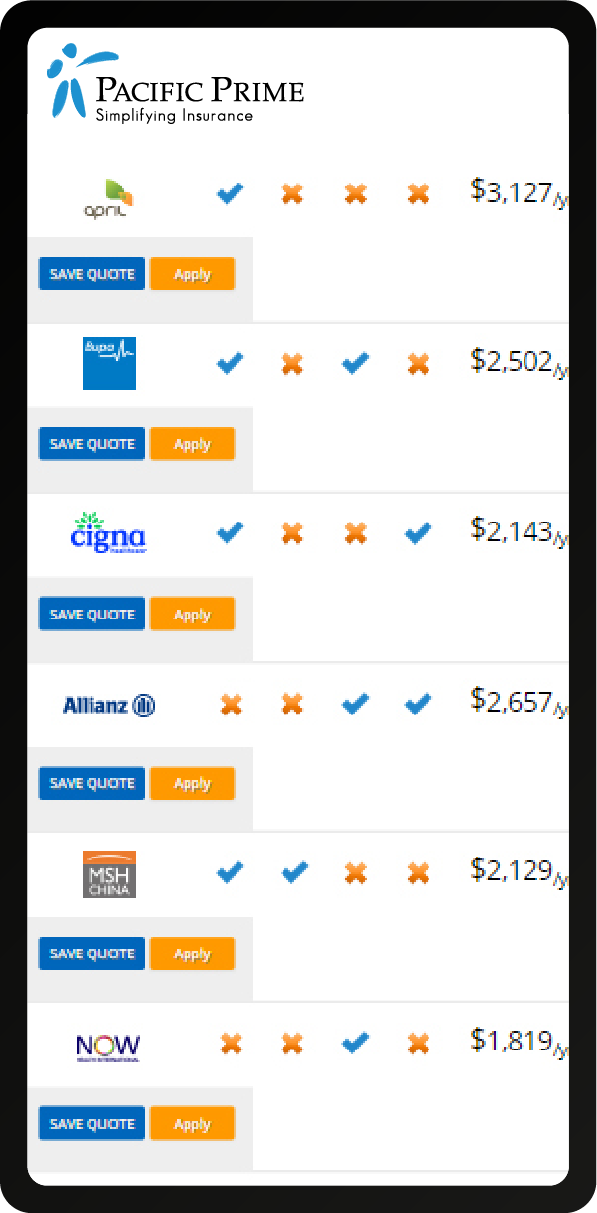
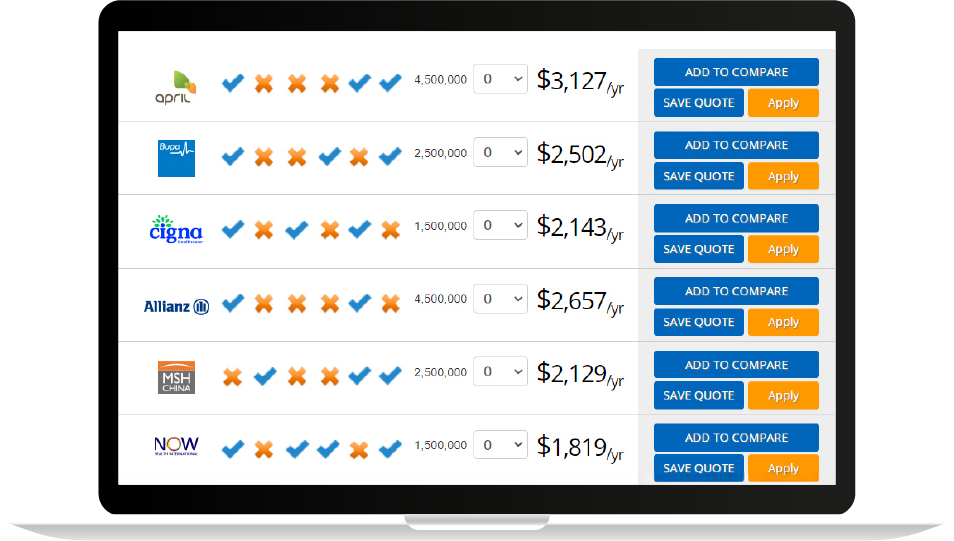
Some of the top international health insurance providers in India for expats include Allianz Care, AXA, Bupa Global, and others. These insurers provide the most comprehensive insurance options for expats with different lifestyles and budgets.
Below is a list of the top nine international health insurance providers for expats in India:
Allianz Care Plans for Expats in India
As one of the largest international health insurance providers, Allianz Care offers expats in India great international medical coverage. Their international plans are available in three tiers: Care, Care Plus, and Care Pro.
The benefits and limits will vary between the three tiers. Expats can expect annual limits of up to USD $5,000,000. Additionally, expats can also opt for additional add-on plans to further tailor their policies to suit their needs and requirements.

AXA International Health Insurance for Expats in India
With over 50 years of experience in providing insurance policies for expats in India, AXA’s comprehensive international health insurance plans are available in five coverage tiers: Foundation, Standard, Comprehensive, Prestige, and Prestige Plus.
Expats can expect annual limits of up to USD $8,000,000 with an AXA international health insurance plan. Specific limits and coverage benefits will vary between the different tiers.
Bupa Global Plans for Expats in India
The international health insurance plans available for expats in India are available in four key tiers: Major Medical, Select, Premier, and Elite. Annual benefit limits will range from approximately USD $3,174,200 to USD $4,761,300.
If you are interested in more international health insurance options in India for expats, check out our complete guide on the Top 9 Insurance Companies in India for Expats.
Getting Insured in India
India is the fastest-growing economy in 2024. As such, it attracts expats from all over the world. Whilst opportunities are ample, it is important to be insured during your stay in India to ensure access to the private healthcare sector without having to pay out-of-pocket.
The good news is that expats have a wide variety of private international health insurance plans to choose from between major insurance providers in India including Allianz Care, AXA, Bupa Global, Cinga, IMG Global, and many more.
If you are considering moving to India or are already working in India and want to up your private health insurance coverage, Pacific Prime can help you find an insurance plan that is right for you.
With over two decades of experience in the industry, our expert advisors can provide impartial advice on the coverage you will need and find a plan that suits your needs, requirements, and budget.
Contact us today for a free plan comparison and an obligation-free quote!
Frequently Asked Questions
What are the healthcare facilities in India like?
Healthcare facilities in India vary depending on whether they are in the public or private sector. The public sector features primary health centers, public hospitals that are available to all residents, and national health programs. The private sector offers private hospitals and clinics.
Do I need health insurance as an expat in India?
Health insurance is not required to visit or work in India but it is highly recommended to provide access to the private sector without having to pay the full costs out-of-pocket. Private healthcare facilities are beneficial to expats as the services are catered to more international needs.
What are the best insurance providers in India for expats?
The top insurance providers in India for expats include Allianz Care, William Russell, Cigna, IMG Global, VUMI, AXA, Bupa Global, GeoBlue, and David Shield. These providers offer comprehensive insurance options for expats of different lifestyles and budgets.
How can I access English-speaking healthcare professionals in India?
English is widely spoken in India, but expats will find better services catered towards international needs in the private sector. With the rising popularity of telemedicine services, expats will also be able to connect to English-speaking healthcare professionals even in rural areas.
Are there specific vaccinations I need to take as an expat moving to India?
Expats moving to India should ensure they are up-to-date with routine vaccinations such as measles, mumps, rubella, and tetanus. Additionally, vaccinations for diseases like hepatitis A and B, typhoid, and Japanese encephalitis are recommended depending on the region you plan to move to.

Born and raised in the cultural melting pot that is Hong Kong, and having studied at an international school, Vista has developed a multicultural perspective that he uses in his writing and strives to connect to people of different backgrounds.
In his free time, Vista enjoys immersing himself in different worlds, from video games to light novels and movies. His hobbies help him expand his writing style by putting himself in the point-of-view of different people and characters.
- Best International Health Insurance Plans for Expats in Fiji – October 17, 2025
- Best International Health Insurance Plans for Expats in Kosovo – October 17, 2025
- How to Get UAE Citizenship in Dubai – October 17, 2025



Comments