300x85-png.webp)


 Hong Kong
 Singapore
 China
China Dubai
Dubai Thailand
 United Kingdom
 Mexico
Expats can access coverage for in vitro fertilization (IVF) through international maternity insurance plans offered by providers like Allianz, Cigna, and VUMI. These plans help reduce the financial burden of fertility treatments, which often require multiple costly cycles.
Discover the world’s top
health insurers.
Compare quotes with
a click of the button.
Many international insurers include IVF coverage under high-tier maternity plans, offering support for expats undergoing treatment abroad. This article breaks down what IVF involves, which insurance plans offer coverage, and important legal and financial considerations when seeking IVF in another country.
We will give a general overview of what IVF treatments are, and explain which maternity insurance plans offer coverage for these treatments. We will also share some important considerations for expats thinking of beginning IVF abroad.
What IVF Treatment Involves

In vitro fertilization (IVF) is a fertility treatment: a series of procedures that can lead to pregnancy that is generally used for couples or individuals who can’t get pregnant. It can also be used to avoid passing on genetic problems to the baby.
The procedures can be complex, but we provide a general summary and outline of the steps of the series of procedures below.
- Step 1: Suppress the natural menstrual cycle and take fertility hormones
- Step 2: Collect the eggs and sperm sample
- Step 3: Fertilize the eggs in the laboratory
- Step 4: Transfer the fertilized embryos into the womb
- Step 5: Wait 2 weeks to take a pregnancy test to see if the treatment has been successful
As IVF is not a guarantee and embryos may not develop into pregnancy, some women have to undergo several rounds of IVF before they have a successful pregnancy. With IVF’s expensive costs, this means that medical bills can begin to pile up with each round.
With the right maternity insurance coverage, you can have financial protection against these costs.
IVF Access and Options for Expats
Your ability to receive IVF treatments as an expat will depend on where you live or travel to in order to have the procedures done. Because every country has different laws and policies around IVF, you may have to travel to find a country with an IVF clinic that will work for your needs.
Costs also vary widely from country to country. For example, IVF treatments in Turkey cost an average of a little over USD$3000, while in the UK the average cost is around USD$7600. Understanding the costs in your host country can help you plan your next steps.
Expats with international maternity insurance with fertility treatment coverage will have the additional option of traveling to receive IVF. This can be a great option if your host country’s laws or costs around IVF do not work for your lifestyle, preferences, or budget.
IVF Cost Differences by Country
IVF prices vary greatly from country to country and also from case to case. Some women may have to undergo additional tests or procedures during their treatments, which will inevitably raise the price of their treatments. Additionally, IVF with your own eggs will be cheaper than using donor eggs.
Below is a table of European countries with their corresponding average IVF costs for comparison. All money values will be listed in EUR.
IVF Treatment Costs Across Europe |
||
| Country | IVF Costs with Own Eggs | IVF Costs with Donor Eggs |
| Spain | €3,600 – €6,700 | €5,900 – €8,500 |
| Greece | €2,500 – €3,500 | €4,200 – €6,000 |
| Portugal | €4,000 – €4,600 | €6,300 – €7,300 |
| Poland | €2,200 – €2,500 | €5,200 – €6,000 |
IVF Insurance Coverage from Top Global Providers
Expats can access IVF treatment coverage with maternity insurance plans through international providers like Cigna Global, VUMI, and Allianz. These international insurers offer expats the means to explore IVF treatments while covering their costs up to their varying limits.
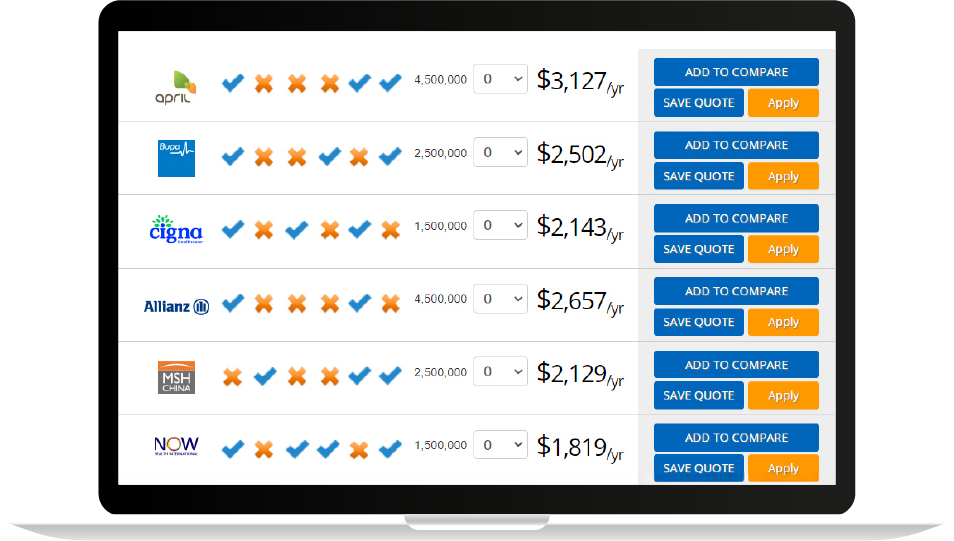
When choosing a maternity insurance plan with fertility coverage, take care to compare plans and understand their coverage limitations. If you’d like to see quotes for maternity and IVF coverage, reach out to an insurance expert at Pacific Prime, or use their free online plan comparison tool.
IVF Coverage with Cigna Global
Cigna Global offers IVF coverage with its Platinum international insurance plan, their most comprehensive health insurance plan for expats. Cigna Global is the largest international insurance provider on the market today, making it a stable and reliable choice for expats.
The waiting period for Cigna Global maternity coverage is 24 months long.
IVF Insurance Benefits from VUMI
VUMI offers fertility treatment coverage through its Global Flex VIP Ultra plan. It covers up to USD $10,000 per lifetime and up to USD $2,500 per round of IVF. The waiting period for VUMI maternity coverage is 12 months.
IVF Options Under Allianz Care Plans
Allianz offers fertility treatment coverage through its Active Pro plan. This outpatient coverage health insurance plan can be purchased in addition to its core insurance plans like Care Pro or Care Plus. This coverage reimburses up to 80% of costs, up to USD $16,200 per lifetime.
Their Active Pro plan differs from their traditional maternity plans, offered in Bloom or Bloom Plus categories. You will need to purchase a Bloom plan to receive maternity coverage.
The waiting period for Active Pro IVF coverage is 16 months, and coverage for Bloom plans is 10 to 18 months.
Additional IVF Factors Expats Should Know

Expats should evaluate other factors that affect their ability to receive IVF abroad, such as the legal and ethical considerations in each country and financial planning. By considering these considerations, expats can be more prepared to begin their fertility treatments abroad.
IVF Legal and Ethical Guidelines Abroad
The different parts of the IVF process are regulated differently in each country, with heavy limitations in some countries and little in others. Legislation and guidelines in each country will affect the access expats have to IVF, as well as affect almost every stage of treatment.
Some examples of legal and ethical issues that are regulated differently from country to country are listed below:
- Surrogacy: the use and payment of a surrogate are against the law in countries like many European countries like Germany and Italy, and in many parts of Asia as well.
- Donor Egg and Sperm Regulations: Some countries, such as Japan and Canada, allow donors to remain completely anonymous. Other countries, such as Portugal, will allow those born from donated sperm to learn the donor’s identity on their 18th birthday.
- The Development Period Allowed for Embryos: Many countries will allow embryos to develop for several days so the healthiest embryos can be selected for implantation, but in other countries, only early embryos can be implanted.
- Sex Selection and Genetic Screening for Embryos: Some countries have banned pre-implantation genetic diagnosis (PGD), while other countries have allowed it under strict regulations. The UK and Canada allow PGD for medical reasons but not for sex selection.
- The Maximum Number of Embryos that Can Be Transferred: for example, many countries have strict single embryo transfer policies, while others will leave the number of embryos implanted up to the discretion of the fertility specialist.
- Frozen Embryo Maximum Storage Time: the length of time that you will be allowed to store your embryo varies from country to country. For example, Brazil has a limit of just three years that an embryo can be stored, while other countries may allow indefinite storage.
- Using a Frozen Sperm or Embryo After the Death of the Partner: Some countries, such as Belgium, may allow frozen sperm or embryos to be used after a partner’s death if there is written permission beforehand, but other countries rule that the eggs or sperm must be destroyed.
These complex legal and ethical issues are handled differently in every country, so it is vital to do your due diligence and research the legislation in the country where you’ll be seeking fertility coverage. Knowing all of these facts beforehand will keep you protected from later complications.
How Expats Can Budget for IVF Treatment
Expats can begin financially planning for their IVF by understanding their insurance coverage, looking into grants, researching the costs across countries, and more. By staying consistent and thorough with preparations, the financial obstacles of IVF can be overcome.
We will list some options that expats can take for financial planning below.
- Review Your Insurance Coverage: If you have an insurance plan that covers IVF, take the time to understand your coverage limits and any possible exclusions. If you don’t purchase insurance that covers IVF, you will be left to pay the cost entirely out of pocket.
- Consider International Options: Globally, mobile expats can choose to have their IVF treatments in other countries that may offer lower costs. Greece and Turkey are two popular countries for people to visit for IVF treatments.
- Consider the Treatments You May Require: Every expat going through fertility treatment will have different needs regarding testing and procedures, which will affect cost. Consult with your doctor to understand what treatments you may need and if you will require any specialized treatments.
- Look into Grants: Some countries may have grants or subsidies for fertility treatments such as IVF. These grants can help offset the high costs of fertility treatments for couples or individuals.
- Budget and Save: Taking the time to budget and save for your fertility treatments can make a fundamental difference in being able to afford the procedures. By having money set aside for treatments, you can avoid feeling any significant financial strain.
Frequently Asked Questions:
Can US citizens get IVF in other countries?
Americans can get in vitro fertilization treatments in other countries, but each country will have its own rules and laws around the treatments. For example, many countries will require you to be legally married before you begin treatments. Only a handful of countries allow single women to do IVF.
How can I find out if my insurance covers fertility treatments?
The quickest way to find out if IVF is covered by your existing insurance is to contact your insurance provider directly and ask. If you are not able to make a call, you can also look through your plan documents to find out the details of your coverage.
What is the cost of IVF treatments for expats living abroad?
IVF treatment costs vary, depending on factors like the country, clinic, any additional testing or procedures required, and how many cycles are needed for a pregnancy. Each couple or individual will require different services during these treatments, making the cost difficult to estimate exactly.
Conclusion:
IVF is expensive, but with the right maternity insurance plan, expats can have coverage for their treatment plan. Through international insurance providers like Allianz, expats can be protected against the high medical costs of these treatments.
Ready to begin your journey of planning your IVF treatments abroad? Your first step should be to secure a maternity insurance plan with IVF coverage. To make sure you qualify, ensure you follow the waiting period outlined by the insurer. Pacific Prime can help you find the right plan today.
With over 20 years of experience in providing insurance solutions worldwide, we are willing and ready to help you with any question you may have. Visit our website today to use our free quote tool to begin comparing plans yourself, or to reach out and chat with an insurance expert.
Want to learn more about childbirth options abroad? Check out our articles on Considering Home Birth and Neonatal Care Coverage.

Serena earned her Bachelor’s Degree in Psychology from the University of British Columbia, Canada. As such, she is an avid advocate of mental health and is fascinated by all things psychology (especially if it’s cognitive psychology!).
Her previous work experience includes teaching toddlers to read, writing for a travel/wellness online magazine, and then a business news blog. These combined experiences give her the skills and insights she needs to explain complex ideas in a succinct way. Being the daughter of an immigrant and a traveler herself, she is passionate about educating expats and digital nomads on travel and international health insurance.
- How to Compare Travel Insurance Plans the Smart Way – October 21, 2025
- Best Hospitals in the UAE: Top Picks in Dubai and Abu Dhabi – October 21, 2025
- How Much is a Doctor Visit in Dubai Without Insurance? – October 21, 2025



Comments