300x85-png.webp)


 Hong Kong
 Singapore
 China
China Dubai
Dubai Thailand
 United Kingdom
 Mexico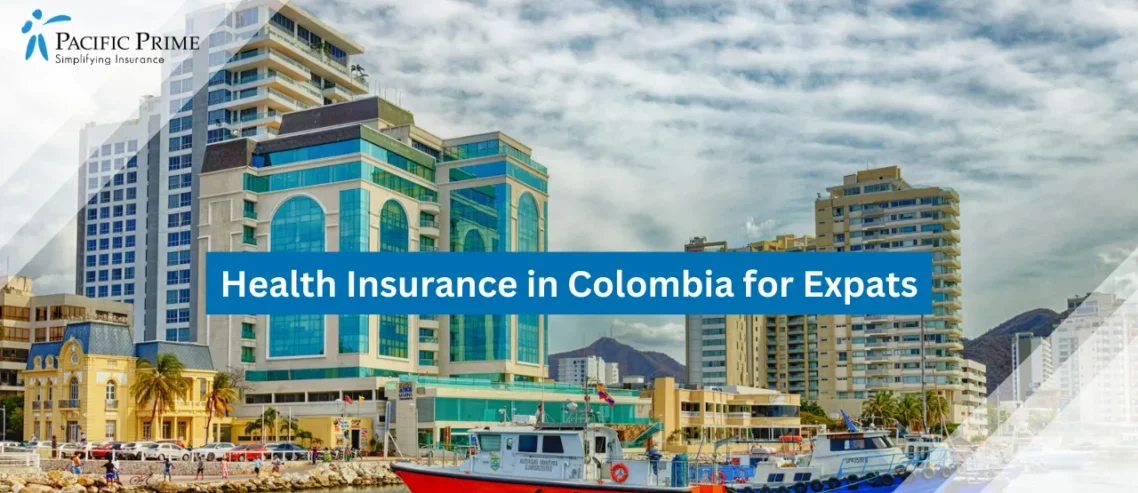
Expats in Colombia can choose between two main types of health insurance: the public system known as EPS and private health insurance plans. Public insurance is mandatory for legal residents and offers broad coverage at a low cost, while private insurance provides faster access to care, English-speaking doctors, and greater flexibility in treatment choices.
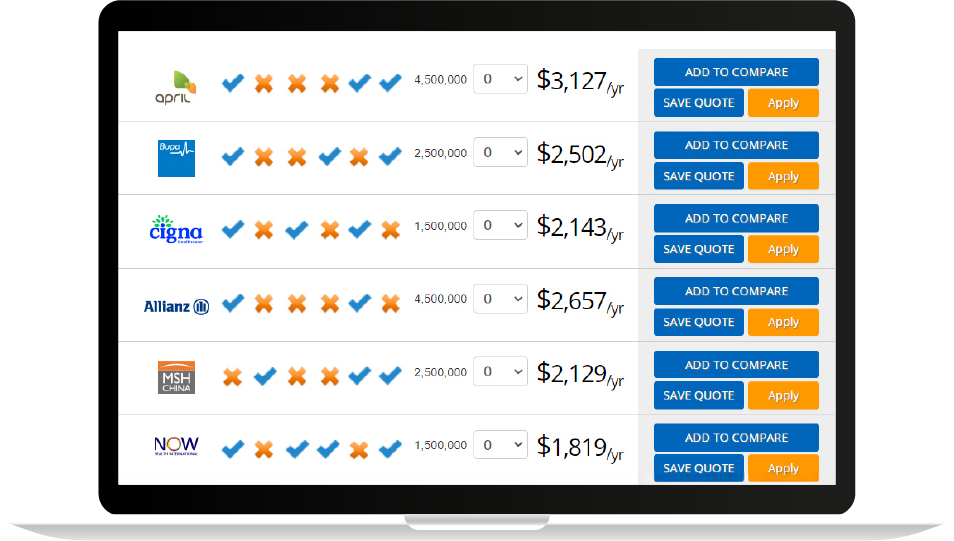
Discover the world’s top
health insurers.
Compare quotes with
a click of the button.
Colombia’s healthcare system ranks among the best in Latin America and is known for its affordability and quality. To stay protected while living overseas, securing the right medical coverage in Colombia is essential. Whether you’re relocating for work, retirement, or long-term living, understanding your insurance options helps maintain your health and peace of mind abroad.
Overview of Colombia’s Healthcare System
Colombia’s healthcare system, thanks to its high quality and significant improvement over time, ranks 22nd place on the World Health Organization (WHO)’s list of best healthcare systems.
More specifically, the public health insurance system in Colombia is known as Entidades Promotoras de Salud (EPS). Private health insurance is a preferred option among expats thanks to its wider array of coverage along with freedom of treatment and medical facility choices.


Public Health Insurance Through EPS
The Entidades Promotoras de Salud (EPS) is Colombia’s affordable public health insurance system, which is also mandatory for all legal residents. For example, employees pay 12.5% of their gross monthly income to the EPS while retirees pay 12% of their declared pension income.
Additionally, there are also no maximum age limits for applications. Below are the areas in which Colombia’s public health insurance, via the EPS, covers:
- Lab tests
- Diagnostic imaging
- Specialist visits
- Medications
However, despite high healthcare standards, public healthcare might not be accessible in rural areas in comparison to urban areas. For instance, urban areas such as Bogota, Medellin, and Cali are all covered by health insurance while healthcare is much more limited for rural areas.
Moreover, healthcare and clinic standards in rural areas could be particularly basic, waiting times could be longer than one would like, their medical treatment and facility selections may be limited, and people may have difficulties finding multilingual or at least English-speaking doctors.
Furthermore, serious or specialized care may also require trips to urban healthcare facilities, which can be inconvenient for rural residents depending on the distance.
Benefits of Private Health Insurance in Colombia
A popular and preferred option among those moving to Colombia, private health insurance allows expats to choose their desired healthcare treatment and facilities much more freely.
Private health insurance grants expats access to private healthcare facilities, which also means they will get the benefit of shorter waiting times, better comfort and amenities, as well as English-speaking medical staff.
You also get the addition of being able to consult a specialist of your choice directly without consulting a general physician, ensuring you get the specific treatment you need from your specialist of choice. During emergency cases, you will also get the benefit of prompt assistance.
However, while public health insurance in Colombia lacks the age limit for eligibility, individuals aged 60 and above with pre-existing conditions are not eligible for private health insurance in Colombia.
Health Insurance Costs for Expats in Colombia
Expats pay between USD $100-$200 (approx 391,864-783,728 Colombian pesos) for public health insurance in Colombia, while private health insurance will run around USD $50/month (approx 198,073 Colombian pesos).
The EPS charges are based on one’s income calculation rather than age or medical condition.
Public Health Insurance Eligibility Requirements
Every legal resident has to sign up with the EPS healthcare system. While signing up isn’t mandatory for expats, they must show proof of coverage from a different healthcare plan. Anyone who signed up with the EPS will have to pay 12.5% of their gross monthly income to the EPS.
For individuals employed with a Colombian company, the EPS payment rate will be 4% while the employer pays for the rest.
Steps to Enroll in Colombia’s EPS System
The EPS public healthcare system in Colombia, affordable and lacking age eligibility, is mandatory for all legal residents. Below are the steps to take when signing up with the healthcare system:
1. Obtain a Visa
EPS healthcare is exclusively available for legal residents and citizens alike. Thus, one must enter Colombia with an appropriate visa that allows them to stay and work in the country such as the “visa de trabajo” TP-4 Work Visa.
Other options include the “Pensionado Visa” retirement visa, the real estate purchasing visa, the business ownership visa, and the business investment visa. It will take at least two weeks for your visa to be processed, though sometimes it may take even longer.
2. Apply for Your Cédula (Identification Card)
After you get your visa in your passport and enter Colombia, proceed to the immigration office (Migración) to register your visa and apply for an identification card (known as Cédula). You will be asked to complete a form, pay a fee, provide fingerprints, and get a photo taken.
In case you can’t speak Spanish, it’s highly recommended that you either bring along a Spanish-speaking friend or hire a translator to help you out throughout the application process.
The application process usually takes around two to four weeks. Once complete, proceed to the same immigration office and claim your card. Note that some expats may be required to provide additional paperwork by the immigration office during the wait.
3. Sign Up with the EPS
Once you have your Colombian identification card, it’s now time to sign up with the EPS. Start off by choosing an insurance administrator and apply with them. Your coverage begins immediately upon approval of your application.
You won’t be issued a health insurance card, nor do you need one, as a cédula identification card is all you need to make a doctor’s appointment.
Frequently Asked Questions
Is healthcare in Colombia free?
Free healthcare is only available for the homeless and those with incredibly low incomes. Expats do not get the benefit of free healthcare, regardless of their type of job or their financial standing.
How good is healthcare in Colombia?
On the World Health Organization (WHO)’s list of best healthcare systems, Colombia ranks 22nd place. Colombia’s health standards have improved since the 80s, as healthcare reforms led to significant improvements in the country’s healthcare system.
Can I bring prescription medication to Colombia?
Make sure you bring your prescription medication in its original packaging along with your doctor’s prescription. Travelers can check with the Embassy of Colombia in the US to verify the legality of their medication in Colombia.
Conclusion
Health insurance in Colombia is available in both public and private forms, each having its fair share of ups and downs. On one hand, public health insurance via the EPS lacks the age limit but at the cost of potentially long waiting times, language barriers, and treatment selection limits.
Meanwhile, private health insurance offers an even wider range of coverage and added perks such as shorter waiting times, freedom of treatment and specialist selections, better room amenities, and multilingual medical staff.
Whether you’re heading to Colombia with your family or on your own, understanding the country’s health insurance system is crucial to ensure your fresh start abroad is equally as safe as it is healthy.
Being a renowned international health insurance broker, Pacific Prime has over 20 years of experience in matching both expats and locals to the right health insurance plan that matches not only their budget but also their unique healthcare needs.
Whether you’re a traveler in need of short-term travel insurance or an expat in need of long-term international health insurance, we are happy to help you with service-mindedness and impartiality.
So, if you have any further questions, please get in touch with us.

Serena earned her Bachelor’s Degree in Psychology from the University of British Columbia, Canada. As such, she is an avid advocate of mental health and is fascinated by all things psychology (especially if it’s cognitive psychology!).
Her previous work experience includes teaching toddlers to read, writing for a travel/wellness online magazine, and then a business news blog. These combined experiences give her the skills and insights she needs to explain complex ideas in a succinct way. Being the daughter of an immigrant and a traveler herself, she is passionate about educating expats and digital nomads on travel and international health insurance.
- How to Compare Travel Insurance Plans the Smart Way – October 21, 2025
- Best Hospitals in the UAE: Top Picks in Dubai and Abu Dhabi – October 21, 2025
- How Much is a Doctor Visit in Dubai Without Insurance? – October 21, 2025


Comments