300x85-png.webp)


 Hong Kong
 Singapore
 China
China Dubai
Dubai Thailand
 United Kingdom
 Mexico
There are many reasons an expat should consider taking out health insurance in Thailand; this includes financial protection in the event of unexpected medical bills, convenient access to private medical hospitals, and comprehensive coverage for all your health needs.
Discover the world’s top
health insurers.
Compare quotes with
a click of the button.
Living and working in Thailand should be a stress-free experience. If you’re considering making your way to the land of smiles, it’s worth knowing more about the healthcare system in Thailand and the importance of private health insurance in Thailand.
This Pacific Prime article will go into detail on health insurance in Thailand for expats, serving as a guide for their expatriate journey.
The Types of Health Insurance Available in Thailand
The main types of health insurance in Thailand are employer-sponsored health insurance, government-sponsored health insurance, travel health insurance, local Thai health insurance, and international health insurance.
Travel Health Insurance
Travel health insurance is a short-term coverage option for those looking to visit and not live in Thailand. It provides the necessary coverage during trips, which includes medical treatments, evacuation and repatriation, and medical emergencies.
Employer-Sponsored Health Insurance
Most employers in Thailand offer their employees health insurance coverage as part of their employee benefits. These policies generally offer basic coverage that serves to assist expats in their day-to-day lives, but they do not cover pre-existing conditions and have relatively low coverage limits.
Government-Sponsored Health Insurance
In a similar vein to that of Australia, Canada, and the UK, Thailand’s government-sponsored health insurance is driven and funded by the government and taxpayers through the social security system. Expats may access this form of health insurance under the Universal Coverage Scheme.
Local Thai Private Health Insurance
Thai health insurance companies only provide coverage in Thailand, are partnered with hospitals in Thailand, and offer direct billing for these service points. While affordable, it may not offer as much coverage and benefits as an international health insurance plan.
International Health Insurance
International health insurance plans offer comprehensive coverage abroad and within Thailand. They also offer access to a global network of healthcare providers, ensuring that expats receive timely access to the best private hospitals and financial protection in the event of surging medical bills.
Who is Eligible for Medical Coverage?

For expats, they may seek coverage as individuals, as couples, as families, or as a group under a company. Depending on what you require, these are the types of health insurance plans offered by insurance companies for expatriates.
Individuals
Individual health insurance plans offer individual expatriates comprehensive coverage for their specific needs while they live and work in Thailand. These plans are suitable for those looking for more coverage than their employer-sponsored health insurance or who are self-employed.
Couples
Couples residing in Thailand can receive coverage for both under a single policy. As part of a joint coverage scheme, a couple can receive their necessary healthcare treatments and services, which are consolidated, calculated, and paid for under one single plan.
Families
Expatriate families residing in Thailand can take out a family insurance policy to provide comprehensive coverage for their entire family, taking into account all individual needs and conditions.
Groups
Employers looking to insure their employees may do so under a group insurance policy. The employer’s budget and choice of coverage are factors in group insurance policies. As a result, they provide only general coverage for an employee’s day-to-day life.


How Much Does Health Insurance Cost?
The cost of health insurance, also known as a premium, is calculated by the total sum of values such as age, the benefits, the coverage areas selected, the number of people covered, the reputation of the insurer, the deductible conditions, and your pre-existing conditions.
For a better understanding, the list below provides more detail:
- Age: We are more likely to get sick as we age, which means that insurance premiums will be higher.
-
- Areas of Coverage: The more countries selected for coverage, the more you’ll pay. This takes into account the relative medical costs in each country.
- Selected Benefits: Similar to that of consumer goods, the more features we want, the more it’ll cost. In this case, adding dental or maternity coverage will result in higher costs.
-
- Deductible Conditions: By choosing to pay part of medical expenses yourself, you may lower the premium on your policies.
- Number of People Covered: The more people you’ve chosen to cover, the more you’ll pay.
- Insurer Reputation: The more reliable and well-known an insurer is, the more you’ll have to pay to receive their insurance.
- Pre-existing Conditions: If you have pre-existing conditions, insurers will expect you to claim insurance for those conditions, resulting in a higher premium.
Medical Expenses Covered by a Health Insurance Policy
Most health insurance policies cover inpatient, outpatient, and medical evacuations, with add-ons such as dental and maternity coverage. The majority of policies, by default, include inpatient care.
Inpatient Coverage
Inpatient coverage, or hospitalization, is a mandatory feature within a health insurance policy. They provide coverage for treatments that take place when you are admitted to a hospital overnight. While this is for more severe cases, the coverage is essential for expats living in Thailand.
Outpatient Coverage
Outpatient coverage provides coverage for minor illnesses, injuries, or any treatments that would not require admission into a hospital. While this is an optional benefit, most expatriates living in Thailand are recommended to ensure that this is included to seek convenient medications.
Medical Evacuations
Should you be caught in an accident in any remote location in Thailand and require urgent treatment, medical evacuations ensure that you are brought to the nearest medical facility. This is especially important in Thailand, considering the number of expats who live in remote areas.
Maternity Coverage
For expats looking to build a family during their stay in Thailand, maternity coverage will cover an expatriate woman’s routine costs of pregnancy. This includes prenatal visits, delivery, and any complications that may occur.
Dental Coverage
Regardless of where you’re living, dental coverage is valuable but is usually an add-on for most policies. It ensures that any dental treatments are covered, whether minor or significant. With dental treatments being what they are, costs can add up fast, so this is a great way to save money.
Thailand’s Private Healthcare

Thailand’s private healthcare system includes for-profit businesses with frontrunners such as Bumrungrad, Bangkok Hospital, BNH, and Samitivej. These are the best hospitals that operate to the highest global standards and offer expatriates the best and most specialized treatments.
Bumrungrad
Located in central Bangkok, Bumrungrad International Hospital is known as one of Thailand’s premier hospitals, offering access to over 700 highly qualified physicians and over 500 inpatient beds.
They also work in coordination with interpreters, concierge services, embassies, international insurers, and airports.
- Location: 33 Soi Sukhumvit 3, Khlong Toei, Watthana, Bangkok 10110, Thailand
- Phone: +66 (0)2 066 8888
Bangkok Hospital
With state-of-the-art technology and accreditation from medical boards in the European Union, the United States, Australia, and Japan, Bangkok Hospital is renowned for its specialized cancer and neurological treatments. They also have a medical workforce capable of communicating in 30 languages.
- Location: 2 Soi Soonvijai 7, New Petchburi Road, Bangkapi, Huai Khwang, Bangkok 10310, Thailand
- Phone: +66 (0)2 310 3000
BNH Hospital
With over 120 beds available for inpatient admission, BNH Hospital offers 24-hour access to physicians in every field of medicine, the most modern facilities, and internationally recognized accreditation.
- Location: 9/1 Convent Road, Silom, Bang Rak, Bangkok 10500, Thailand
- Phone: +66 (2) 686 2700
Samitivej
With over 270 beds, 87 examination labs, and more than 1200 nurses, Samitivej offers some of the most comprehensive facilities that an expat could ever need in the heart of Bangkok, including high-tech medical tools and equipment.
- Location: 133 Klang Alley, Sukhumvit 49, Khlong Tan, Watthana, Bangkok 10110, Thailand
- Phone: +66 (0)2 022 2222
Thailand’s Public Healthcare
The purpose of Thailand’s public healthcare system is to ensure that Thai nationals have free access to medical care. While expats have access to public healthcare through the universal healthcare scheme, there are long wait times and crowds, and English is not typically spoken.
Pros of Thailand’s Public Healthcare
Thailand’s public healthcare is free if you are registered under the universal healthcare and social security systems. The system is also staffed with world-class doctors that rival even the world’s best.
- Free: If you are registered under the Universal Healthcare System and the social security system, Thailand’s public healthcare system is free and does not require you to pay to use it.
- World-Class Doctors: Thailand’s medical workforce is among the most skilled in the world. Their public healthcare doctors rival some of the top doctors in other countries, and many people choose the public system for this reason.
Cons of Thailand’s Public Healthcare
More often than not, expats will face language barriers, long queues, and crowds at Thai public hospitals. Additionally, due to the limited inventory in public hospitals, they will have inconsistent access to the drugs that they require, not to mention the brand-new drugs.
-
- Language Barriers: English isn’t the strong suit of many medical staff in the Thai public healthcare system. On many occasions, you’ll require the help of a Thai friend to translate.
- Long queues: The public health system is overloaded with people, and more often than not, you’ll have to wait an entire day to get treated.
- Crowds: If you’re looking for peace and quiet, don’t expect it at public hospitals. Parking lots will be full, hospitals will be cramped, and you’ll be sharing your personal space with others.
- Limited Inventory: More often than not, Thailand’s hospitals have to wait to have their medical inventory stocked. This results in limited or inconsistent access to drugs.
Frequently Asked Questions
What are the main types of health insurance available in Thailand?
The main types of health insurance in Thailand are employer-sponsored health insurance, government-sponsored health insurance, travel health insurance, local Thai health insurance, and international health insurance.
What is the difference between local Thai health insurance and international health insurance?
Local Thai health insurance is affordable but may not cover as much as international health insurance. International health insurance offers comprehensive coverage both abroad and within Thailand, with access to a global network of healthcare providers.
Who is eligible for medical coverage under health insurance plans in Thailand?
Expats in Thailand can seek coverage as individuals, couples, families, or groups under a company. Insurance companies offer health insurance plans tailored to these different types of coverage needs.
What factors affect the cost of health insurance in Thailand?
The cost of health insurance, or premium, in Thailand, is influenced by factors such as age, areas of coverage selected, selected benefits (e.g., dental or maternity coverage), deductible conditions, the number of people covered, insurer reputation, and pre-existing conditions.
What medical expenses are typically covered by health insurance policies in Thailand?
Most health insurance policies in Thailand cover inpatient care, outpatient care, and medical evacuations and may include add-ons like dental and maternity coverage.
Conclusion
Living in Thailand requires expats to know the different types of health insurance available, the costs, the coverage types, private healthcare providers, and the public healthcare system.
While you are looking into Thailand, you might as well look into the top areas to live in Thailand and the health insurance options for expats.
By taking into account all these variables, you’ll be able to make a more informed decision when looking to take out a health insurance policy. Furthermore, it is worthwhile to contact a broker to ensure that all your needs, especially those of your dependents, are met.
As your trusted broker, Pacific Prime can provide you with the peace of mind you need to fully embrace and experience life in any country, including Thailand. We offer international health insurance plans tailored to your specific needs and those of your family.
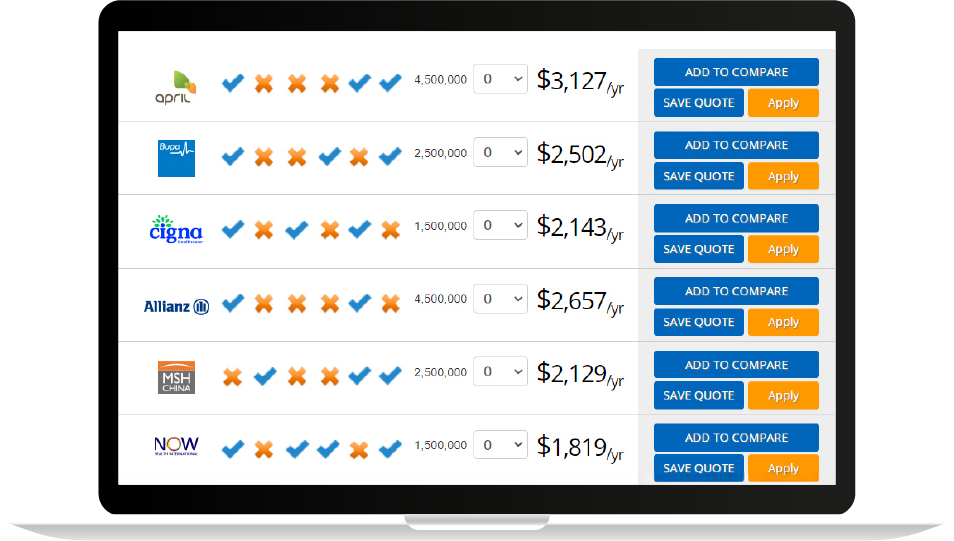
Contact us today for insurance quotes, compare plans, or explore our guide on how to use the quote generator to assist you further.

Upon graduating from Mahidol University International College’s International Relations program, he spent his career in marketing and business development, working for an international subcontractor, a marketing research firm, an international news agency, a software development company, and a creative agency. His journey now continues at Pacific Prime, where he hopes to make an impact by simplifying insurance and writing a gargantuan amount of SEO articles to draw in billions of leads.
In his free time, Piyanat is an avid martial artist and musician, spending most of his time at boxing gyms in Nakhon Pathom and music studios with his friends in the music industry.
- Chiang Mai Travel Insurance: A Comparison Of The Top Providers – August 22, 2025
- Last-Minute Travel Insurance: How to Get Covered After Departure – August 18, 2025
- Childbirth Coverage in Singapore: Maternity Health Insurance Explained – August 18, 2025

Comments