300x85-png.webp)


 Hong Kong
 Singapore
 China
China Dubai
Dubai Thailand
 United Kingdom
 Mexico
Living in Indonesia as an expat or digital nomad offers a lower cost of living, diverse cultural experiences, and a variety of visa options. Many foreigners find they can live comfortably on a modest budget, with rent, food, and transportation costing significantly less than in Western countries. The country’s 17,000 islands provide countless lifestyle choices, from bustling cities to tranquil beach towns.
Discover the world’s top
health insurers.
Compare quotes with
a click of the button.
Before relocating, it is important to understand both the practical and cultural aspects of daily life. Expats should review visa requirements, compare living expenses, and prepare for differences in traditions, language, and social customs. With the right planning, Indonesia can provide an enriching and affordable long-term home.
This article is intended to help you determine if Indonesia is the right place for you to live. As an additional resource, we’ve created a guide to living abroad in Asia just for you!
Indonesia Living Guide for Expats
When expats are deciding whether or not they want to live abroad in Indonesia, Pacific Prime suggests starting with your budget. Can you afford the cost of living? The rent, food, and transportation expenses? Can you afford the educational and healthcare fees?
Once you have a solid footing in these topics, you should consider the visa requirements to move as well as the cultural differences you will face so you can be prepared to make that adjustment.
To ease your research, we’ve compiled all of these categories into easy-to-follow sections so you can see exactly what living abroad might be like by the Indian and Pacific Oceans. By the end of this article, you’ll be ready to read about the best places to live in Indonesia.
Indonesia vs USA Cost of Living
The cost of living in Indonesia for one person is $559 a month on average vs. in the USA it’s $2,213 a month. The cost of living in Indonesia for a family is $1,427 a month on average vs. in the USA it’s $5,003 a month. Rent, food, and transportation expenses are significantly cheaper in Indonesia.
These averages come from crowd-sourced data, and they are intended to give you a general idea of what you may spend, not exact prices.
To understand how much you might spend in Indonesia, we will break down the housing, food, and transportation living expenses and compare them to those in the USA.
Housing Costs in Indonesia vs USA
On average, one person in Indonesia spends $253 a month on rent, while a family in Indonesia spends $508 a month. In the United States, one person spends on average $1,399 a month on rent while a family in the USA spends $2,331 a month on rent.
Here are some average prices:
- 1-bedroom apartment downtown: $269 in Indonesia vs. $1,483 in the USA
- A cheap 1-bedroom apartment: $164 in Indonesia vs. $1,154 in the USA

Food Prices in Indonesia vs USA
On average, individuals in Indonesia spend $207 a month on food expenses vs. individuals in the USA who spend $568 a month on food. Restaurant prices in Indonesia are dirt cheap compared to the expensive prices in the USA, and groceries are also significantly more affordable in Indonesia.
Eating out averages:
- Lunch: $1.87 in Indonesia vs. $16.60 in the USA
- Dinner: $14.30 in Indonesia vs. $63.30 in the USA
- Fast food meal: $3.34 in Indonesia vs. $9.07 in the USA
Grocery Averages:
- 1 qt of milk: $1.27 in Indonesia vs. $1.05 in the USA
- 1.1 lb of bread: $1.17 in Indonesia vs. $3.04 in the USA
- 2.2 lb of rice: $0.95 in Indonesia vs. $3.99 in the USA
- 12 eggs: $1.52 in Indonesia vs. $3.91 in the USA
- 2.2 lb of chicken: $3.41 in Indonesia vs. $11.70 in the USA
- 2.2 lb of apples: $2.46 in Indonesia vs. $4.66 in the USA
Transportation Costs: Indonesia vs USA
Transportation expenses are significantly more affordable in Indonesia vs. in the USA. On average, you may spend $43 a month in Indonesia but $98 a month in the United States. Both public transportation and buying gas for a privately owned vehicle is much pricier in the US.
Transportation average costs:
- Local transport ticket: $0.32 in Indonesia vs. $2.23 in the USA
- Monthly local transport ticket: $14.50 in Indonesia vs. $65.50 in the USA
- Taxi Ride for 5 miles: $4.15 in Indonesia vs. $17.40 in the USA
- ¼ gallon of gas: $0.75 in Indonesia vs. $1.01 in the USA
Average Salaries in Indonesia vs USA
In Indonesia, the average monthly salary after tax is $330, while the average annual salary after tax is $3,960. In the USA, the average monthly salary after tax is $4,223, while the average annual salary after tax is $50,676.

Is Living in Indonesia Affordable?
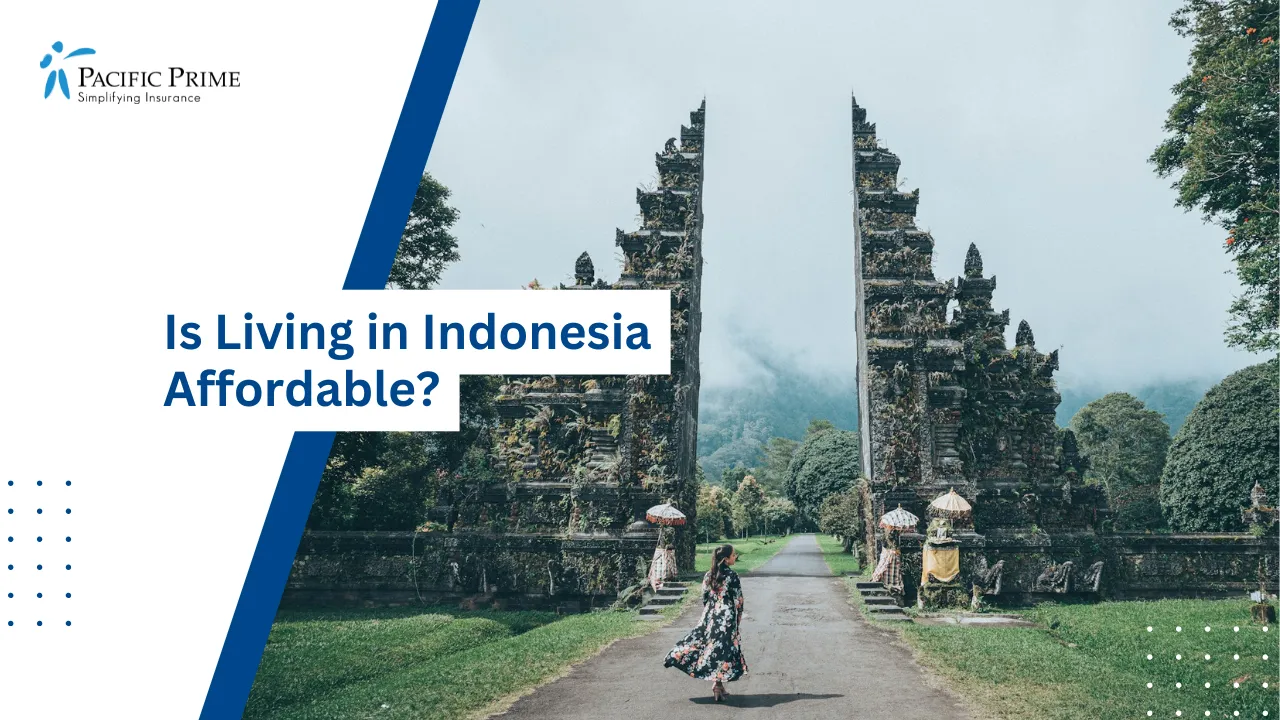
Compared to the United States and other Western countries, Indonesia is not expensive to live in. In fact, expats and digital nomads moving there should be able to live quite comfortably in Indonesia if they continue earning a Western salary or if they have saved up a good retirement fund.
In addition to general living expenses, you will want to consider educational and healthcare expenses as you decide if Indonesia will fit your budget.
Education Options for Expats in Indonesia
Starting at age seven, children in Indonesia are expected to attend schools. Expatriate children can join them in public schools at no cost, though many parents prefer to send their children to international schools where they can be taught in English.
There are many international school options taught in a variety of languages and styles of curriculum. These schools can be a significant monetary commitment, though, so you’ll want to shop around to find the right price for you.
Many of these schools cater to students from the following countries:
- The United States
- The United Kingdom
- France
- Germany
- India
- Japan
- South Korea
- New Zealand
- Rusia
- Singapore
Healthcare in Indonesia for Foreign Residents
In 2014 the Indonesian government implemented a national healthcare scheme, Jaminan Kesehatan Nasional (JKN), that provides coverage for 82% of the population. If you’re a working expat, your employer will enter you into the scheme. The premium starts at 5% of your monthly salary.
Because the JKN scheme is relatively new, it is still under development. You may find these public facilities to be overcrowded, understaffed, and underfunded. In addition, you must work for at least six months before you can begin getting coverage in the scheme.
On the flip side, you may be more interested in the private healthcare system in Indonesia. Here are some reasons why:
- Professionals are more likely to speak English
- The level of care is more like the Western standards you may be used to
Though, the facilities are still somewhat limited, so in this case, Pacific Prime recommends adding a medical evacuation rider to your international health insurance plan.

Visa Process for Moving from USA to Indonesia
Every foreigner who moves to Indonesia, either from the USA or another country, should apply for an entry visa called a VITAS (Visa Izin Tinggal Terbatas). Within thirty days of arriving in Indonesia, you must then convert your VITAS into an ITAS (Temporary Stay Permit) at an immigration office.
After you have an ITAS, you will apply for a KITAS (Temporary Stay Permit Card). These are the different types of KITAS:
- Work visa KITAS: You must have a job offer before you can apply.
- Family visa KITAS: This is for spouses or children of Indonesian citizens. Their Indonesian family members can sponsor their KITAS visa application.
- Retirement visa KITAS: To move permanently to Indonesia and retire, you must get a retirement visa before you can travel there. Once you’ve arrived, you can apply for a KITAS that will last for one year and can be renewed for five years.
- Student visa KITAS: You must first be enrolled as a student in an Indonesian school, and then you apply for a student visa. This will allow you to live in Indonesia for six to twelve months.
After working in Indonesia for three years with a KITAS visa, you can apply for a KITAP, or a permanent stay permit. This permit lasts for five years and can be renewed.
If you’re moving for family reunification, you can apply for a KITAP permanent residence after three years.
If you’re retiring in Indonesia, you can apply for a KITAP after five years.
Indonesia does not allow dual citizenship.

Cultural Insights for Americans in Indonesia
If you’re an American planning on living in Indonesia, you’ll want to learn about the culture so you can be respectful, considerate, and appreciative of the local customs. Indonesia has Islamic and Hindu-Buddhist influences, as well as art, dance, and theater traditions.
Here are some differences between these two nations:
- Family-Oriented: Indonesians tend to be group and family-focused, while Americans tend to be individualistic.
- Conservative Fashion: Indonesians have heavy Eastern ethical and Islamic values when it comes to fashion. Wearing scandalous clothing is considered impolite and inappropriate. This differs from how in the USA, an individual can choose vibrant and radical styles without getting negative complaints.
- Rice is a Favorite: Rice is often served three times a day in Indonesia. Americans drink coffee with the same commitment Indonesians eat rice.
- Religion is Important: Almost everyone in Indonesia has a religion, though there is no one religion specific to the whole country. It is common and acceptable to ask about other people’s religions and even to be taught religion in school.
- Hot and Spicy Foods: Many foods in Indonesia have a hot and spicy taste, and they are almost always served warm. In the United States, most people prefer a sweet or salty taste.
Conclusion
We’ve now learned a lot about Indonesian culture, the cost of living, and visa requirements. If you’re still not sure this is the right country for you to move to, consider living abroad in Vietnam or Taiwan. And of course, don’t forget to contact Pacific Prime to answer your questions about international health insurance.

Serena earned her Bachelor’s Degree in Psychology from the University of British Columbia, Canada. As such, she is an avid advocate of mental health and is fascinated by all things psychology (especially if it’s cognitive psychology!).
Her previous work experience includes teaching toddlers to read, writing for a travel/wellness online magazine, and then a business news blog. These combined experiences give her the skills and insights she needs to explain complex ideas in a succinct way. Being the daughter of an immigrant and a traveler herself, she is passionate about educating expats and digital nomads on travel and international health insurance.
- How to Compare Travel Insurance Plans the Smart Way – October 21, 2025
- Best Hospitals in the UAE: Top Picks in Dubai and Abu Dhabi – October 21, 2025
- How Much is a Doctor Visit in Dubai Without Insurance? – October 21, 2025



Comments