300x85-png.webp)


 Hong Kong
 Singapore
 China
China Dubai
Dubai Thailand
 United Kingdom
 Mexico
Schistosomiasis, or bilharzia, is a parasite that enters the skin when you enter contaminated fresh water. To avoid Schistosomiasis, the key prevention is to avoid coming in contact with contaminated water. You should be particularly careful with drinking and bathing water.
Discover the world’s top
health insurers.
Compare quotes with
a click of the button.
In this article, we’ll also discuss how you get schistosomiasis, how to avoid it, and common treatments. We’ll also make sure you have links to find great travel insurance and international health insurance so you can stay insured during your travels.
What Causes Schistosomiasis?
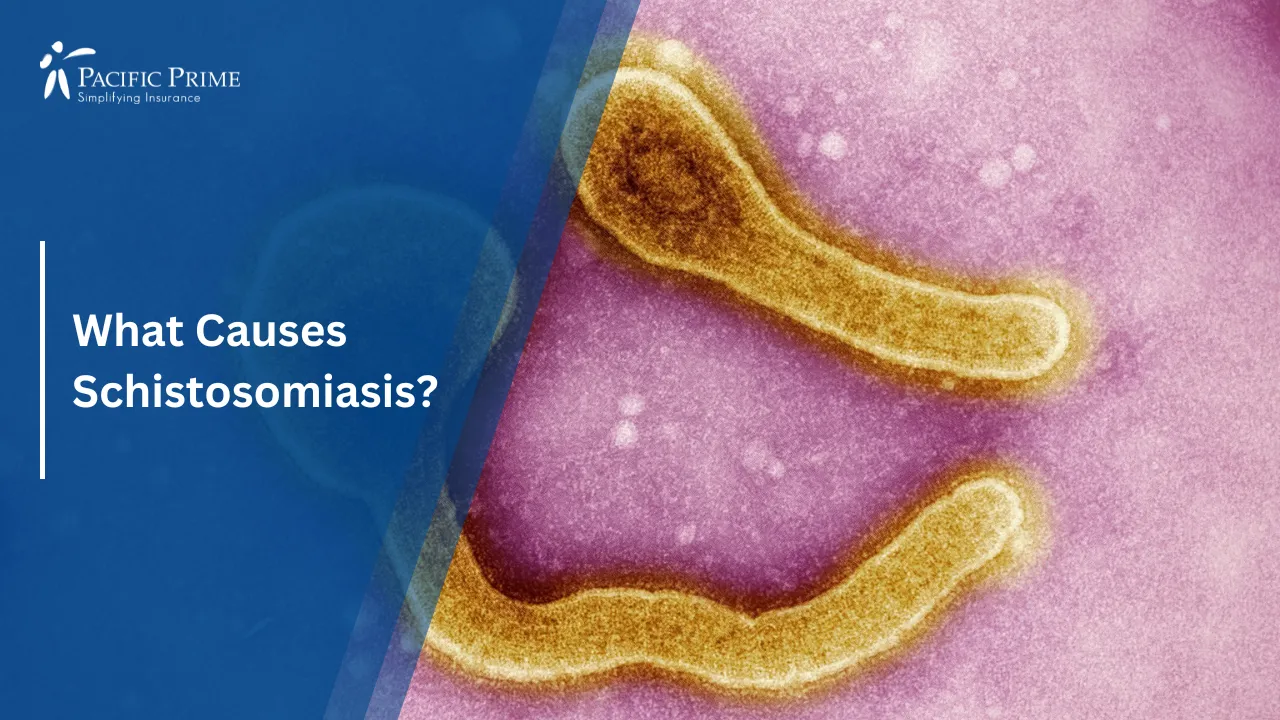
Schistosomiasis is a disease caused by a parasitic worm. The worm is found in many parts of the world. The worm enters your body through your skin. You can become infected after bathing, wading, swimming, or coming in contact with contaminated fresh water.
This disease is also known as bilharzia. The worms most likely to infect humans are Schistosoma mansoni, Schistosoma haematobium, and Schistosoma japonicum. Nearly 200 million people are infected worldwide.
Is Schistosomiasis Contagious?
Schistosomiasis does not spread from person to person through contact. The disease spreads when urine or feces from an infected person or animal contaminates fresh water with the worm’s eggs. Once the worms have hatched and matured, they can enter through the skin from the water.
Containing the disease involves controlling the snail population in these waters that serve as hosts to maturing worms and treating infected populations to stop contamination.
Common Symptoms of Schistosomiasis
The first sign of infection is a rash or itchy skin. This happens with days of infection. 1-2 months later, infected individuals may develop muscle aches, fever, chills, and a cough. Most people will not experience any symptoms during the beginning infection phase.
In children, schistosomiasis can lead to anemia, stunted growth, and reduced learning ability. Fortunately, these effects are usually reversible with treatment.
Schistosomiasis has two main manifestations: intestinal and urogenital each presents a little differently and the infection type can depend on the type of Schistosoma worm that infects you.
Intestinal Schistosomiasis
Symptoms of intestinal schistosomiasis include abdominal pain, diarrhea, and blood in the stool. Advanced cases may result in complications for the abdomen including the liver and spleen.
Urogenital Schistosomiasis
The most recognized symptom of urogenital schistosomiasis is blood in the urine. This is also called hematuria. Advanced cases of urogenital schistosomiasis can result in kidney damage and fibrosis of the ureter and bladder.
- In men, a urogenital schistosomiasis infection can affect the prostate and other sex organs. This disease may also cause irreversible infertility.
- In women, urogenital schistosomiasis may cause genital lesions, nodules on the vulva, vaginal bleeding, and pain during sexual intercourse. It also increases the risk of an ectopic pregnancy.
What Causes Symptoms of Schistosomiasis Infection
Once the adult worms begin laying eggs in your body, the eggs can travel to your intestines, bladder, or liver. The presence of the eggs leads to scarring in these locations. After many years of infection, you may have significant damage to your lungs, intestines, bladder, or liver.
It is important to note that the worms themselves do not cause the symptoms of Schistosomiasis, but rather, your body responds to the eggs, causing symptoms. In rare cases, the eggs may also travel to the spinal cord or brain and cause inflammation, paralysis, or seizures.
Schistosomiasis is not the only disease abroad that may cause inflammation in the brain. Be aware of other diseases like rabies or Japanese Encephalitis. These diseases are also found in some of the same regions as schistosomiasis.
Where Schistosomiasis Is Found
Schistosomiasis is mainly found in South America, Africa, Southeast Asia, and the Middle East. The disease can also be found in the Caribbean and a part of France. Since the disease is spread by contact with contaminated fresh water, avoid contact with fresh bodies of water in the affected regions.
85% of all schistosomiasis cases are in Africa. In Africa, as much as 50% of the local population is infected with schistosomiasis in impacted regions.
Schistosomiasis transmission has been reported in 78 countries worldwide. 51 countries are considered to have a moderate to high risk of transmission.
More specifically, areas identified by the World Health Organization and CDC include:
- Africa
-
-
- Nile River Valley in Egypt and Sudan, rainforests of central Africa, and countries like Mauritius, Madagascar, and Togo
-
- Asia
- South America
-
-
- Brazil, Venezuela, Suriname
-
- Southeast Asia
-
-
- Philippines and Indonesia
-
- The Caribbean
-
-
- Martinique, Dominican Republic, Guadeloupe, Saint Lucia
-
- Europe
-
- Parts of Corsica in France
No matter where you’re headed in the world, make sure you are familiar with the most common diseases abroad to avoid illness during your travels.
Schistosomiasis Travel Restrictions
There are currently no travel restrictions related to schistosomiasis or bilharzia but travelers to areas where schistosomiasis is endemic should take certain precautions such as checking health advisories, taking preventative measures during their stay, and getting insured before their visit.
How to Avoid Schistosomiasis While Traveling Abroad
Unfortunately, there is no vaccine to prevent schistosomiasis. The key to avoiding schistosomiasis is avoiding contact with sources of water where the parasite may be found. Drinking water and bath water should be prepared in ways to prevent infection.
Ensure your drinking water is safe. Appropriately filter the water to remove organisms or boil it for a minute. Boiling water is a great way to avoid bacteria, viruses, and parasites in the water. Iodine alone will not kill parasites.
Bath water should be boiled for a minute before use or stored in a tank for at least 1-2 days before use to prevent a schistosomiasis infection. Don’t assume the water used for showers at hotels is safe. Many facilities draw water from nearby lakes without treating it.
Avoid playing, swimming, or wading in water where schistosomiasis occurs. Schistosomiasis can be found in any fresh body of water in affected countries: lakes, rivers, canals, streams, etc. Chlorinated swimming pools and the ocean will not infect you with schistosomiasis.
Some people may say that towel drying is a good way to prevent infection. Towel drying should be used after very brief, accidental contact with potentially contaminated water. Please note that this is not an effective way to consistently prevent infection.
What Happens if a Tourist Gets Sick Abroad With Schistosomiasis
If you suspect you have been infected with schistosomiasis, urine, stool, or blood testing will determine if this is the case. It may take up to 6-8 weeks from the exposure for the infection to be detectable in tests.
For the most accurate results, order testing 6-8 weeks after your last exposure before providing samples for diagnosis. If you have evidence of schistosomiasis in the samples, you will be provided treatment.
Common Treatments for Schistosomiasis
The recommended drug for treating schistosomiasis is Praziquantel. Other safe and effective drugs may be available too. The only way to get treatment for schistosomiasis is to see a healthcare provider.
Frequently Asked Questions
Can I get schistosomiasis in the United States?
Schistosomiasis is not transmitted within the United States, but you can be infected somewhere else and develop symptoms after returning from travels.
Does Schistosomiasis make you really sick?
Schistosomiasis infection may not have symptoms early on, but complications from the disease can damage organs and become disabling.
Is Schistosomiasis a sexually transmitted disease?
Although urogenital schistosomiasis causes symptoms in the reproductive tract, the flatworm is not transmitted through sexual intercourse. The disease is transmitted through contaminated bodies of freshwater.
Will I recover from schistosomiasis?
Using safe and effective treatment from a licensed healthcare provider will treat schistosomiasis. The treatment will kill the parasites in your body, although you may need multiple treatments to be completely cured. Early treatment is the best way to prevent long-term complications.

Conclusion
Schistosomiasis is a parasitic infection found in many countries around the world. The parasite lives in bodies of fresh water and enters the body through the skin. There is no vaccination for the infection but treatment is available once a healthcare provider confirms the infection.
Travelers should take safety precautions including avoiding contaminated waters and ensuring that drinking water and bath water are safe when visiting a destination known to have Schistosomiasis.
You can prepare yourself financially for any illness or health emergency abroad by finding the right travel insurance and international health insurance for your needs. If you are looking to stay insured for your next trip, Pacific Prime can help you.
Pacific Prime is a global insurance broker with over 25 years of experience in the insurance industry. Our insurance experts can help you filter through different insurance plans from our extensive list of insurance partners to help you find a plan that suits you.
Contact us today for impartial advice or an obligation-free quote!
For more health-related travel advice, check out Lyme Disease Travel Advice and Hepatitis A Travel Advice.

Born and raised in the cultural melting pot that is Hong Kong, and having studied at an international school, Vista has developed a multicultural perspective that he uses in his writing and strives to connect to people of different backgrounds.
In his free time, Vista enjoys immersing himself in different worlds, from video games to light novels and movies. His hobbies help him expand his writing style by putting himself in the point-of-view of different people and characters.
- Best International Health Insurance Plans for Expats in Fiji – October 17, 2025
- Best International Health Insurance Plans for Expats in Kosovo – October 17, 2025
- How to Get UAE Citizenship in Dubai – October 17, 2025



Comments